Your Ultimate Guide to 30 40 30 Meal Plans
Discover how 30 40 30 meal plans work with our ultimate guide. Learn how to calculate your macros, prep meals, and create a balanced diet you'll love.
Love This Article?
Get personalized meal plans with recipes like this, automatically matched to your nutrition targets.
So, what's the deal with a 30/40/30 meal plan?
Simply put, it’s a way of eating where you get 30% of your daily calories from carbs, 40% from protein, and 30% from healthy fats. Think of it less as a rigid "diet" and more as a smart, balanced framework for fueling your body. It’s become a go-to for a reason: it’s effective for a wide range of goals, from building muscle to just feeling more energetic day-to-day.
Why This Macro Split Actually Works
If you've ever felt overwhelmed by conflicting nutrition advice, you're not alone. The beauty of the 30/40/30 split is its simplicity. It cuts through the noise and gets back to basics, focusing on a solid balance instead of forcing you to eliminate entire food groups. This isn’t some flash-in-the-pan trend; it’s a strategic method for giving your body what it needs to thrive.
The real powerhouse here is the protein. By dedicating 40% of your calories to it, you’re giving your muscles the raw materials they need to repair and grow. This is crucial whether you're hitting the gym hard or just want to maintain strength as you go about your life. Plus, protein is a secret weapon for staying full. It keeps those snack cravings at bay, which can make all the difference.
The Power of Balanced Energy
Next up, we have carbs, which make up 30% of your intake. These are your body's go-to fuel source. The key is to pick the right kind—complex carbs like sweet potatoes, quinoa, and mountains of veggies. They provide a slow, steady stream of energy, which means you can say goodbye to that dreaded afternoon crash. No more wild blood sugar swings.
And let's not forget about fat! The final 30% comes from healthy fats, and they are absolutely essential. We're talking about the good stuff found in avocados, nuts, and olive oil. These fats are vital for everything from hormone production and brain health to helping your body absorb key vitamins.
Before we dive deeper, let's quickly break down what each of these macronutrients brings to the table.
What Each Macronutrient Does For You
| Macronutrient | Its Role in Your Body | Healthy Food Sources |
| Protein (40%) | The builder. It repairs tissues, supports muscle growth, and keeps you feeling full and satisfied. | Chicken breast, salmon, Greek yogurt, lentils, tofu, eggs |
| Carbohydrates (30%) | The fuel. This is your primary source of energy for your brain and muscles. | Sweet potatoes, brown rice, quinoa, oats, fruits, vegetables |
| Fats (30%) | The operator. Crucial for hormone production, brain function, and absorbing fat-soluble vitamins. | Avocado, olive oil, nuts, seeds, fatty fish |
This kind of balanced approach is all about creating a sustainable way of eating that you can actually stick with long-term.
This isn't just a random set of numbers. This structured approach lines up perfectly with proven nutritional science, which has long championed a sensible distribution of macros for overall health.
This framework even echoes principles found in large-scale nutritional guidelines, like the USDA's Thrifty Food Plan, which customizes macronutrient ratios based on age and lifestyle. It’s a testament to the fact that our dietary needs are not one-size-fits-all, but a balanced intake is always a winning strategy. It's a fascinating look into how food consumption patterns continue to evolve, which you can read more about on Future Market Insights.
Ultimately, this is about working with your body, not against it.
Calculating Your Personal Macro Targets
Alright, before we dive into building delicious 30-40-30 meal plans, we need to figure out your specific numbers. Forget about complicated formulas and dizzying spreadsheets for now. We're just looking for a solid starting point that’s all about you.
The magic number we're after is your Total Daily Energy Expenditure (TDEE). Think of it as your body's daily calorie budget—the total energy you burn just being you. Once we have that, the rest is just simple math.
Finding Your Calorie Starting Point
Let's get a ballpark estimate of your daily calorie needs using a quick and dirty multiplier. It's not an exact science, but it gives us a fantastic baseline to work from.
- For Weight Loss: Multiply your current body weight (in pounds) by 13–15.
- For Weight Maintenance: Multiply your current body weight (in pounds) by 15–17.
Let’s run a real-world example. Say you weigh 160 pounds and want to shed a few of them. A good starting point would be 160 lbs x 14 = 2,240 calories a day. This is your launchpad, not a life sentence. You can—and should—tweak it later based on how you feel and the progress you're seeing.
If you want to get even more granular with this, check out our deep dive on how to calculate macros.
Turning Calories into Grams
Okay, you've got your daily calorie target. Now, let's slice it up using our 30-40-30 ratio. Sticking with our 2,240 calorie example, the math is pretty straightforward.
Here’s how we split those calories into their macronutrient buckets:
- Protein (40%): 2,240 x 0.40 = 896 calories
- Carbohydrates (30%): 2,240 x 0.30 = 672 calories
- Fats (30%): 2,240 x 0.30 = 672 calories
But here’s the thing: you don't eat "calories." You eat real food, which we measure in grams. So, the last step is converting these calorie targets into something you can actually track on a food label.
Pro Tip: Just remember these three simple conversions:
Protein has 4 calories per gram.
Carbs also have 4 calories per gram.
Fat is the dense one, with 9 calories per gram.
Armed with that knowledge, let's finish our calculation to get the final daily macro targets in grams:
- Protein: 896 calories ÷ 4 = 224 grams
- Carbohydrates: 672 calories ÷ 4 = 168 grams
- Fats: 672 calories ÷ 9 = 75 grams
And there you have it—your own personalized macro goals!
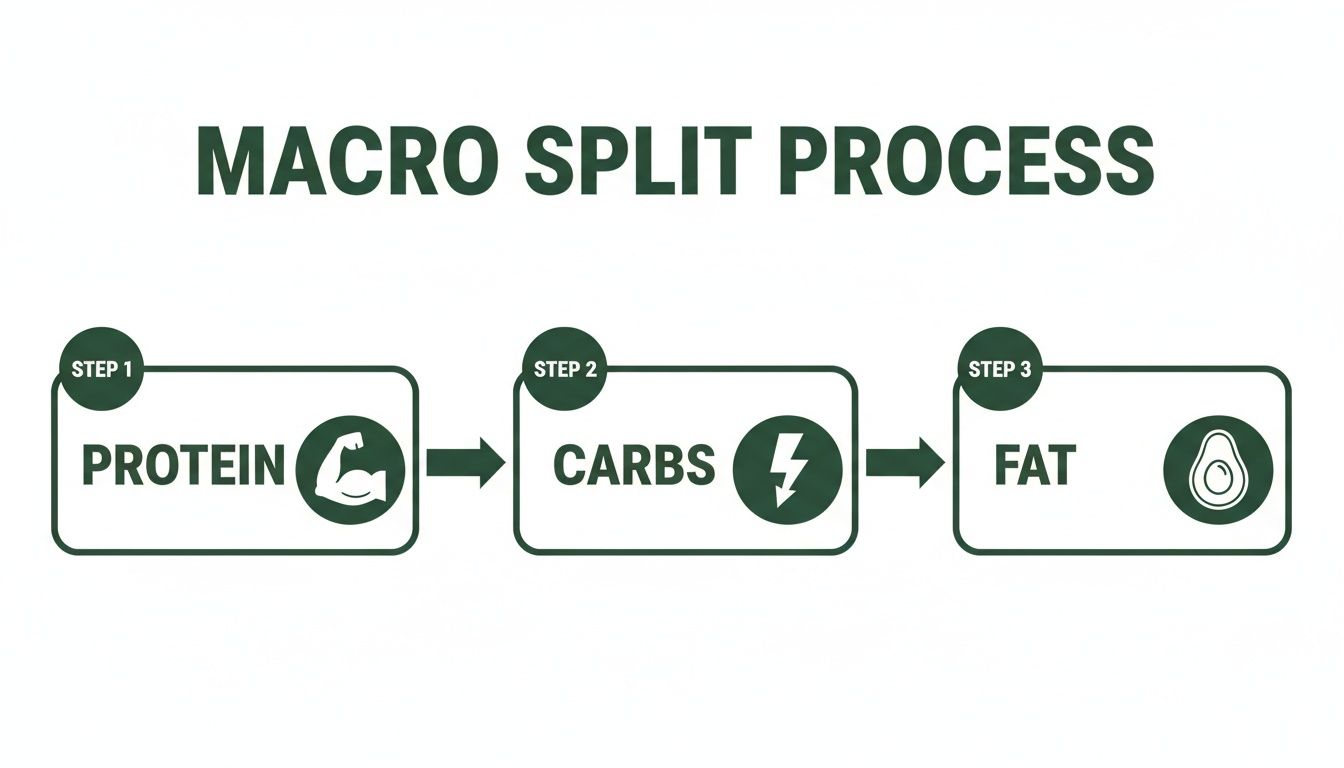
This simple breakdown shows how each macro plays its part. Protein builds, carbs energize, and fats keep everything running smoothly. It's all about creating a balanced system where your body can thrive.
And hey, don't sweat it if you don't hit these numbers perfectly every single day. The real key is consistency, not perfection. Use these targets as your guideposts and start building some amazing meals.
Bringing Your Perfect Meal Plan to Life
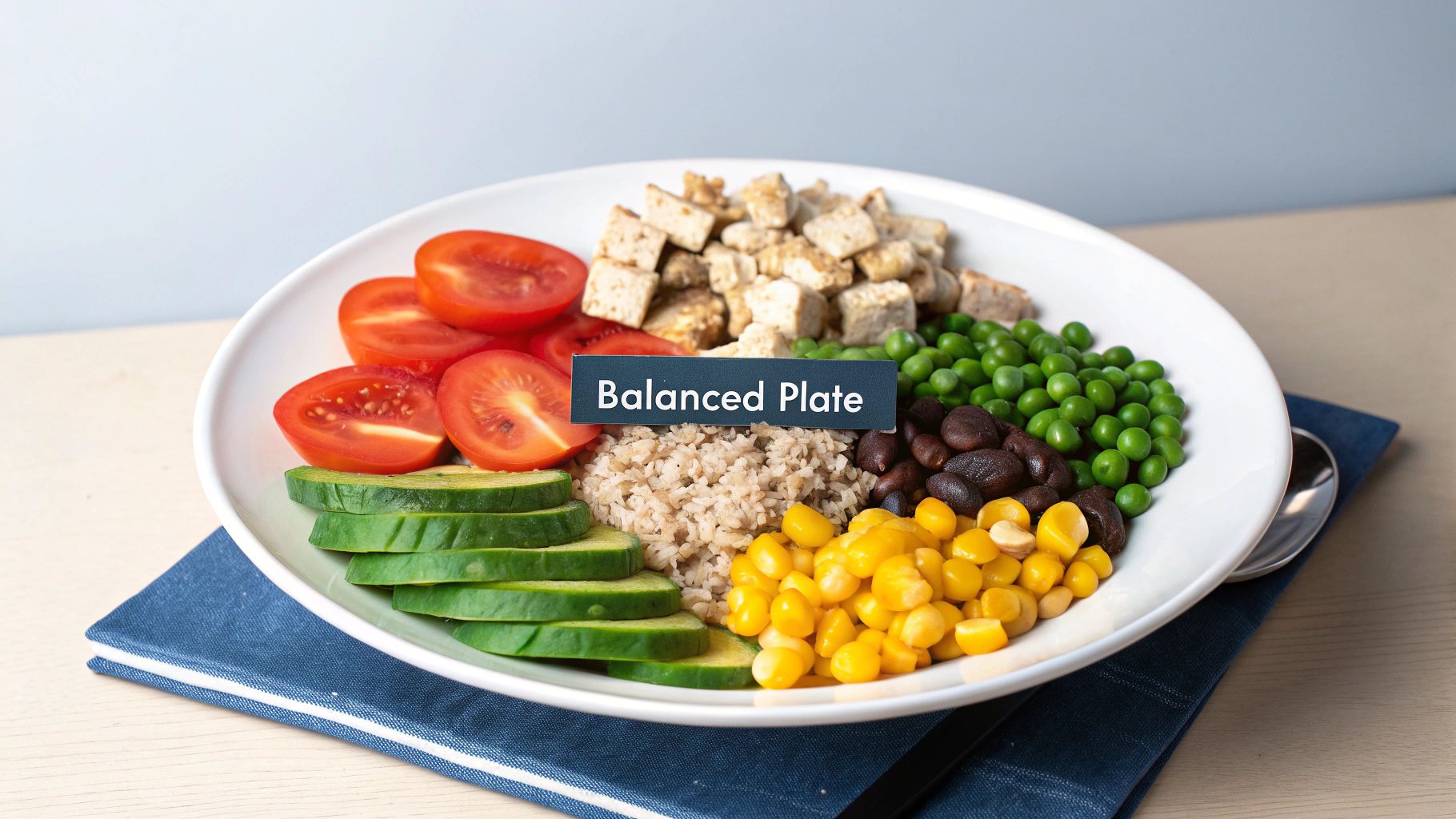
Alright, this is where the rubber meets the road. We're moving past the numbers and percentages and getting to the good stuff: delicious, satisfying food on your plate. Building your perfect 30-40-30 meal plan isn't about following a super-strict, joyless diet. It's about creating a flexible blueprint that actually works for your life.
The whole point is to design meals that are both nutritionally powerful and genuinely enjoyable. Forget about eating boiled chicken and broccoli every day. We’ll start by mapping out what a single day could look like, then scale that up into a weekly rhythm you can stick with.
What a Great Day of Eating Looks Like
Let's turn theory into reality. Here’s a sample day built around a 2,000-calorie target. Don't think of this as a rigid prescription—it's more like a splash of inspiration to show you how tasty and diverse this way of eating can be.
This is just one example of how you can structure your meals to hit those 30% carb, 40% protein, and 30% fat targets without a fuss.
Sample 2000-Calorie Day on a 30-40-30 Plan
To give you a clearer picture, here’s a full day's menu. Notice how each meal contributes to the overall macro balance, providing a steady stream of energy.
| Meal | Food Items | Approximate Macros (P/C/F in grams) |
| Breakfast | 3 Scrambled Eggs with Spinach & 1/2 Avocado, Side of Berries | 25g / 20g / 20g |
| Lunch | Grilled Chicken Salad with Mixed Greens, Quinoa, & Olive Oil Vinaigrette | 45g / 35g / 25g |
| Snack | 1 cup Greek Yogurt with a Handful of Almonds | 25g / 15g / 15g |
| Dinner | Baked Salmon with Roasted Sweet Potato & Broccoli | 40g / 40g / 25g |
See? Nothing crazy. This simple structure keeps you fueled and focused all day long, so you never feel like you're running on empty or missing out.
From a Single Day to a Winning Week
One perfect day is a great start, but the real magic happens when you build consistency. A weekly template gives you that structure without forcing you to eat the same meal on repeat. I like to think of it as a "plug-and-play" system.
Your template can be as simple as giving each day a theme. Maybe you do "Meatless Monday" with lentils or tofu, and "Taco Tuesday" with lean ground turkey or fish. This simple trick keeps meals interesting and makes grocery shopping way more predictable.
A Quick Reality Check: Having a flexible meal plan is more important than ever. The demand for convenient, healthy food is exploding, especially in places like the USA and Australia where high-protein takeout is booming.
At the same time, we have to be real about food costs. The average price of a healthy diet has hit $4.46 per person per day, which is a huge hurdle for the 2.6 billion people around the world facing affordability issues.
Making Smart Food Swaps on the Fly
Life happens. You’ll run out of ingredients, or the grocery store won't have what you need. The beauty of a 30-40-30 meal plan is its adaptability. Knowing how to make smart swaps is the key.
Here are a few of my go-to substitutions:
- Protein Power-Ups: No chicken breast? Grab some turkey, lean ground beef, cod, or even a can of tuna. For my plant-based friends, lentils, chickpeas, and tofu are fantastic stand-ins.
- Carb Choices: Out of sweet potatoes? Brown rice, quinoa, or whole-wheat pasta will do the trick. Just stick to complex carbs that give you that slow, steady energy release.
- Healthy Fat Fixes: If the avocados are rock-hard, no problem. A handful of nuts, a drizzle of extra virgin olive oil on your salad, or some chia seeds stirred into your yogurt work perfectly.
To really get the most out of your 30-40-30 plan, think about how it fuels your physical activity. The right nutrition can supercharge your workouts and speed up recovery. If you need some fresh ideas to get moving, you can explore various workout routines that pair perfectly with a solid eating plan. When you dial in both your food and your fitness, you create a powerful synergy for hitting your goals.
Making Your 30-40-30 Plan a Reality in the Kitchen
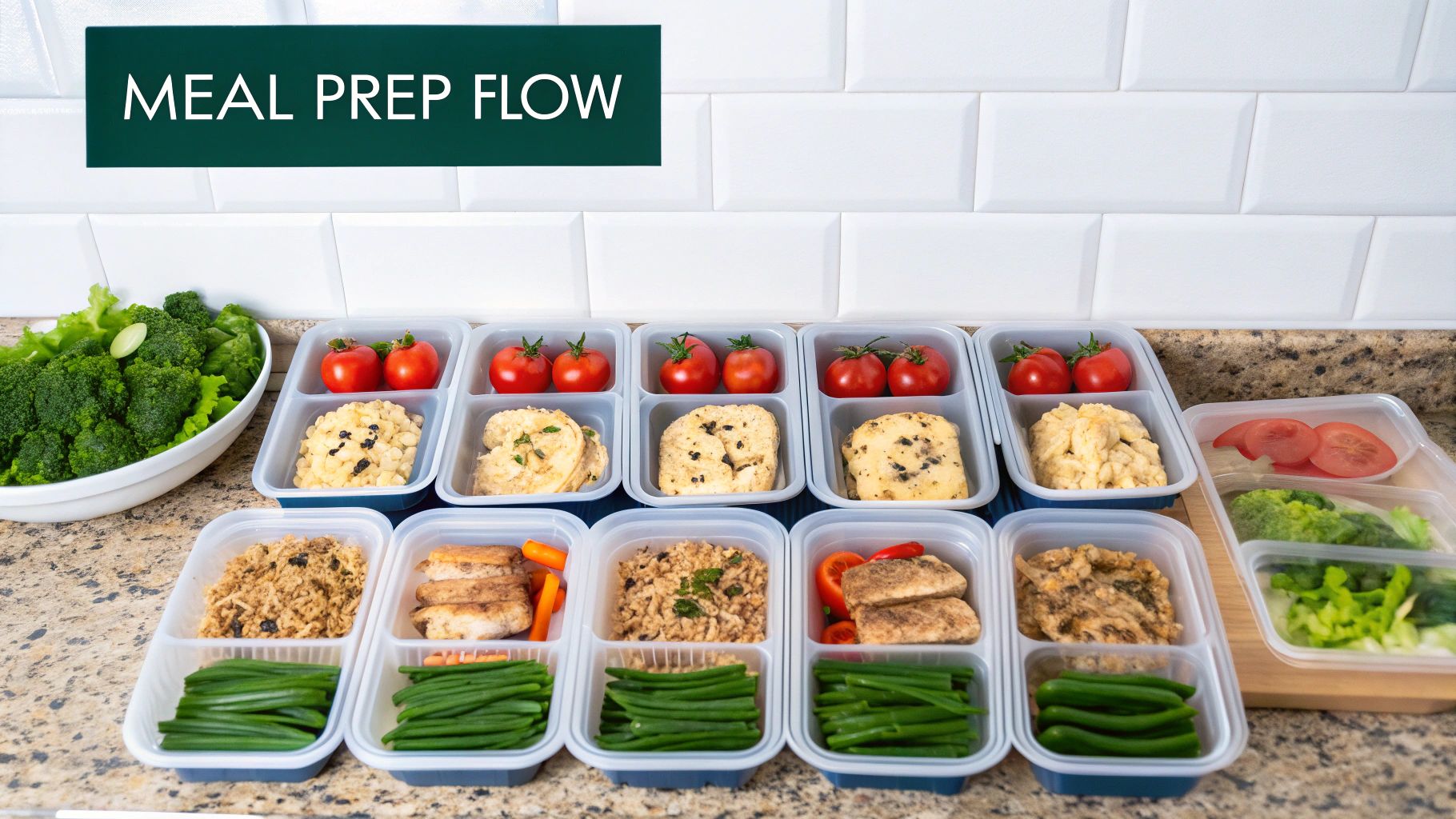
Let's be real. A perfectly calculated 30 40 30 meal plan is useless if it just sits on a spreadsheet. The magic happens when you bring it to life in your kitchen. This is where your meal prep game plan comes in—the secret weapon that turns good intentions into delicious, grab-and-go reality.
The whole point is to make your healthy choice the easiest choice. By carving out a few hours one day a week, you totally eliminate the "what's for dinner?" panic and dodge the siren song of last-minute takeout. You're not just cooking; you're building a system that makes hitting your goals feel almost automatic.
Get Friendly With Batch Cooking
At the heart of any solid meal prep strategy is batch cooking. It’s the simple art of preparing core ingredients in big quantities so you can mix and match them into different meals all week. This is how you save a mountain of time and avoid eating the exact same boring meal five days in a row.
Your game plan should be all about versatility. Think of it as building a foundation of staple ingredients that fit right into your 30-40-30 macros.
- Protein Power: Fire up the grill for a big batch of chicken breasts, bake a whole tray of salmon, or get a dozen eggs hard-boiled and ready to go. If you're plant-based, cook up a big pot of lentils or press and bake some tofu.
- Complex Carb Crew: Make a family-sized amount of quinoa or brown rice. While you’re at it, roast a sheet pan of sweet potato cubes or some butternut squash. Easy.
- Vibrant Veggies: Chop up a mountain of fresh veggies like bell peppers, cucumbers, and cherry tomatoes for salads. Toss another batch of broccoli, asparagus, and zucchini with some olive oil and roast them until they're perfect.
With these building blocks prepped and waiting in your fridge, putting together a balanced plate takes minutes, not an hour. If you want to really get into the nitty-gritty of an efficient workflow, check out our full guide on how to meal prep for the week.
Your Grocery List Is Your Battle Plan
A killer meal prep session always starts with a killer grocery run. A messy, disorganized list is a one-way ticket to impulse buys and forgotten essentials, which wrecks both your budget and your plan.
Treat your shopping list like a roadmap. Organize it by store section—produce, protein, pantry, dairy. This way, you can move through the store like a pro without backtracking. And before you even walk out the door, take a quick peek in your fridge and pantry to see what you already have. Nobody needs three jars of paprika.
By planning your meals and shopping with a precise list, you can seriously cut down on food waste. That saves you money and is better for the planet. It’s a total win-win.
Keep Your Food Fresh, Not Funky
The final piece of this puzzle is smart storage. Nothing kills the meal prep vibe faster than opening a container on Wednesday to find a sad, soggy mess. Good, airtight containers aren't a luxury; they're a necessity.
Here are a few insider tricks I've learned to keep things fresh all week:
- Chill Out: Always, and I mean always, let hot food cool down completely before you put a lid on it and stick it in the fridge. Trapped steam creates condensation, and condensation is the enemy of crispy, fresh food.
- Keep 'Em Separated: Store wet and dry ingredients in different containers whenever you can. Keep your salad dressing in a separate little container until you’re literally about to eat.
- Layer Like a Pro: When you’re packing salads, build them upside down. Dressing goes on the very bottom, followed by your hardier ingredients (think quinoa, chickpeas), and finally, your delicate greens go on top. No more wilted lettuce!
Nailing this workflow is what makes a 30 40 30 meal plan go from a cool idea to a sustainable part of your life.
Using AI to Automate Your Nutrition
Let's be honest. Counting every last gram of protein, carbohydrate, and fat can feel like a full-time job. The results are amazing, but the daily grind of logging, calculating, and tweaking can burn anyone out. This is where a little bit of tech magic comes in to do the heavy lifting for you, transforming your meticulous 30-40-30 meal plans from a chore into something you barely have to think about.
Think about it: what if you had a personal nutritionist on call, 24/7, right in your pocket? That’s pretty much what you get with AI-powered meal planning tools. These platforms take your unique stats—your calorie target, fitness goals, food likes and dislikes, and any allergies—and spit out a perfectly balanced plan in seconds. The endless calculations and guesswork? Gone.
How AI Takes the Pain Out of Meal Planning
These tools are so much more than just a fancy recipe book. They're smart systems built from the ground up to handle the most tedious, mind-numbing parts of nutrition planning. This frees you up to focus on what actually matters: eating well and living your life.
They typically come packed with features that make a real difference:
- Instant Meal Plans: Just plug in your TDEE and that 30/40/30 macro split. The AI immediately builds an entire week of meals that nail your numbers.
- Automatic Shopping Lists: Poof! Your weekly menu is instantly turned into an organized grocery list. Many even connect directly with services like Instacart for delivery.
- Real-Time Adjustments: Feeling like chicken instead of fish tonight? Or got a last-minute dinner invitation? The AI can adjust the rest of your day or week on the fly to keep you on track.
This kind of automation makes sticking to your plan almost ridiculously easy. Forget spending your Sunday afternoon lost in a sea of spreadsheets. You can have your entire week planned, and your grocery order placed, in just a few minutes.
For example, a platform like Meal Flow AI gives you a clean, simple dashboard to see exactly what you're eating.
An interface like this lets you see your daily meals and macros at a glance, making it incredibly easy to follow your plan and make changes whenever you need to.
It's no surprise that AI is making waves in nutrition. People are catching on to balanced approaches like the 30-40-30 plan, and AI personalization is becoming the key to making it work. This shift is happening everywhere, from South Korea to the US, especially as many people find it tough to afford a healthy diet every single day.
Finding the Right AI Assistant
The app store is overflowing with nutrition apps, but there's a huge difference between a passive tracker and an active planner. Most apps just log what you've already eaten. True AI planners do the work for you, creating the plan from scratch. If you want to get into the weeds comparing different AI tools, articles like Cal AI vs MyFitnessPal for AI Coaching and Food Logging are a great place to start.
Ultimately, using an AI meal plan generator is about working smarter, not harder. When you let technology handle the repetitive, boring stuff, you free up so much mental space. This lets you focus on building good habits and actually enjoying the food that's helping you crush your goals.
Got Questions About the 30-40-30 Plan?
Jumping into any new eating style is going to bring up some questions. It's totally normal. Let's walk through some of the most common things people ask when they're getting started with a 30% carb, 40% protein, 30% fat plan, so you can dive in feeling like a pro.
Can Vegetarians and Vegans Actually Do This?
You bet. This macro split is surprisingly flexible for anyone eating a plant-based diet. The trick is just getting a little smarter about where your protein and fats come from to make sure you nail that 40% protein and 30% fat goal.
You’ll want to lean heavily on plant-powered protein sources like:
- Tofu and tempeh (your new best friends)
- Lentils, chickpeas, and black beans
- Edamame
- A solid vegan protein powder for smoothies or post-workout shakes
For those healthy fats, think avocados, nuts, seeds, and high-quality oils. You can absolutely build a delicious and satisfying 30-40-30 meal plan without touching a single animal product. It just takes a little planning.
Will This Actually Help Me Lose Weight?
For sure, this can be a fantastic setup for weight loss. That higher protein number—40%—is the real secret weapon here. Protein is incredibly satisfying, which means you feel fuller for longer after a meal. Suddenly, that 3 p.m. urge to raid the vending machine doesn't seem so strong.
Plus, the balanced carbs give you steady energy for workouts, which helps keep your metabolism humming along. But let's be real: the most important piece of the weight-loss puzzle is still a calorie deficit. This plan just gives you an amazing framework to manage those calories without feeling hungry or exhausted all the time.
A little wisdom from my own journey: Think of your nutrition as a weekly average, not a daily report card. One "off" day doesn't ruin anything. Progress is built on what you do most of the time, not on being perfect 100% of the time.
Ugh, I Blew My Macros Yesterday. Now What?
First of all, breathe. It happens to literally everyone. Don't panic. If you had a carb-heavy dinner or went a little crazy with the peanut butter, just get back on track with your very next meal. Whatever you do, don't fall into the trap of drastically cutting your calories the next day to "make up for it." That's a quick recipe for a vicious cycle.
Think of it like a long road trip. You wouldn't turn the car around and go home just because you took one wrong turn, right? You'd just correct your course and keep going. Acknowledge it, let it go, and focus on your next good choice. It's that day-in, day-out consistency that gets you where you want to go.
---
Tired of all the math and guesswork? Meal Flow AI can handle the heavy lifting for you. It builds your perfect 30-40-30 meal plan in seconds, complete with personalized weekly menus and shopping lists that write themselves. Give it a try at https://mealflow.ai.