The Best Containers for Meal Prep a Parent's Guide
Tired of flimsy containers and leaky lunches? Discover the best containers for meal prep with our guide comparing glass, plastic, and stainless steel.
Love This Article?
Get personalized meal plans with recipes like this, automatically matched to your nutrition targets.
Let's be real—the "best" meal prep containers are the ones that actually make your life easier, not harder. What works wonders for one family might be a total flop for another. The secret is finding the right tool for the right job.
Glass is your go-to for reheating leftovers, plastic is a lifesaver for lightweight, on-the-go lunches, and stainless steel is the indestructible hero of your kid's backpack. It all boils down to how you and your crew eat day-to-day.
Your Guide to Perfect Meal Prep Containers
Hey there, fellow parent! If your days are a blur of drop-offs, pickups, and endless snack requests, meal prepping is your secret weapon. But even the best-laid plans can fall apart without the right gear. The sheer number of container options out there is enough to make anyone's head spin, so let's cut through the noise and figure out what you actually need.
We'll start with the basics: the materials. Each one has its own personality and excels at different things in a busy family kitchen.
- Glass Containers: Think of these as the reliable workhorses. They're perfect for reheating last night's dinner and won't get stained by that spaghetti sauce. Plus, they can go in the oven and are a breeze to clean.
- Plastic Containers: You just can't beat the convenience. They're light, easy on the wallet, and fantastic for packing school lunches or organizing pantry snacks. Just know they can get a little dingy or warped over time.
- Stainless Steel & Silicone: These are the superstars of the lunchbox world. Stainless steel is virtually kid-proof (you know what I mean), while silicone is super flexible and often collapses down to save you precious cabinet space.
If you’re leaning toward a greener kitchen, it’s worth checking out this fantastic guide on plastic-free lunch containers for sustainable lunches for some great eco-friendly ideas.
Comparing Meal Prep Container Materials
Choosing the right container isn't about finding a single "winner." It's about matching the material to the meal. A parent prepping purées for a baby has totally different needs than one packing for a high school athlete. Look at your week: Are you microwaving, freezing, or just grabbing and going?
The most practical meal prep systems I've seen use a mix of materials. You might have a big glass dish for the family casserole, but you'll pack individual servings for school in lightweight plastic or steel bento boxes.
Having a variety means you're never stuck. Here’s a quick rundown to help you see the key differences at a glance.
Meal Prep Container Materials at a Glance
This little chart breaks down the big four materials based on what really matters for busy parents.
| Material | Best For | Microwave Safe | Freezer Safe | Durability |
| Glass | Reheating, oven use, storing acidic foods | Yes | Yes (with caution) | Good (but breakable) |
| Plastic | Portability, budget-friendly bulk prep | Yes (BPA-free) | Yes | Moderate (can crack/warp) |
| Stainless Steel | Kid's lunches, durability, no-reheat meals | No | Yes | Excellent (indestructible) |
| Silicone | Snacks, freezing small portions, saving space | Yes | Yes | Very Good (flexible) |
As you can see, it's all about trade-offs. The ease of popping plastic in the microwave might come with a side of spaghetti stains. And while stainless steel can take a serious beating, you can forget about using it for reheating.
The Great Container Showdown: Glass vs. Plastic vs. Steel
Alright, let's settle the great debate. Picking the best containers for meal prep feels like choosing a champion for your kitchen, and the top contenders—glass, plastic, and stainless steel—all bring something different to the ring. This isn't just about what looks prettiest in your fridge; it's about what actually works for your real, chaotic, wonderful family life.
Forget the generic pro/con lists. We need to dig into the scenarios that really matter. We’re talking about the difference between reheating last night's cheesy casserole and packing a lunch that might get drop-kicked in a backpack. Each material has its moment to shine.
The Clear Choice: Glass Containers
Glass is the undisputed king of reheating and food purity. If you're a fan of batch-cooking meals that will end up in the microwave or oven, glass is your best friend. It’s totally non-porous, which means it won’t hold onto stains or smells. That leftover curry or spaghetti sauce? Not a problem.
The downside is just as clear: glass is heavy and breakable. Loading up a week's worth of glass containers is a workout, and sending one to school with your kid can feel like a high-stakes gamble. They’re tough, but a good drop on a hard floor can mean game over.
Parenting Reality Check: Glass is absolutely perfect for meals you'll be eating at home. Think big, oven-safe lasagna for family-style prep or individual portions you plan to grab from the fridge and heat up. It’s the ultimate for going from freezer to oven to table with zero fuss.
The Lightweight Champ: Plastic Containers
When it comes to pure convenience, plastic containers are the ultimate grab-and-go solution. They’re incredibly lightweight, easy on the wallet, and usually designed to stack perfectly, making them a parent's best ally in the war for cabinet space. For packing school lunches, on-the-go snacks, and anything that needs to travel, plastic is tough to beat.
But plastic has its quirks. Over time, it can get stained by colorful foods, hold onto strong smells (hello, garlic!), and even warp if you blast it in the dishwasher or microwave. While modern, BPA-free plastics are food-safe, many parents prefer to avoid heating food in them altogether, reserving them strictly for cold storage and transport.
So, when does plastic make the most sense?
- School Lunches: It's light enough for little hands to carry.
- Bulk Snack Prep: Perfect for portioning out grapes, crackers, or veggie sticks for the week.
- Freezer Duty: They're less likely to crack from extreme cold than glass.
The trick is to view them as the high-convenience, lower-lifespan option in your container arsenal.
The Indestructible Hero: Stainless Steel
And then there's stainless steel, the nearly invincible hero of the meal prep world. These things are built to survive drops, tumbles, and the general mayhem of a kid's backpack. They’re lightweight like plastic but give you the non-porous, non-staining power of glass.
The one major kryptonite for stainless steel? The microwave. You absolutely cannot nuke it, which makes it the go-to for cold or room-temperature meals. Think salads, sandwiches, fruit, and grain bowls. Many bento-style steel containers are designed specifically for these kinds of lunches, keeping all the little components separate for picky eaters.
This flowchart can help you decide which material fits the job at hand, whether you’re focused on reheating, portability, or durability.
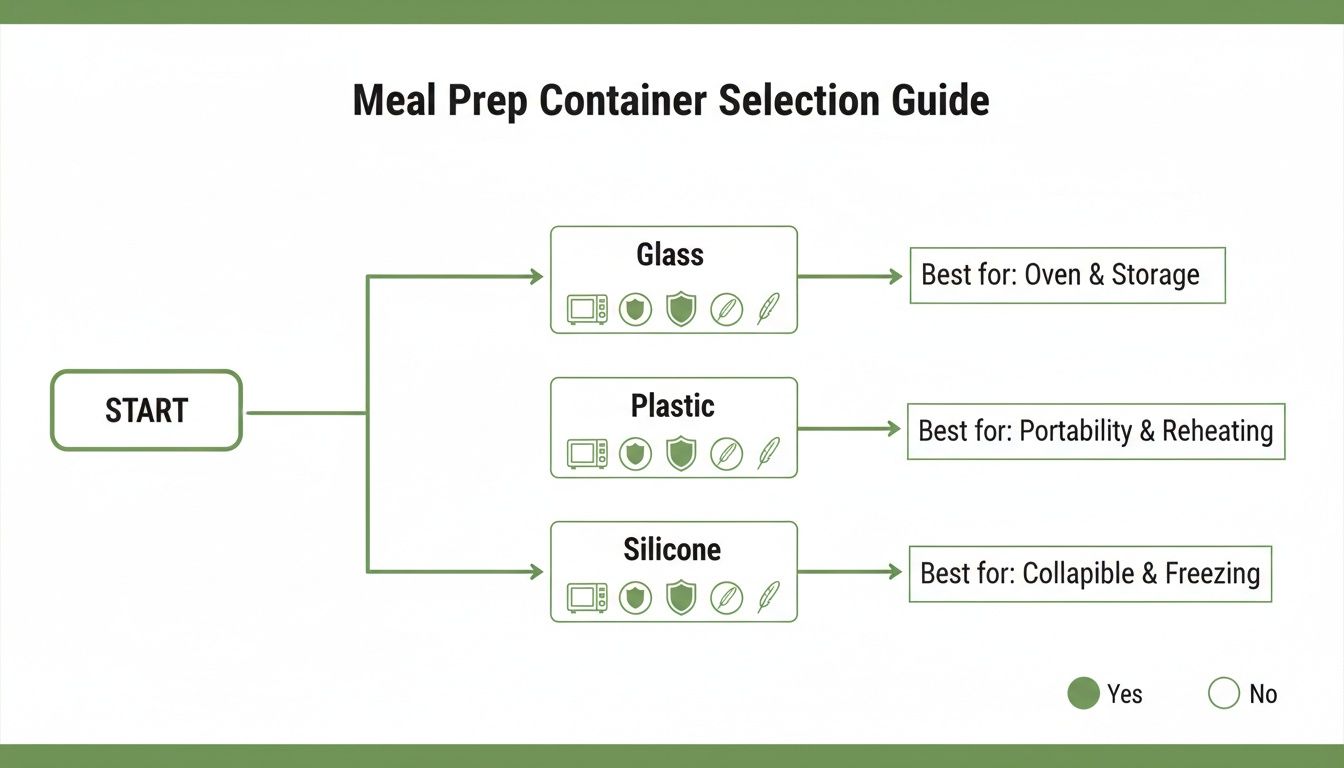
As you can see, what you plan to do with the container—heat it, carry it, or just hope it survives the week—is the biggest factor in choosing the right material.
Making the Smart Investment
So, which one wins? The truth is, a well-stocked kitchen needs a team, not a single hero. The real strategy is in having a mix of all three. This is a trend playing out everywhere, as more people are willing to invest a little more per container for something that will last.
This shift is obvious in market trends. The global meal prep container market is worth billions, and experts see it growing as people demand durable, non-plastic options. You can dive deeper into the market trends in meal prep containers to see how things are changing. The takeaway is clear: investing in a core set of high-quality glass and stainless steel, supplemented by some trusty plastic for specific jobs, is a smart long-term play.
Choosing Container Features That Actually Matter
So you’ve picked a material. High-five! But now comes the real fun: the features. This is where a container goes from being just a box to your secret weapon for a stress-free week. The right details can make you feel like a kitchen wizard, while the wrong ones will have you wrestling with leaky lids and an avalanche of plastic every time you open a cabinet.
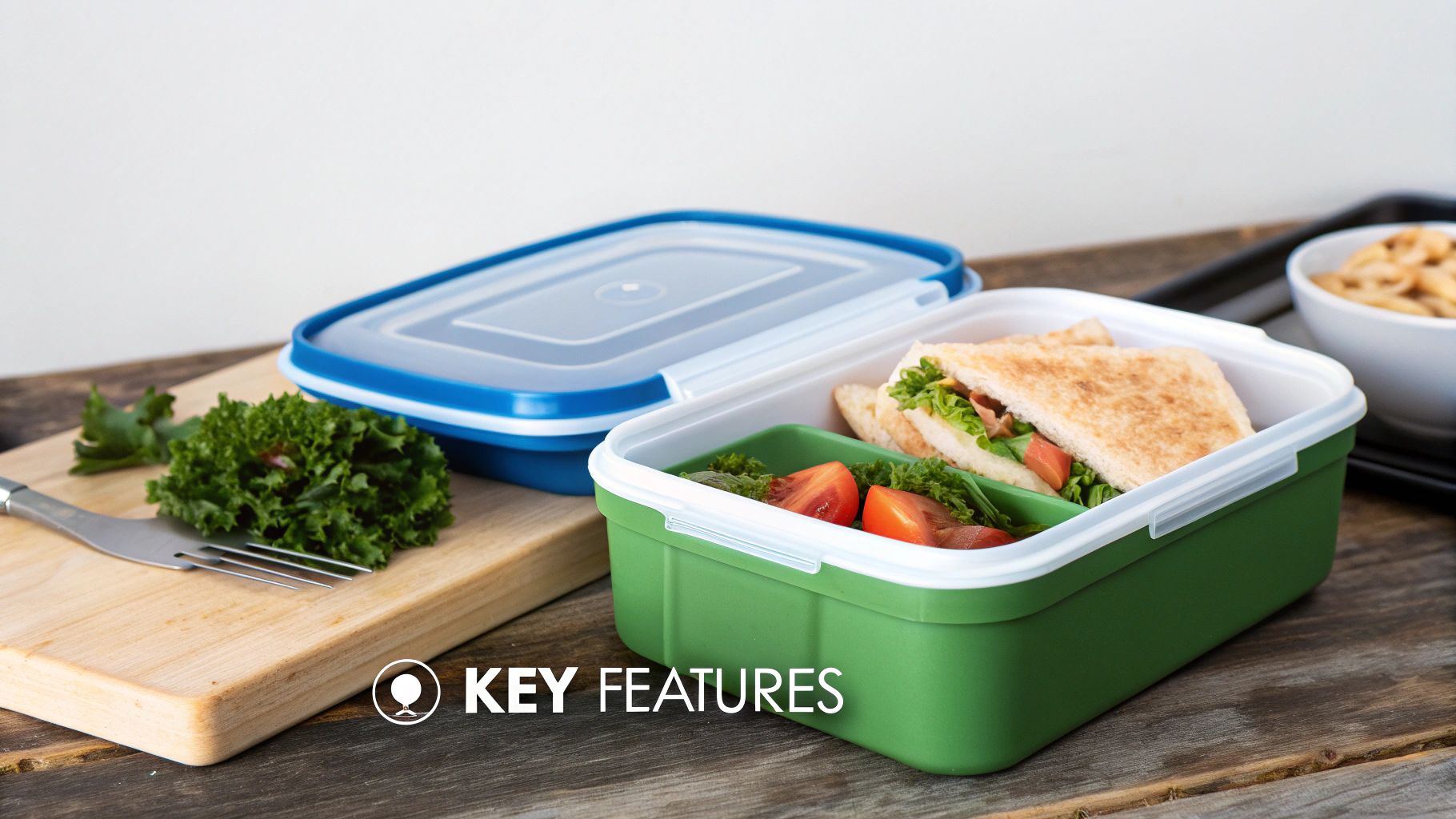
It’s easy to get lost in all the options. Let’s cut through the noise and figure out what a busy parent actually needs to make life easier.
Solving the Compartment Conundrum
First up, the great debate: one big section or a bunch of little ones? There’s no right or wrong answer here, just what’s right for the food you’re packing.
- Single-Section Containers: These are your workhorses for one-pot wonders. Think chili, a big batch of soup, a hearty casserole, or leftover pasta. They're straightforward, a breeze to clean, and perfect when you want all the flavors to mingle.
- Compartmentalized (Bento-Style) Containers: These are the holy grail for picky eaters and anyone who cringes at their sandwich getting soggy. They keep wet and dry ingredients separate and are brilliant for creating those balanced, snack-box-style lunches with a main, a fruit, and some crunchy veggies.
Parenting Pro Tip: Don't commit to just one style. Grab a few of each. Use your big single-section containers for prepping family dinners and save the bento boxes for school lunches or your own perfectly portioned midday meal. You’ll quickly see which ones you grab for most.
The Leakproof Promise Put to the Test
Is there anything worse than finding a soupy, yogurt-covered mess in your kid’s backpack? A "leakproof" sticker is easy to slap on a package, but the truth is in the lid design.
Look for a lid with four-sided locking tabs and a silicone gasket running along the inside rim. That combo creates a truly airtight seal that’s the gold standard for trapping liquids. When in doubt, do the shake test: fill a new container with water, snap the lid shut, and give it a good, vigorous shake over the sink. Peace of mind is worth it.
For salads, keeping the dressing separate is a non-negotiable for avoiding a wilted disaster. We have a whole bunch of tricks for this in our guide on how to meal prep salads that stay crisp all week long.
The Non-Negotiable Trio: Microwave, Freezer, and Dishwasher Safety
For any parent, these three are absolutely essential. Life's too short for containers that can't pull their weight. Always flip a container over and look for the little symbols that confirm it's safe for each.
- Microwave-Safe: A must-have for zapping leftovers. Glass is always a safe bet, and many BPA-free plastics are up to the task. Just remember, stainless steel should never, ever go in the microwave.
- Freezer-Safe: This is your ticket to long-term sanity. Prep meals weeks ahead of time and stash them in the freezer for those days when you just can’t.
- Dishwasher-Safe: This is the ultimate time-saver. At the end of a long day, being able to toss everything in the dishwasher is a game-changer for keeping your meal prep momentum going.
If you’re digging deep into what your containers are made of, especially with concerns about chemicals, it’s worth doing some reading on understanding non-toxic materials.
Smart Shapes for Sane Storage
Last but not least, let's talk about the unsung hero of container design: stackability. A cabinet that unleashes a tidal wave of mismatched containers and lids is no one's idea of a good time.
Square or rectangular containers are the clear winners for saving space. They nest into each other when empty and stack like perfect little bricks in the fridge, using every last inch of precious real estate. This isn't just my opinion—market data consistently shows that rectangular, divided containers are top sellers precisely because they’re so darn efficient.
Look for sets where the lids are interchangeable or designed to snap together. It’s a small thing, but it brings an unbelievable amount of calm to your kitchen. When you can find the exact container and lid you need without a frantic search, your whole day just starts off better.
Building Your Container Arsenal: A Strategy for Family Meal Prep
Forget the myth of the "one perfect container." It doesn't exist. The real secret to a killer meal prep system isn't finding one magic box, but assembling a specialized squad of containers. Think of it as building a small, efficient team where every player has a specific job, perfectly suited to how your family actually eats.
Instead of dropping a ton of cash on a giant, uniform set of plastic tubs that'll just clog your cabinets, let's get strategic. The goal is to build a curated collection that's way more useful and way less wasteful.
Match Your Containers to Your Family's Season of Life
Kids grow, and their eating habits change—fast. The containers that were perfect for purees are totally useless for a teenager's bottomless appetite. Your container collection needs to evolve right along with them.
For the Baby and Toddler Years:
This is the era of tiny portions and freezer Tetris. You're dealing with purees, mashed bananas, and little bites that need to be frozen in single servings and gently reheated without a fuss.
- Your Go-To Gear: Small (4-ounce) glass jars are fantastic. They’re a breeze to sterilize and don’t hold onto stains or smells. Silicone freezer trays with lids are also clutch—they let you pop out perfect little food cubes on demand.
- What to Skip: Big plastic containers. They’re just space hogs in the freezer for such small amounts, and many parents prefer to avoid microwaving plastic for their little ones anyway.
For the School Lunchbox Brigade:
Suddenly, it’s all about survival. Can it survive a backpack being used as a soccer ball? Can it prevent the catastrophic "my-carrots-touched-my-crackers" meltdown? Portability and separation are king.
- Your Go-To Gear: Stainless steel bento boxes are the undisputed champs here. They’re nearly indestructible, won't get funky smells, and the built-in dividers are a picky eater's dream.
- Pro Tip: Grab some tiny silicone cups to tuck inside for hummus, ranch, or yogurt. It’s the ultimate hack for preventing a soggy lunch apocalypse.
Scaling Up for Whole-Family Meals
When you graduate from packing individual lunches to prepping entire family dinners, your container game has to level up, too. This is where the heavy-hitters come in, the ones that make batch cooking a truly glorious, time-saving endeavor.
Think of it this way: your small containers are your daily troops on the front lines, while your large containers are your strategic backup, handling the big-batch missions that set you up for an easy week.
For Batch-Cooked Family Dinners:
You've just made a massive lasagna, a hearty casserole, or a big pot of chili. You need something that can go from oven to fridge to microwave without breaking a sweat.
- Your Go-To Gear: Large (9x13 or similar) oven-safe glass baking dishes with airtight lids are a must-have. Being able to prep, bake, store, and reheat in the exact same dish is a massive win for reducing cleanup.
- Budget Hack: Never underestimate the power of simple foil pans for freezer meals. They're cheap, stack like a dream, and you can toss them right in the oven. For more freezer-friendly ideas, check out our complete guide on the best containers for freezing meals.
Ultimately, building your perfect container collection is a marathon, not a sprint. Start by tackling your most common problem—whether that’s packing lunches or freezing baby food—and get a few great pieces for that specific job. From there, you can slowly build out your system, creating a personalized setup that makes your weekly meal prep feel less like a chore and more like a parental superpower.
Matching Your Workflow with the Right Containers
Owning a cabinet stuffed with the best meal prep containers is a fantastic start. But let's be real—it's like having a garage full of fancy power tools with no project in mind. The real magic happens when you turn that pile of boxes into a finely tuned, chaos-busting system. This is where you match your new gear to your family’s unique rhythm, creating a workflow that makes your week feel less like a sprint and more like a Sunday drive.
The secret is aligning your container choice with how you actually cook. Think about your go-to meals. Are you the king or queen of one-pot wonders, simmering up giant batches of chili, soup, or curry? If so, your workhorses will be those big, single-section glass containers that can hop from fridge to microwave without a second thought.
But what if your family craves variety, or you're assembling lunches with a million little components? For grain bowls with separate toppings or those deconstructed "lunchable" style meals for picky eaters, bento-style boxes are your absolute best friends. They make packing complex meals a breeze, keeping everything neat, tidy, and separate until showtime.
From Kitchen Shelf to Grab-and-Go System
A smart container strategy goes way beyond just filling them up; it’s about how you organize them to make life easier. An organized fridge is a happy fridge, and it's your secret weapon for making mornings less… well, chaotic.
A solid system transforms your refrigerator into a personal grab-and-go station. Here’s how you can turn your shelves from a danger zone of forgotten leftovers into a streamlined machine:
- Create Designated Zones: Dedicate one shelf or a specific part of your fridge just for prepped meals. When everything has a home, you and your family can find what you need in seconds. No more excavating behind that week-old jar of pickles.
- Stack and Label: This is where those space-saving rectangular containers really shine. Create neat stacks and use a little painter's tape and a marker to label the meal and the date. It saves you from the "what is this?" guessing game later in the week.
- Front-Load for Freshness: Put the meals that need to be eaten first right at the front. It’s a simple visual cue that helps everyone (including the kids) grab the oldest items first, which is a huge win for cutting down on food waste.
A well-organized meal prep system isn't just about saving time; it's about reducing your mental load. When you open the fridge and see clearly labeled, ready-to-go meals, you've eliminated one more decision from an already packed day. That’s a victory.
Keeping Your Containers in Top Shape
You've invested in good gear, and a little TLC will make sure it lasts for years. Proper cleaning isn't just about getting rid of germs; it’s about preserving the integrity of your containers, from preventing those stubborn tomato stains in plastic to keeping your glass sparkling clear. For a deep dive into the nitty-gritty, our guide on how to store prepped meals covers everything you need to know about keeping food fresh and your containers in prime condition.
And you're not alone in this—the demand for high-quality, reusable containers is a worldwide thing. While North America is currently the biggest market for meal prep containers, the fastest growth is actually happening in the Asia Pacific region. According to Precedence Research, this reflects a global shift toward durable, long-lasting products. So taking care of your premium glass and steel containers isn't just good for you, it's a smart move that's right on trend.
By thoughtfully connecting your containers to your meal plan and getting your fridge in order, you create a sustainable rhythm. This isn’t just about packing food into boxes; it’s about building a system that gives you back time and energy, one delicious, prepped meal at a time.
Top Container Picks for Every Parent
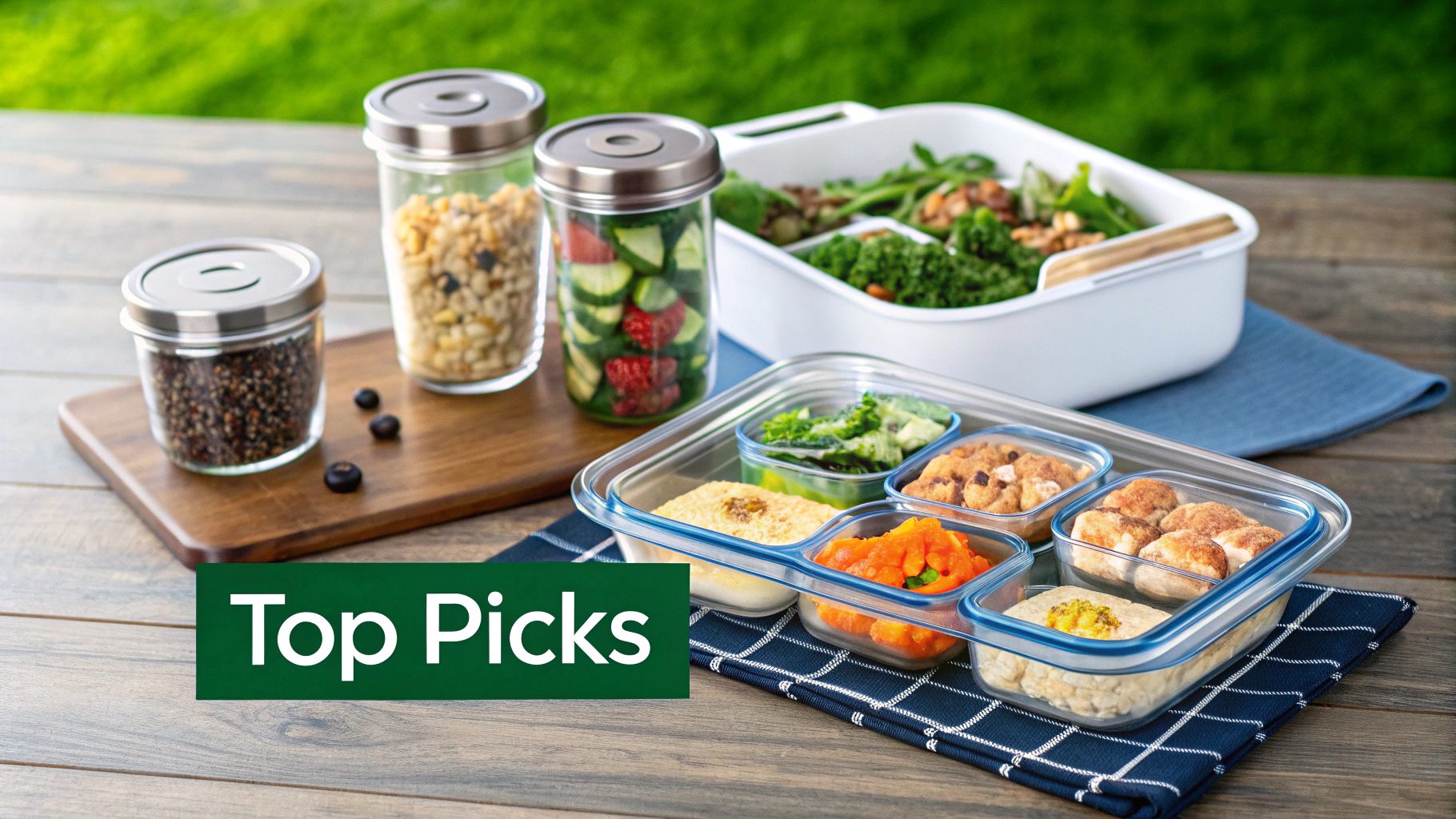
Alright, theory is great, but let's get down to the good stuff—naming names. After digging through a mountain of options, we've found the real MVPs that can actually handle the beautiful chaos of family life. These aren't just random picks from a catalog; they're our tried-and-true champions, each one a perfect solution for a specific parenting puzzle.
Think of this as your personal, curated shopping list. Every container here earned its spot by living up to the standards we've talked about: durability, real-world convenience, and features that genuinely make your life easier when you're just trying to get dinner on the table.
Best All-Around Glass Set for Family Dinners
For the parent who batch-cooks lasagna, big pots of soup, or roasted veggies, the Pyrex Simply Store Glass Set is a legend for a reason. These things are the absolute workhorses of the meal prep world.
Their non-porous glass laughs in the face of stubborn tomato sauce stains and garlicky smells that haunt lesser containers. You can literally bake a casserole, pop the lid on to store leftovers, and then reheat it in the microwave—all in the same dish. Fewer dishes to wash? That's a massive win. Sure, they're heavier, but their sheer versatility for home-based meals is second to none.
Most Durable Lunchbox for Active Kids
When your kid's lunchbox has to survive being used as a soccer ball, a drum, and occasionally, a lunchbox, the LunchBots Large Cinco Stainless Steel Bento Box is your hero. This thing is practically indestructible. It's surprisingly lightweight, totally non-toxic, and those five compartments are a picky eater's dream come true, keeping every snack in its own pristine little zone.
The biggest win here is the peace of mind. You’ll never worry about it cracking in a backpack, and the stainless steel won't hold onto last week's tuna salad smell. It’s an investment, but it's the kind you make once and then use for years.
This is the "buy it for life" lunchbox. It solves the soggy sandwich problem and the "my crackers touched my grapes" crisis in one fell swoop, making it a true sanity-saver for school mornings.
Best Budget-Friendly Set for Bulk Prep
So you need a whole army of containers but don't want to remortgage your house? The Rubbermaid Brilliance Food Storage Containers are your answer. Their superpower is the truly leakproof seal—we're talking airtight latches that pass the toddler-shakes-the-backpack test with flying colors.
They’re made from a BPA-free plastic called Tritan, which looks almost like glass and does a fantastic job resisting stains and odors, unlike its cheaper plastic cousins. They also stack like a dream, saving precious real estate in your fridge and cabinets, making them one of the best containers for meal prep when you need to organize a week's worth of food without creating chaos.
Best Versatile Option for Snacks and Freezing
For maximum flexibility, Stasher Reusable Silicone Bags are total game-changers. No, they aren't your typical boxy container, but their jack-of-all-trades nature earns them a permanent spot on our list. They are perfect for freezing pre-portioned smoothie packs, marinating chicken without the mess, or just throwing some crackers and cheese in for a trip to the park.
Because they’re made from pure platinum silicone, they can go straight from the freezer to the microwave to the dishwasher. They squash down to nothing when you’re not using them and replace countless disposable plastic bags over their lifetime. That makes them a win for both your kitchen and the planet.
Got Questions About Meal Prep Containers? We've Got Answers.
Stepping into the world of meal prep containers can feel like opening a kitchen cabinet and having everything tumble out. So many options, so many questions! Let's clear the air and tackle some of the biggest head-scratchers so you can prep like a seasoned pro.
One of the first debates everyone has is glass versus plastic. Are glass containers really safer? Look, high-quality, BPA-free plastic is generally safe for storing food. But when it comes to reheating, glass is the undisputed champ. It’s completely non-porous and won't hold onto that ghost of last week's curry or leach anything funky into your kid's mac and cheese when you nuke it.
Outsmarting Stains and Taming the Tupperware Tornado
Ah, the dreaded orange spaghetti-sauce stain on a brand-new plastic container. We’ve all been there. How can I stop my plastic containers from looking permanently haunted by tomato sauce? Here’s a brilliant little trick: before you spoon in that bolognese, give the inside of the container a quick spritz or wipe of cooking oil. It creates a protective little barrier that stops the color from clinging.
And then there's the storage nightmare—the avalanche of lids and bottoms that never seem to match. The secret to winning this battle is to break them up.
- Nest your containers: Stack them like Russian dolls, from largest to smallest.
- File your lids: Stand them up vertically in a plate rack or a narrow drawer divider. Trust me, it’s a game-changer.
- Pick a team: Stick to one main brand and style. Your future self will thank you when every lid fits every container.
Let's talk about freezing in glass, because it freaks a lot of people out. The fear of a shattered, icy mess is real, but easily avoided. The golden rule is to prevent "thermal shock." Never, ever take a glass dish straight from the freezer and pop it into a screaming-hot oven. Let it thaw in the fridge overnight. Also, when freezing liquids like soup, leave about an inch of headspace at the top. Liquids expand when they freeze, and that little bit of room is the difference between a perfectly prepped meal and a cracked container.
---
Ready to stop guessing what's for dinner? Meal Flow AI whips up personalized meal plans and zips the shopping list right over to Instacart for you. It's the ultimate shortcut to a stress-free week. Get started with Meal Flow AI today