The Ultimate Container Meal Plan Guide for Busy People
Tired of takeout? This container meal plan guide shows you how to prep healthy, delicious meals that save time and money. Start your journey today.
Love This Article?
Get personalized meal plans with recipes like this, automatically matched to your nutrition targets.
Tired of the daily "what's for dinner?" scramble? A container meal plan is your secret weapon. It's a brilliantly simple system that uses pre-portioned, color-coded containers to build balanced meals without ever having to count a single calorie. Think of it as a visual, grab-and-go roadmap for your nutrition that makes healthy eating feel effortless.
End Mealtime Chaos with a Container Meal Plan
If you've ever felt like you're a part of a massive movement toward smarter, healthier eating, you're not wrong. The food-container market was valued between USD 160–180 billion in 2024–2025 and is on track to blow past USD 265 billion by 2035. This isn't just a trend; it's a fundamental shift in how people approach their busy lives. People just like you are fueling this growth by demanding convenience and efficiency without sacrificing their health. You can explore the market trends yourself and see how your meal prep fits into a huge global picture.
The Container Meal Plan System at a Glance
Here's a quick look at how different containers correspond to food groups, helping you visualize a balanced daily intake.
| Container Type or Color | Represents Food Group | Common Foods |
| Green | Vegetables | Spinach, broccoli, peppers, salad greens |
| Purple | Fruits | Berries, apple slices, banana |
| Red | Proteins | Grilled chicken, lean beef, tofu, eggs |
| Yellow | Carbohydrates | Brown rice, quinoa, sweet potatoes, oats |
| Blue | Healthy Fats | Avocado, nuts, seeds, cheese |
| Orange | Dressings & Seeds | Vinaigrette, sunflower seeds, olives |
This table makes it easy to see how each piece of the puzzle comes together to form a complete, nutritious meal.
Why This System Just Works
The real genius of a container meal plan is how it eliminates decision fatigue. You know, that 5 PM brain fog where you can't possibly decide what to cook? Gone. Your meals are planned, prepped, and waiting for you. This isn't about a restrictive diet; it's about building a reliable framework for your nutrition that you can actually stick with.
Think of it as a strategic blueprint for your nutrition. You plan once, cook once, and enjoy delicious, healthy meals that are ready to go whenever hunger strikes.
What you're really doing is front-loading the effort. A couple of hours on a Sunday buys you a full week of stress-free, healthy eating. It’s a powerful way to build consistency and turn good intentions into solid habits.
Key Benefits of Container-Based Planning
This system is about so much more than just saving time. It's a game-changer for your wallet, your waistline, and your sanity.
- Effortless Portion Control: The containers do all the measuring for you. No scales, no cups, no hassle. This is hands-down the biggest hurdle for most people, and this system solves it elegantly.
- Reduced Food Waste: Ever find slimy spinach in the back of your fridge? When you plan your meals and buy only what you need, you use what you have. It’s that simple.
- Financial Savings: All those "quick" takeout lunches and impulse buys at the grocery store add up fast. Meal prepping keeps that cash right in your pocket.
- Nutritional Balance: The color-coded system is designed to give you a well-rounded mix of veggies, proteins, carbs, and healthy fats. It naturally guides you toward giving your body the fuel it actually needs.
Choosing Your Meal Prep Arsenal the Right Way
At the heart of any great container meal plan are, well, the containers. But let's be real—not all plastic and glass boxes are created equal. Walking down that aisle can feel like a pop quiz you didn't study for, so let's break it down. Think of me as your personal shopper for building a collection that actually lasts.
Your first big choice is the classic material showdown: glass vs. plastic.
Glass containers are the heavy-duty champs. They laugh in the face of tomato sauce stains, never hold on to the ghost of last week's curry, and can go straight from the oven to the freezer. The downsides? They’re heavier and can cost a bit more upfront.
Plastic, on the other hand, is the lightweight, budget-friendly option that won't shatter if you have a case of the butterfingers. The trick is to only buy BPA-free, high-quality plastic that can survive both the microwave and the dishwasher without turning into a sad, warped version of its former self.
Beyond the Basics: What Really Matters
Once you’ve picked your team, it’s time to get picky about the features that separate the good stuff from the "why can't I ever find the right lid?!" pile.
A truly leak-proof seal is an absolute must. I'm talking about those satisfying snap-lock lids with silicone gaskets. They give you the confidence to toss a container of soup into your work bag and not spend the whole commute worrying about a disaster.
Stackability is another unsung hero of the meal prep world. Containers designed to nest inside each other and stack securely are a godsend. They save you precious real estate in your fridge and cabinets, turning potential chaos into organized bliss.
A smart initial investment in a versatile set of containers can make your entire meal prep journey feel effortless. It’s the difference between a frustrating chore and a satisfying weekly ritual.
Sizing Up Your Collection
Variety is the spice of life, and it's also the key to a functional container collection. You're going to need more than just one standard size for everything. A solid starter pack should look something like this:
- Large containers (3-5 cups): Perfect for your main events like big salads, grain bowls, or sheet-pan dinners.
- Medium containers (1-2 cups): Ideal for side dishes, a hearty portion of overnight oats, or larger snacks.
- Small containers (1/2 cup or less): Absolutely essential for dressings, sauces, nuts, and seeds. Keep 'em separate until you're ready to eat!
This mix-and-match approach isn't just a niche habit; it's a global thing. While Asia-Pacific buys the most containers, North America is all about a few high-quality, reusable ones. In fact, the U.S. alone accounted for over 50% of a specific food storage container segment in 2024, which just goes to show how deep the meal prep culture runs here.
And remember, your prep gear goes beyond just the containers. It’s also crucial to consider the health aspects of what you're cooking with. To get started, you can explore some great options for the best cookware for health and safe cooking.
For a much deeper dive into picking the perfect containers, check out our complete guide on portion control meal prep containers. A well-chosen set is truly the foundation of your success.
How to Design Your Perfect Week of Meals
Alright, let's get to the good stuff—mapping out a container meal plan you'll actually want to eat past Wednesday. If you think meal prep is just sad, identical rows of chicken and broccoli, I'm here to tell you there’s a much better way. The real secret is creating a system that’s flexible, fun, and built for your actual life.
First things first, we need to give your week some structure. Think of it like being the executive chef of your own personal restaurant. My absolute favorite trick? Assigning a theme to each day. It sounds simple, but it's a total game-changer for keeping meals interesting and making grocery shopping a breeze.
Create Daily Meal Themes
This isn't about being super rigid. It's about setting up guideposts to make decisions easier. When you already know Tuesday is taco night and Friday is for fish, you've already won half the battle against decision fatigue.
Need some inspiration? Here’s a weekly theme I’ve used before to get the ideas flowing:
- Meatless Monday: Kick off the week with something plant-based, like a hearty lentil soup or some killer black bean burgers.
- Taco Tuesday: It’s a classic for a reason! This could be ground turkey bowls, fish tacos, or a massive taco salad.
- Wok Wednesday: Stir-fries are the undisputed champion of using up whatever veggies you have hanging around.
- Pasta Thursday: Who doesn't love pasta night? I usually go for a whole wheat pasta with some lean protein and a sauce packed with veggies.
- Fish Friday: You can't beat sheet-pan salmon with roasted asparagus. It’s delicious, simple, and the cleanup is practically non-existent.
Having a simple framework like this stops that dreaded "what's for dinner?" stare-down with your fridge. It gives you direction without boxing you in.
The Mix and Match Method
Now, let's build your meal-prep arsenal. Instead of cooking five identical meals, you're going to prep components. This is the absolute core of making a container meal plan you can stick with for the long haul.
I live by the "cook once, eat twice" (or three or four times!) philosophy. It's your ticket to freedom. By prepping versatile ingredients in big batches, you can build completely different meals all week long from the same core set of foods.
The goal is to prep a couple of options from each food group that you can combine in a bunch of different ways. For instance, a typical Sunday prep session for me might look like this:
- Two Proteins: A big batch of grilled chicken strips and some seasoned chickpeas.
- Two Carbs: A pot of fluffy quinoa and a tray of roasted sweet potato cubes.
- Four Veggies: Chopped bell peppers, steamed broccoli, roasted Brussels sprouts, and a huge container of mixed greens.
- One or Two Sauces: A simple vinaigrette and maybe a creamy Greek yogurt-based dressing.
With these building blocks ready to go, Monday's lunch could be a chicken and quinoa bowl with broccoli. On Tuesday? A totally different meal: a vibrant chickpea salad with sweet potatoes and peppers. You did the work once, but you get to enjoy variety all week.
Choosing the right containers for these components is crucial to keeping everything fresh.
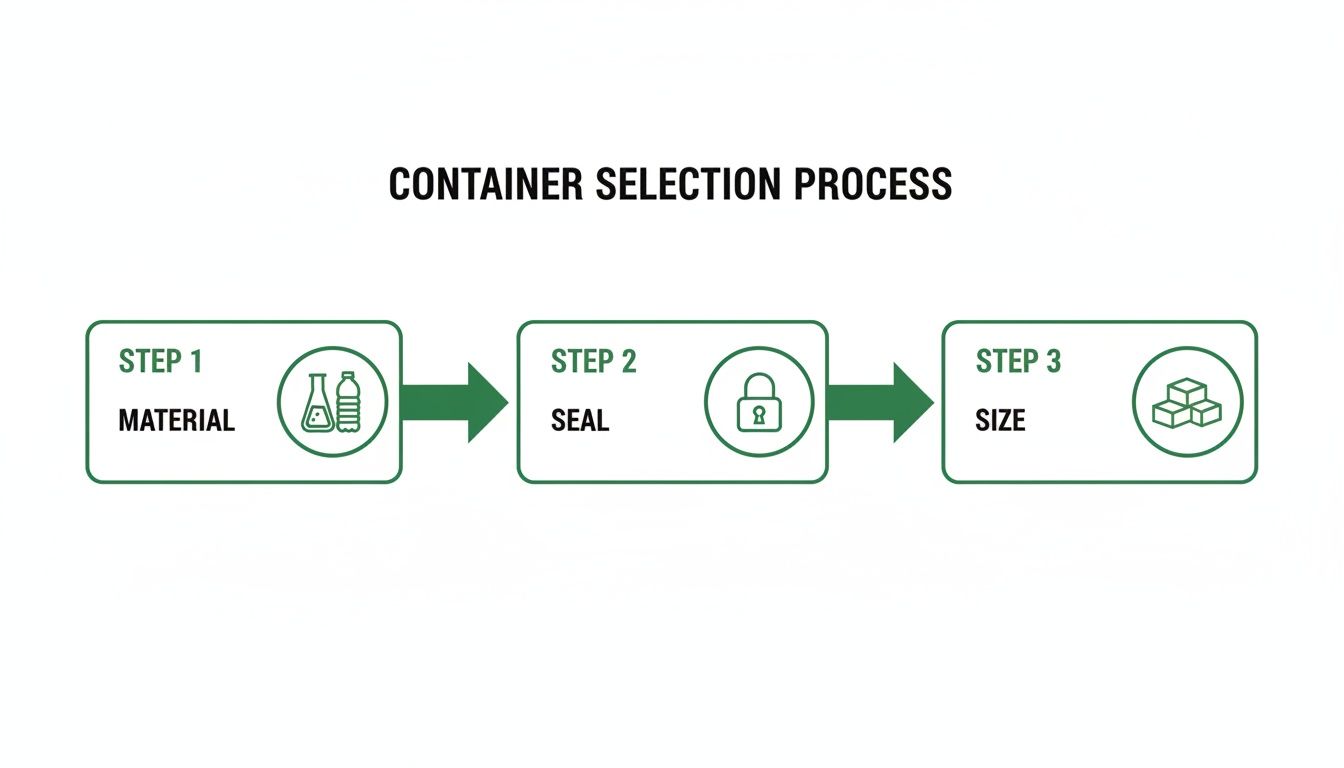
This process shows that everything from the material to the seal and size of your containers lays the foundation for successful meal prep.
Map Out Your Entire Day
One last thing—don't forget about breakfast and snacks! These are the supporting actors in your meal plan, but they're often where things go off the rails. Plan for them with the same intention you give your lunches and dinners.
Overnight oats, hard-boiled eggs, and pre-portioned bags of nuts or individual Greek yogurts are all fantastic grab-and-go options that slot perfectly into a container-based system. When you plan out every meal and snack, you’re not just prepping food; you’re creating a complete nutritional roadmap for a successful week.
A Sample 7-Day Container Meal Plan To Get You Rolling
Alright, enough theory. Let's see what this looks like on a plate—or, more accurately, in a container. Theory is great, but a ready-to-go blueprint is even better. Think of this as your roadmap for a ridiculously successful first week, wiping out all the guesswork from your shiny new container meal plan.
This plan is built for real, busy people who want amazing flavor without all the fuss. We're talking simple ingredients, straightforward instructions, and meals that are already perfectly balanced and portioned for your containers.
And you're not alone in this. The whole structured eating thing is exploding for a reason. The global meal kit market hit a whopping USD 16.2 billion in 2023 and is still climbing. That boom is driving innovation in the very containers we use for meal prep, as companies push for better, more durable packaging. It's a fun little tidbit you can learn more about if you're curious about market trends.
Your Week At A Glance
Here’s a bird’s-eye view of your week. Pay close attention to how dinner one night magically becomes lunch the next day. That’s the kind of efficiency we’re aiming for.
Sample 7-Day Meal Plan Schedule
Here's a sample schedule to get you started. It's a simple, visual guide to keep you on track and prevent that dreaded "what's for dinner?" panic at 5 PM.
| Day of the Week | Breakfast Idea | Lunch Idea | Dinner Idea |
| Monday | Greek Yogurt Parfait | Quinoa Salad (from Sunday) | Sheet-Pan Lemon Herb Chicken & Veggies |
| Tuesday | Overnight Oats with Berries | Leftover Chicken & Veggies | Turkey Taco Bowls with Black Beans |
| Wednesday | Scrambled Eggs with Spinach | Leftover Taco Bowl | Simple Baked Salmon & Asparagus |
| Thursday | Overnight Oats with Berries | Salmon Salad with Greens | Turkey Meatballs with Zucchini Noodles |
| Friday | Greek Yogurt Parfait | Leftover Turkey Meatballs | DIY Veggie Pizza on Whole Wheat |
| Saturday | Scrambled Eggs with Peppers | Leftover Pizza | "Clean Out the Fridge" Stir-Fry |
| Sunday | Whole Wheat Pancakes | Leftover Stir-Fry | Batch Prep: Quinoa, Chicken, Veggies |
This isn't set in stone, of course, but having a structure like this is a total game-changer for staying consistent and stress-free.
A Few Simple Recipes To Kick Things Off
To make this even easier, here are three of the core recipes from the plan. They’re simple, delicious, and absolutely perfect for batch cooking. Just remember to tweak the portion sizes to fit your specific container goals.
1. Sheet-Pan Lemon Herb Chicken & Veggies
This one is the undisputed king of one-pan wonders.
- Ingredients: Chicken breasts, broccoli florets, chopped bell peppers, red onion wedges, olive oil, lemon, dried oregano, salt, and pepper.
- Instructions: Just toss everything—veggies and chicken—with olive oil and seasonings right on a big baking sheet. Squeeze a whole lemon over the top, and bake at 400°F (200°C) for 20-25 minutes until the chicken is cooked through. Done.
2. Turkey Taco Bowls
You get all the incredible flavor of tacos without any of the mess.
- Ingredients: Lean ground turkey, taco seasoning, black beans, corn, chopped lettuce, pico de gallo, and a scoop of Greek yogurt.
- Instructions: Brown the turkey and stir in your taco seasoning. Then, just build your bowls: start with lettuce, and layer on the turkey, beans, corn, and pico. Save the Greek yogurt for a topping right before you dig in.
3. Overnight Oats with Berries
Seriously, this is the easiest breakfast you will ever, ever make.
- Ingredients: Rolled oats, your milk of choice (dairy or not), chia seeds, a little maple syrup, and a handful of mixed berries.
- Instructions: Dump the oats, milk, chia seeds, and syrup into a jar. Stir it up, pop the berries on top, and stick it in the fridge overnight. That’s literally it!
This isn't just a meal plan; it's your first step toward building a sustainable, stress-free relationship with food. Use this as your starting point, and don't be afraid to swap in your favorite ingredients!
These ideas are just the beginning, of course. When you’re ready for more inspiration, check out this fantastic list of 10 quick and tasty meal prep recipes for busy weeks to keep your menu fresh and exciting.
Pro Tips for Storage, Reheating, and Food Safety
Alright, you’ve done the hard work in the kitchen—now for the part that keeps your meals from turning into a sad, soggy mess by Wednesday. Let's make sure that delicious food you prepped stays delicious.
First things first: the cooldown. I can't stress this enough. Never, ever slap a lid on a container of piping-hot food and shove it in the fridge. That's a one-way ticket to a steamy, bacteria-friendly sauna. Let your meals hang out on the counter and cool down for about an hour before you seal them up. This simple step is non-negotiable for food safety.
Smart Storage Strategies
The way you pack your containers is everything. Think of it like building a delicious little fortress against sogginess. For salads, the dressing always goes on the very bottom, or better yet, in its own tiny container. Next, pile on the hard, non-absorbent veggies like carrots or bell peppers. Then come your proteins and grains, with the delicate greens sitting safely on top. This layering trick is your secret weapon against the dreaded lunchtime mush.
Your fridge itself is also a key player in this game. This is especially true if you’re relying on a smaller unit at the office or in a dorm room. Knowing the optimal mini fridge temperature settings can be a real game-changer for keeping your food fresh and safe all week long.
Your freezer is your best friend for getting ahead. Soups, stews, chilis, and even meatballs freeze like a dream. Doubling a recipe and freezing half is basically giving a high-five to your future, overworked self.
Reheating for Maximum Deliciousness
Sure, the microwave is fast, but it’s a blunt instrument. Using the right reheating method is the difference between food that tastes freshly made and the tragedy of rubbery chicken or crunchy, dried-out rice.
Here’s a quick-and-dirty guide I've learned from experience:
- Stir-fries & Pastas: The microwave works, but with a trick. Add a splash of water or broth, then cover the container with a damp paper towel. This steams the food back to life instead of just nuking it into oblivion.
- Chicken, Fish & Meats: The toaster oven or a skillet over low heat is your best bet here. It takes a few more minutes, but you'll be rewarded with food that isn't tough and chewy.
- Soups & Stews: Stovetop all the way. Reheating on the stove gives you total control, allowing for even heating and the chance to add a little more broth if it’s gotten too thick.
If you really want to level up and make your meals last, check out some more expert advice on how to store meal prep at https://mealflow.ai/blog/how-to-store-meal-prep. Following these simple rules ensures your Thursday lunch tastes just as incredible as it did on Sunday.
Got Questions About Container Meal Planning? I've Got Answers.
Jumping into a container meal plan is exciting, but let's be real—a few questions are bound to pop up. You’re definitely not alone in wondering about the nitty-gritty details. So, let’s clear up some of the most common snags right now so you can dive in feeling like a pro.
Think of this whole system as a flexible blueprint, not a set of ironclad rules. The entire point is to make your life easier, not to add another complicated thing to your to-do list.
So, How Many Containers Do I Actually Need?
Hold on before you go out and buy every single container set at the store. A fantastic starting point is just having enough for five days of lunches and maybe a couple of dinners. That means about 10 main meal containers will get you off to a great start.
From there, grab another 5-10 smaller ones. These are perfect for snacks, dressings, or breakfast goodies like overnight oats. Honestly, a starter set with 20-30 pieces in a few different sizes is usually the magic number. You can always grab more specific ones later once you know what you really use.
How Do I Keep My Food from Getting So… Boring?
Variety is everything. If you're going to stick with this, you can't eat the same sad chicken and broccoli every day. But here's the secret: the magic isn't in cooking a dozen different meals. It's in the sauces, dressings, and spices. They're a total game-changer. A simple lemon vinaigrette one day and a spicy yogurt sauce the next can make the exact same ingredients feel like two completely different dishes.
Your new best friend is the 'mix-and-match' method. Prep 2-3 proteins, 2-3 carbs, and a boatload of veggies. Each day, assemble them in different combos. It keeps your taste buds on their toes.
This little trick completely sidesteps flavor fatigue. Your weekly meal prep suddenly feels less like a diet and more like you've opened your own personal build-a-bowl restaurant.
Can This Whole Container Thing Actually Help Me Lose Weight?
You bet it can. This system is a secret weapon for weight loss because it automates the one thing most people struggle with: portion control. Suddenly, there's no need to obsessively count or measure every little thing. The containers do all that heavy lifting for you.
When you pre-portion your meals, you kill the guesswork and sidestep the temptation to overeat when you're starving. It naturally guides you toward building balanced meals packed with good-for-you stuff like veggies and lean protein. This keeps you feeling full and satisfied, making it an incredibly simple and effective way to hit your weight loss goals.
---
Ready to take the guesswork out of meal planning for good? Meal Flow AI generates personalized meal plans just for you and automatically sends the grocery list straight to Instacart.