Feeding a Family on a Budget Without Losing Your Mind
Discover how to master feeding a family on a budget. Learn practical meal planning, smart shopping strategies, and simple recipes to save money.
Love This Article?
Get personalized meal plans with recipes like this, automatically matched to your nutrition targets.
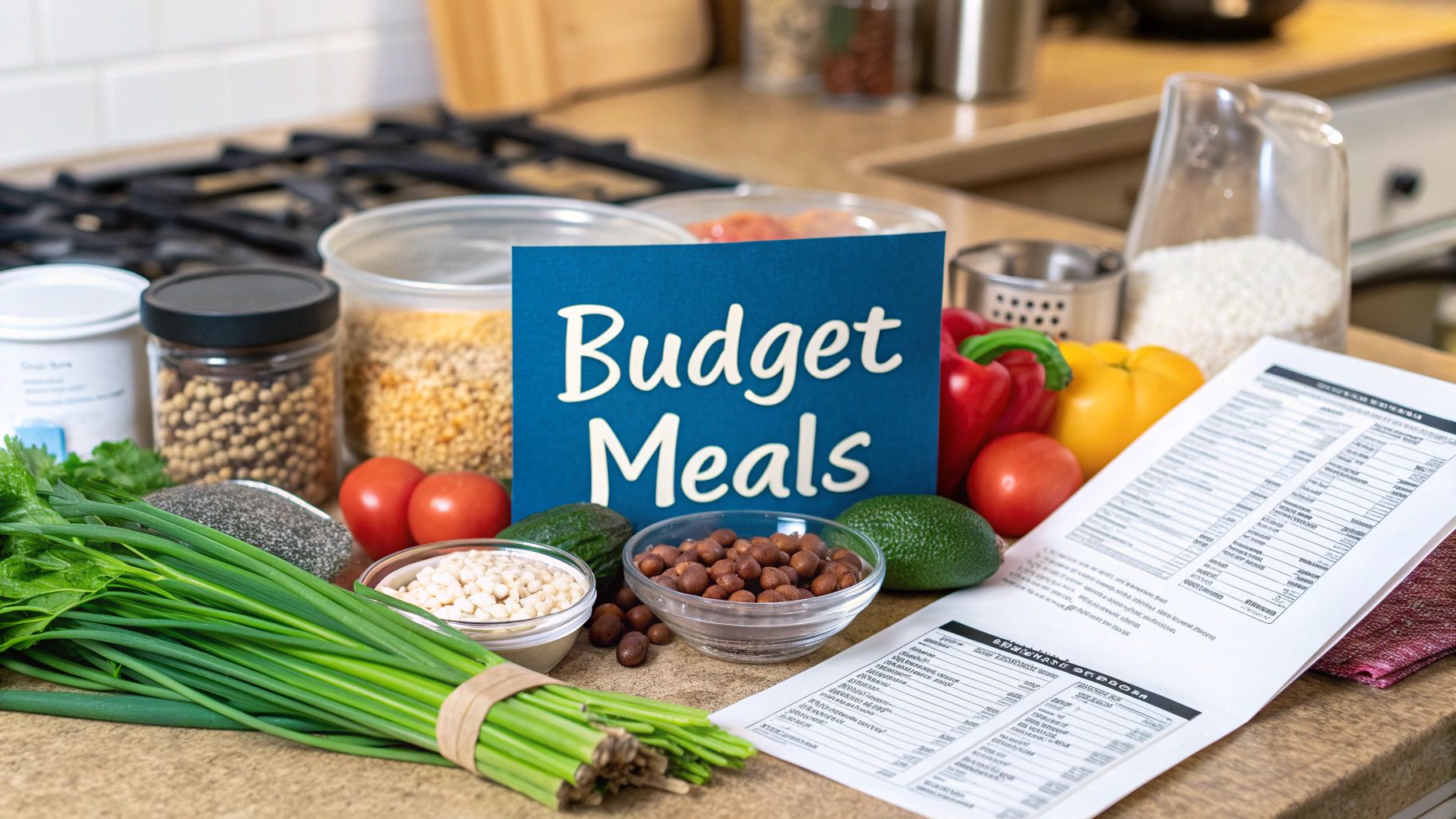
Feel like your grocery bill is staging a hostile takeover of your bank account? You’re in good company. The secret to feeding a family on a budget isn't some mythical, time-consuming coupon-clipping marathon. It’s about building a simple, repeatable system that works for you.
This guide is built around a powerful 4-pillar framework I swear by: Budget, Plan, Shop, Prep. Mastering this system will help you slash costs without sacrificing good food or your sanity.
Your Game Plan for Affordable Family Meals
Let's be real. Walking into a grocery store without a plan is like walking into a casino and expecting to leave with your life savings intact. The shiny packaging, the "deals" at the end of the aisle, the checkout-lane candy—it’s all designed to separate you from your money. That final receipt can feel like a punch to the gut.
If you’re nodding along, you’ve come to the right place.
This guide is not about surviving on ramen or spending your weekends deciphering cryptic coupon codes. It's about taking back control. It’s for busy parents who need a real, sustainable strategy to make healthy, affordable meals the new normal. We’re going to turn that kitchen chaos into confident calm.
The Four Pillars of Budget-Friendly Feeding
The whole system boils down to four key areas. Nail these, and you’ll fundamentally change how you handle your food expenses. Think of them as the legs of the table—if one is wobbly, the whole thing falls apart.
These four pillars are the core of our strategy. Let's break down what they are and what you'll be doing for each one.
The 4-Pillar Budget-Feeding Framework
| Pillar | What It Means | Key Action |
| Budget | Your financial North Star. You’ll know exactly how much you can spend *before* you even think about food. | Set a realistic weekly grocery budget and track your spending against it. |
| Plan | Your strategic map for the week. This is how you avoid the 5 PM scramble for takeout. | Create a weekly meal plan based on sales, what you have, and your schedule. |
| Shop | Your tactical mission. You’ll go in with a list and emerge with only what you need—and a happy wallet. | Shop your pantry first, then build a list and stick to it religiously. |
| Prep | Your time-saving superpower. A little work upfront saves you from expensive, last-minute decisions. | Batch-cook key ingredients or full meals to make weeknights a breeze. |
By focusing on these four areas, you create a system that runs on autopilot, saving you time, money, and a whole lot of stress.
This isn't just about saving money. It's about reducing that constant mental load of figuring out "What's for dinner?!" every single night. It’s about feeling empowered to feed your family well while staying firmly on budget.
Why This Strategy Flat-Out Works
The struggle to afford healthy food is real. Globally, about one-third of the world's population can't afford a healthy diet. For a family of four, the daily cost can soar past $67—a figure that’s just not realistic for so many of us. You can read more about these global food price challenges and how they impact families worldwide.
Our 4-pillar system tackles this head-on by building efficiency and wiping out waste. Instead of making a dozen small, frantic decisions every day, you make a few smart, strategic ones each week.
This guide will walk you through every pillar with actionable steps, templates, and real-world examples from my own kitchen. By the end, you’ll have a complete game plan for feeding your family on a budget—and you might even start to enjoy it.
Mastering Your Food Budget Like a Pro
Let's talk numbers, but not in a way that’ll put you to sleep. Seriously, getting a handle on your food budget is the single most powerful thing you can do to feed your family for less. Think of it as your financial roadmap—it gives you clarity and control before you even think about stepping into a grocery store.
The point here isn't about restriction; it's about awareness. Most of us would be genuinely shocked if we saw where our food money actually goes. Those daily coffees, last-minute takeout orders, and impulse buys at the checkout add up faster than we can say "over budget."
Your One-Week Spending Snapshot
Before you can set a goal, you need to know where you're starting. Forget the complicated spreadsheets for now. Just for one week, track every single dollar you spend on food and drinks.
I mean everything:
- Groceries: The big weekly shop.
- Takeout & Restaurants: Pizza night, drive-thru lunches, date night dinner—it all goes on the list.
- Coffee & Snacks: That morning latte, the vending machine candy bar, the after-school ice cream run.
Use a little notebook, the notes app on your phone, or just snap pictures of your receipts. The method doesn’t matter, but the data does. At the end of seven days, tally it all up. The total might make your eyes water a bit; it’s almost always higher than we guess. This number is your starting line, not a reason to feel bad.
Find and Plug the Spending Leaks
Okay, now look at your list. Where did the money disappear? You're looking for the "leaks"—those little, often mindless, expenses that drain your bank account. The usual suspects are last-minute food delivery because you're too wiped to cook, or those extra trips to the corner store for just one or two things (that turn into five or six).
Just seeing these habits is half the battle. This is where you can make some real changes without feeling like you're sacrificing everything. Maybe it means brewing coffee at home four days a week instead of five. Or planning one awesome pizza night instead of ordering three times on a whim.
Your budget isn’t a cage; it’s a tool. It gives you permission to spend on what matters by showing you where your money is unintentionally disappearing. Gaining this control is the key.
Set a Realistic Weekly Target
With your spending snapshot in hand, it's time to set a goal you can actually hit. If you’re currently spending $250 a week, trying to slash it to $100 overnight is just setting yourself up for failure (and a whole lot of frustration).
A much smarter approach is to aim for a 15-20% reduction to start. So, if your baseline is $250, a new target of $200-$212 feels doable. You can always tighten it up later once you get the hang of it.
This is more important than ever. With food prices constantly climbing, a firm budget is your best defense. US food-at-home prices are on the rise, and it hits lower-income families the hardest. One analysis showed that the most deprived families may need up to 70% of their disposable income just to afford a healthy diet for their children. To see the official data, you can check out the USDA food price outlook for the latest trends.
A huge piece of this puzzle is building and managing a pantry on a budget, which makes sure you've always got the basics on hand.
Simple Budgeting Methods That Actually Work
You don’t need to be an accountant for this. The simplest systems work best because they're the ones you'll actually stick with.
- The Cash Envelope System: This is old-school for a reason—it works. Decide on your weekly budget, pull out that amount in cash, and stick it in an envelope. When the cash is gone, it’s gone. It's a brilliantly simple, visual way to stop overspending.
- The Digital Envelope: Not a cash person? No problem. Use a budgeting app to create virtual "envelopes" for your food spending. A lot of banking apps even have this feature now and will send you alerts when you're getting close to your limit.
- The Weekly "Reset": Get a dedicated debit or prepaid card just for groceries. Every Monday, load your weekly budget onto it. This keeps your food money completely separate from everything else and makes tracking a breeze.
At the end of the day, the best system is the one you don’t ditch after a week. Need more ideas? Our guide on how to save money on meals is packed with more tips. Pick a method, give it a real shot for a month, and just watch how this newfound clarity changes the game.
Strategic Meal Planning and Smarter Shopping
Let's be real: walking into a grocery store without a plan is like throwing your wallet into a black hole. It’s where good budget intentions go to die, usually slain by a BOGO deal on artisanal chips or the sheer panic of the 5 PM "what's for dinner?" scramble.
Strategic meal planning isn't about creating a rigid, joy-sucking food schedule. It's about being clever, proactive, and taking back control of your grocery bill and your sanity. This is the pivot point where you stop reacting to hunger pains and start directing your food dollars with laser-like focus.
Adopt the Reverse Meal Plan
Most people find a cool recipe online, list the ingredients, and then head to the store to buy them. The budget-savvy way? You flip that script completely.
Welcome to the reverse meal plan. It’s a game-changer. You build your weekly menu around three simple things:
- What's on sale: Before you even think about recipes, pull up your grocery store's weekly flyer or app. If chicken thighs are 50% off this week, guess what's for dinner? That's right.
- What's in season: Strawberries in December? Nope. Seasonal produce is always cheaper, tastes a million times better, and hasn't been shipped across the globe.
- What you already have: This is my favorite part. Go "shopping" in your own pantry, fridge, and freezer first. That lonely can of black beans, the half-bag of quinoa, and that forgotten frozen ground turkey? They’re the foundation for your first few meals.
This simple switch forces you to get a little creative and guarantees you're buying ingredients at their absolute lowest price.
Create a Recipe Rotation and Embrace Theme Nights
No one has the mental bandwidth to come up with a brilliant, unique meal every single night. That's a one-way ticket to burnout. Instead, build an arsenal of 15-20 family-approved meals that you know everyone will eat. These are your go-to, no-fail dinners.
To make it even easier, introduce theme nights. This adds a little structure and fun, and it practically automates your planning.
- Taco Tuesday: Use ground turkey, lentils, or shredded chicken for a cheap, cheerful, and customizable meal.
- Pasta Wednesday: A simple marinara with a side salad is incredibly affordable and always a crowd-pleaser.
- Soup & Sandwich Friday: The perfect way to use up any leftover veggies from the week in a big, comforting pot of soup.
Having these themes as a backbone takes the guesswork out of the daily grind. Your weekly planning session will suddenly take minutes, not hours.
The goal isn't just to make a plan; it's to make a plan so simple and effective that you actually stick to it. Consistency is what drives the biggest savings over time.
This flowchart breaks down the whole process. You track your spending, find the money leaks (looking at you, daily coffee runs), and set a goal you can actually hit.
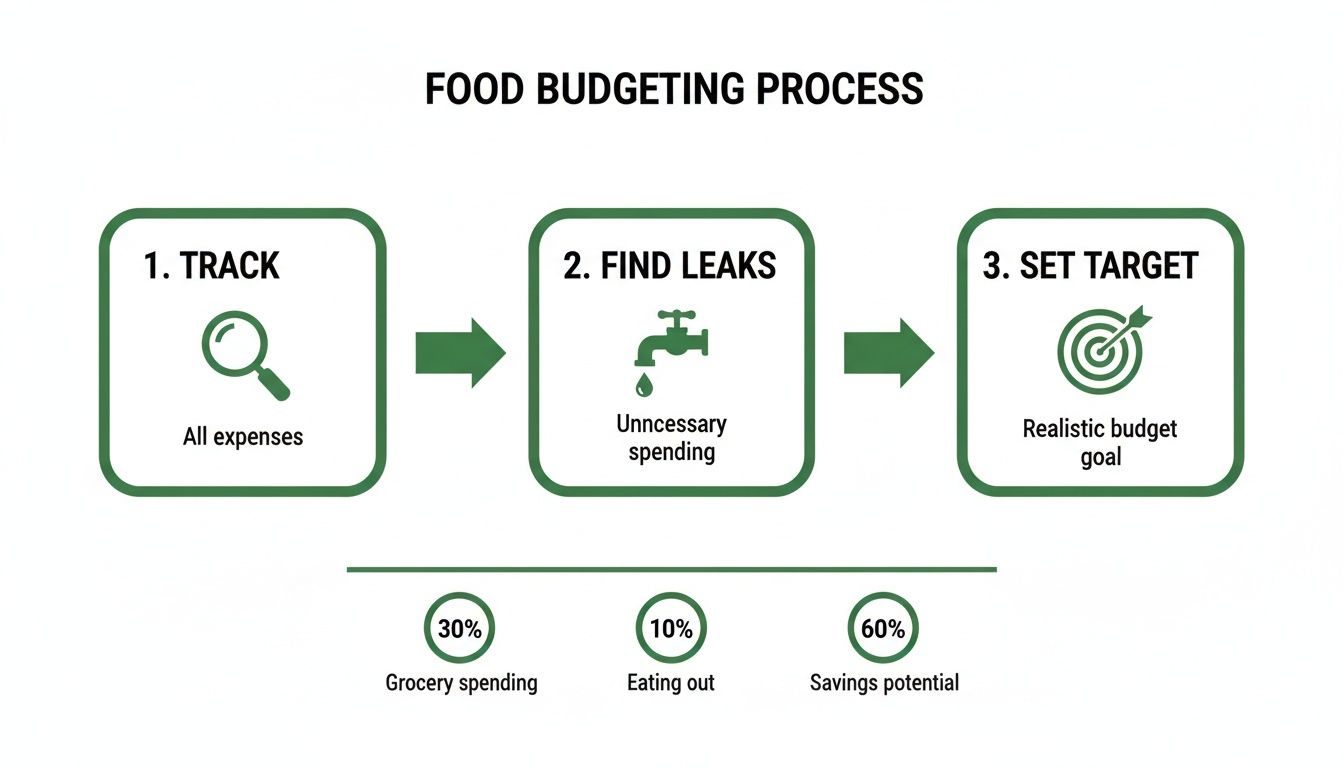
When you see it laid out this simply, it’s clear that getting control of your food budget is all about awareness and a solid, straightforward plan.
The "Cook Once, Eat Twice" Mindset
Leftovers are not a punishment. They are a strategic advantage in the fight against budget-busting takeout. The "Cook Once, Eat Twice" philosophy is your best friend for maximizing time and ingredients.
Roasting a chicken for dinner? Throw two in the oven. The second one becomes chicken salad for tomorrow's lunch, gets shredded for tacos, or tossed into a quick veggie stir-fry later in the week. Making a giant pot of chili? That's dinner tonight and a delicious topping for baked potatoes tomorrow. It's a beautiful thing.
Turn Your Plan into a Master Shopping List
Okay, your meal plan is set. Now, turn it into an ironclad shopping list—and for the love of all that is holy, organize it by store aisle. Seriously. Group all your produce, dairy, meats, and pantry items together.
This simple trick transforms your grocery trip from a meandering, temptation-filled stroll into a focused, efficient mission. You get in, you get what you need, and you get out.
If you want to put this entire process on easy mode, checking out a dedicated meal planning and shopping list app can be a huge help, automating everything from finding recipes to generating that aisle-by-aisle list.
Here's an example of a weekly plan that puts all these ideas into practice. It’s designed to be delicious, affordable, and minimize waste by using leftovers for lunch.
Sample Weekly Budget Meal Plan
| Day | Breakfast | Lunch (Leftovers) | Dinner |
| Monday | Oatmeal with berries | Leftover Chicken Chili | Big Batch Chicken Chili with Cornbread |
| Tuesday | Scrambled eggs | Leftover Chicken Chili | Chicken Tacos (using leftover shredded chicken) |
| Wednesday | Yogurt and granola | Chicken Salad Sandwich | Pasta with Homemade Marinara & Salad |
| Thursday | Cereal | Leftover Pasta | Sheet Pan Sausage & Veggies |
| Friday | Toast with peanut butter | Leftover Sausage & Veggies | Homemade Pizza Night |
| Saturday | Pancakes | Leftover Pizza | Lentil Soup & Grilled Cheese |
| Sunday | Smoothies | Leftover Lentil Soup | Sunday Roast Chicken with Potatoes |
This isn't about deprivation; it's about smart planning. With a little forethought, you can eat incredibly well without breaking the bank.
Winning the War on Food Waste at Home
Picture your kitchen trash can as a tiny, silent leak in your bank account. That wilted spinach, those forgotten leftovers, the fuzzy strawberries—every single bit is money you’re literally just tossing out. For a family on a budget, food waste is the silent killer of even the most well-intentioned meal plan.
But this isn't about guilt. It's about strategy. It's about wringing every last drop of value from the groceries you already paid for. When you stop throwing food away, you're essentially giving your budget a raise without earning an extra cent.
The reality gets even starker when you zoom out. Globally, a shocking one-third of all food produced gets wasted every year. That’s a mind-boggling 1.3 billion tons of food that could go to those in need, as you can see in recent reports on the global food crisis. Tackling waste in your own kitchen is a small, but incredibly powerful, place to start.
Master Your Fridge and Pantry
Your first line of defense is organization. Seriously. A chaotic fridge is where good food goes to die. The goal is simple: see what you have, so you actually use it.
The classic strategy here is "First-In, First-Out" (FIFO). It sounds technical, but it’s dead simple. When you get home from the store, just slide the older stuff to the front and tuck the new groceries in behind. This little habit ensures you’re always grabbing the items that need to be used up first.
Ready to level up? Create an "Eat Me First" box. Grab any clear container and stick it on a prominent shelf in your fridge. Anything nearing its expiration date or starting to look a little sad goes in here—that last bit of yogurt, half an onion, leftover chicken, berries on their last leg. Before you even think about cooking or grabbing a snack, you check this box first. It works wonders.
Give Scraps a Second Life
So many of the food bits we automatically toss are actually packed with flavor and potential. Learning to use these "scraps" is a pro-level move for any budget-conscious cook.
- Veggie Scrap Broth: Keep a big zip-top bag in your freezer. All week long, throw in your onion peels, carrot ends, celery tops, and mushroom stems. Once it's full, just simmer the contents with water for a few hours. Boom—delicious, and completely free, vegetable broth.
- Wilted Greens Revival: Don’t you dare throw out those limp greens! A quick 15-30 minute soak in a bowl of ice water can often bring them right back to life, making them perfectly crisp for a salad. If they're too far gone for that, they're still fantastic for wilting into soups, stews, or pasta sauces.
- Stale Bread Saviors: Stale bread is an ingredient, not garbage. Cube it up for homemade croutons, blitz it into breadcrumbs, or use it as the perfect base for a killer French toast casserole.
By transforming what most people see as trash into a real resource, you’re not just saving money—you’re becoming a more creative and resourceful cook. It’s a total mindset shift.
Smart Storage is Money in the Bank
How you store your food can be the difference between it lasting three days or three weeks. A few simple tweaks can dramatically extend the life of your produce, which is one of the easiest ways to reduce food waste at home and protect your grocery investment.
For instance, did you know that many fruits like apples, bananas, and tomatoes release ethylene gas? This gas acts like a ripening hormone, causing nearby veggies like lettuce, carrots, and broccoli to spoil much faster. Just storing them separately makes a huge difference.
Here’s a quick-and-dirty guide to making things last longer:
| Food Item | Best Storage Method | Pro Tip |
| Herbs | Treat them like a bouquet of flowers. Trim the stems and pop them in a jar with an inch of water. | Loosely cover them with a plastic bag in the fridge to create a little greenhouse effect. |
| Berries | Don't wash them until you're ready to eat. Store them in a single layer on a paper towel inside a container. | A quick rinse in a 1-part vinegar, 3-parts water solution before storing kills mold spores. |
| Potatoes/Onions | Keep them in a cool, dark, dry spot like a pantry. Never store them together! | Onions make potatoes sprout way faster. Keep them on opposite sides of the pantry if you can. |
| Leafy Greens | Wash them, dry them completely, then wrap them in a paper towel before bagging or containerizing. | Moisture is the enemy here. The paper towel soaks up any excess, preventing those dreaded slimy leaves. |
When you treat food storage with the same importance as meal planning, you close the loop on your budget-feeding system. You make sure every dollar you spend actually ends up nourishing your family instead of just feeding the local landfill.
Your Batch Cooking Playbook for Busy Nights
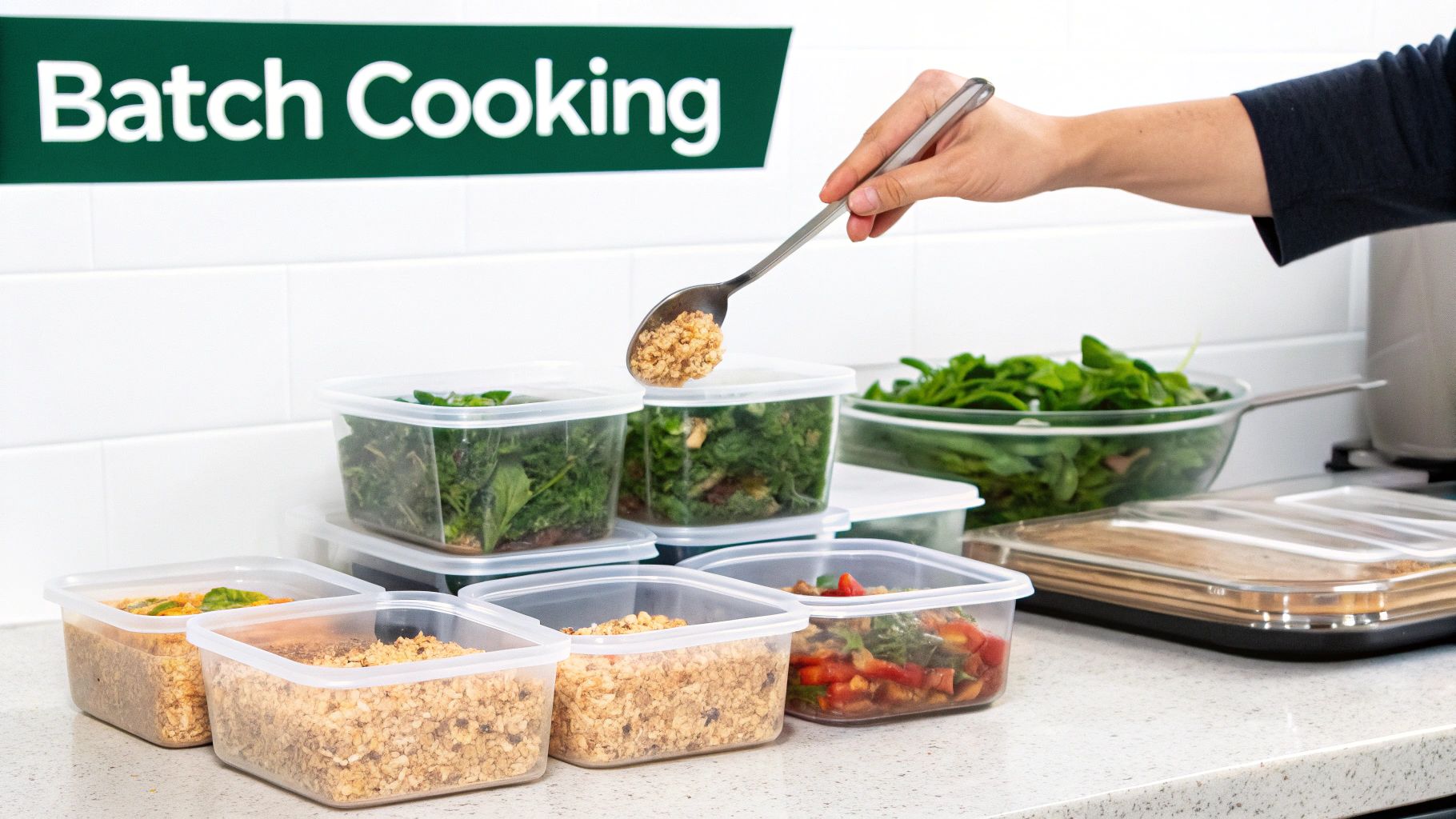
Let’s be real. It’s 6 PM, you just walked in the door after a marathon day, and the kids are starting to circle the kitchen like hungry sharks. The absolute last thing you want to do is start chopping onions and browning meat from scratch.
Now, imagine a different scenario. You open the fridge, pull out a few containers of pre-cooked goodness, and have a delicious, home-cooked meal on the table in minutes. That’s not a fantasy. That's the power of batch cooking.
This isn't about giving up your entire Sunday to be a short-order cook. Think of it as a strategic, two-hour investment that pays you back all week long with stress-free dinners and serious cash savings. By prepping the building blocks of your meals ahead of time, you create an arsenal that keeps you far, far away from the expensive drive-thru lane.
The Real Secret: Component Prepping
Forget trying to cook five completely different, elaborate meals to freeze. That’s a one-way ticket to burnout. The smartest, most sustainable way to do this is component prepping.
It’s simple: you just cook large batches of versatile, basic ingredients that can be mixed and matched all week. This approach is less work and gives you incredible flexibility. You're basically creating your own personal meal kit service, right in your fridge. When dinner time hits, you’re not cooking; you’re just assembling.
Here are the heavy hitters to get you started:
- Proteins: Brown a few pounds of ground beef, slow-cook a big batch of shredded chicken, or hard-boil a dozen eggs. Done.
- Grains: Make a giant pot of rice, quinoa, or pasta. These are the unsung heroes that form the base of so many easy meals.
- Veggies: Roast a huge sheet pan of broccoli, sweet potatoes, and bell peppers until they're caramelized and delicious. Chop up some raw onions, carrots, and celery so they’re ready to be tossed into anything.
With these building blocks on hand, a fantastic "home-cooked" meal is suddenly just 10 minutes away.
Make Your Freezer Your Best Friend
Your freezer is more than just a place for ice cream and forgotten popsicles. It's a time capsule for amazing food, locking in flavor and nutrients while saving your budget from the tragedy of food waste. A well-stocked freezer is your secret weapon against last-minute takeout temptations.
Some meals were just made to be frozen. Think big-batch soups, stews, and chilis—they actually taste even better after the flavors have had a chance to hang out together. Casseroles like baked ziti or chicken and rice are also perfect candidates.
The trick is to portion before you freeze. Don't just dump a giant vat of chili into a container. Store it in family-sized or individual portions. Thawing becomes a thousand times easier, and you won’t have to defrost a whole brick of food for just two people.
Don't Skip This: Smart Storage and Labeling
An unlabeled container in the freezer is a mystery box of sadness that you’ll probably avoid until it’s too late. Please, for the love of all things delicious, get a roll of masking tape and a permanent marker.
Label everything with three simple things:
- What it is: (e.g., "Shredded Chicken")
- When you made it: (e.g., "Oct 26")
- How much is in there: (e.g., "4 servings")
This takes 10 seconds and saves you so much guesswork and waste. For storage, freezer-safe bags and airtight containers are your friends. The goal is to banish freezer burn, which happens when air gets to the food. Squeeze every last bit of air out of those bags before you seal them!
A pro tip for soups and broths: freeze them flat in freezer bags. Once they’re solid, you can stand them up and "file" them like books. It's a game-changer for freezer space.
Your First Batch-Cooking Mission
Ready to dive in? Don't go crazy. Keep it simple. Pick an afternoon, put on a great playlist, and just focus on three core components. Here’s a super-easy plan to get you started:
| Task | Instructions | Time Estimate |
| 1. Cook a Protein | Toss 3 lbs of boneless, skinless chicken breasts in a slow cooker with a cup of broth or salsa. Cook on low for 4-6 hours, then shred it with two forks. | 15 mins prep |
| 2. Prep a Grain | Cook a big pot of brown rice or quinoa on the stove. Just follow the package directions. Let it cool completely before you store it. | 5 mins prep |
| 3. Roast Veggies | Chop up a mix of broccoli, bell peppers, and onions. Drizzle with olive oil and your favorite seasonings, then roast on a sheet pan at 400°F (200°C) for 20-25 minutes. | 20 mins prep |
That’s it! With these three things prepped and ready, you've unlocked countless meal possibilities for the week. Think chicken tacos, burrito bowls, quick stir-fries, or loaded salads. This little bit of effort completely flips the script on your weeknights, making feeding your family on a budget feel surprisingly easy.
Your Top Budget Meal Questions, Answered
Alright, so you’ve got the system—budget, plan, shop, prep. But let's be real, life loves to throw a wrench in even the most perfect plans. What do you do when your kid looks at the beautiful lentil soup you made and acts like you've served them a plate of dirt? How do you really know if you're getting a good deal?
Let's get into the nitty-gritty questions that always pop up. Answering these is what turns a frustrating week into a triumphant one.
"Help! My Kids Are So Picky!"
Ah, the eternal struggle of the family cook. You spend time and money on a meal, only for a small human to declare it "yucky" without even trying it. The secret is to stop being a short-order cook without starting a dinnertime war.
My favorite tactic? "Build-Your-Own" night. It’s genius.
Think taco bars, loaded baked potato stations, or personal pizzas on naan bread. You lay out a bunch of affordable, prepped ingredients, and everyone gets to be the boss of their own plate. It gives kids a sense of control, which makes them way more likely to actually eat what they’ve made.
Another go-to is pairing a "safe" food with a new one. Serve a little bit of the new dish alongside something you know they love, like applesauce or a dinner roll. The rule is they have to try one bite of the new thing. No pressure, no battle, and they won't go to bed hungry.
"What's the Absolute Cheapest Food I Can Buy?"
When the budget is extra tight, you need to know which ingredients give you the most bang for your buck. These are the unsung heroes of the frugal kitchen.
- Legumes: I'm talking lentils, chickpeas, and all kinds of dried beans. A one-pound bag of pinto beans costs pennies per serving and can be the base for chili, burritos, or soups for days.
- Root Veggies: Potatoes, carrots, and onions are your best friends. They're dirt cheap, last forever, and can be roasted, mashed, fried, or thrown into just about anything to make it more filling.
- Eggs: For high-quality protein, you can't beat the price of eggs. They’re a lifesaver for quick breakfasts, lunches, or a simple "brinner" (breakfast for dinner).
- Oats: A big canister of rolled oats is one of the cheapest things in the grocery store. It’s not just for breakfast—use it as a filler in meatloaf or for baking healthy muffins.
If you build your weekly menu around these staples, you’ll see your grocery bill drop. It’s that simple.
"Are There Programs That Can Help Us Out?"
Absolutely, and you should never hesitate to use them. When money is tight, getting a little support can be a game-changer for your family's health and your own peace of mind.
Government programs exist specifically for this reason. For instance, many families qualify for the Special Supplemental Nutrition Program for Women, Infants, and Children. It’s worth checking out the WIC program details to see if you're eligible for that support. Local food banks and community pantries are also incredible resources that exist to help families just like yours.
Let me be clear: there is zero shame in seeking or accepting help. These programs are there to support families. Using them is a sign of strength and a smart move for your family's well-being.
"How Can I Save Money If I Hate Couponing?"
I hear you. Couponing can feel like a part-time job. The great news is, you can save a ton of money without ever touching a pair of scissors. The biggest savings come from smart strategy, not tiny pieces of paper.
Your best friends are the weekly store flyer and the store's app. Plan your meals around what's on the front page. If chicken thighs are $0.99/lb or pasta is BOGO, that's what you're eating this week! This approach saves way more than a $0.50 coupon for some brand-name product you didn't even need.
Also, embrace store brands. Seriously. In most cases, the generic mac and cheese or canned tomatoes are made in the exact same factory as the pricey name-brand stuff. You're just not paying for their marketing budget. Combine that with a solid meal plan, and your savings will blow any coupon-clipping marathon out of the water.
---
Ready to put your entire meal planning and grocery shopping process on autopilot? Meal Flow AI generates personalized meal plans based on your family's tastes and automatically creates a shopping list you can send straight to Instacart. Stop the weekly scramble and start saving time and money. Try Meal Flow AI today!