Your Ultimate Food Macros List for Easy Meal Planning
Discover the ultimate food macros list for effortless meal planning. Get our printable cheat sheet and learn how to simplify tracking for your family.
Love This Article?
Get personalized meal plans with recipes like this, automatically matched to your nutrition targets.
A good food macros list is pretty much your secret weapon for nailing meal planning. It's your quick-reference guide to the protein, carbs, and fat in everyday foods. Think of it as a nutritional cheat sheet that helps you build better meals, keep your energy up, and make grocery shopping a breeze. This knowledge takes vague health goals and turns them into real, actionable choices you can make every day.
Your Essential Guide to Food Macros
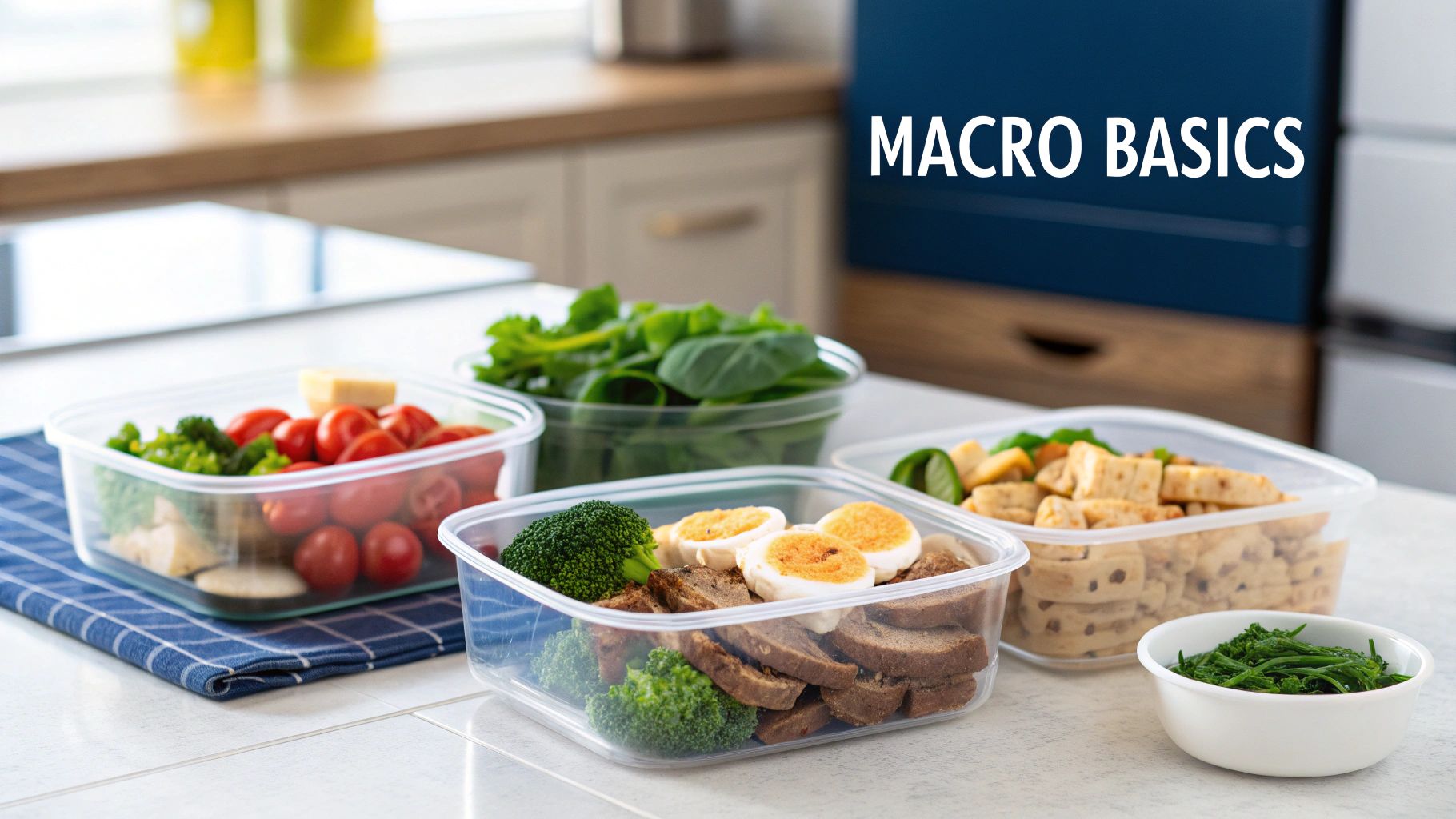
If you're trying to keep up with a hectic family schedule, the phrase "tracking macros" probably sounds like one more chore you definitely don't have time for. But what if I told you it was actually the key to having more energy and feeling less stressed about meal prep? It’s a lot simpler than it sounds.
Macronutrients, or "macros," are the big three nutrients your body runs on. They’re the core of everything.
- Protein: This is your body’s builder, essential for creating muscle, repairing tissue, and keeping everything running smoothly.
- Carbohydrates: Think of these as your main fuel source. They power your brain and give your body the get-up-and-go it needs.
- Fats: These are critical for things like hormone production and helping you absorb all the other good stuff from your food.
Getting the right mix of these three powerhouses means you're less likely to hit that 3 PM wall, and you'll spend a lot less time staring into the fridge wondering what to make for dinner. This guide is all about cutting through the noise and showing you how to put this stuff into practice.
From Numbers to Nourishment
Look, the goal here isn't to get you obsessively counting every single gram. It's about getting a feel for the building blocks of your meals. Once you can glance at a food and know its main job—like chicken is protein, a sweet potato is carbs—you can start putting together balanced plates without even thinking about it. That kind of intuitive eating is way more sustainable for busy parents than fiddling with a calculator.
For example, understanding macros explains exactly why a breakfast of plain toast leaves you starving an hour later, but adding a couple of eggs (hello, protein and fat!) keeps you full and focused all morning. Getting a handle on these basics is the first step, and learning https://mealflow.ai/blog/how-to-read-nutrition-labels can give you an even clearer picture of what's in your food.
By focusing on the quality of your macros—think whole, unprocessed foods—you're not just feeding your family for today. You're setting them up with healthy habits that can last a lifetime.
This is how a simple food macros list goes from being just a bunch of numbers to a seriously powerful tool. It helps you create delicious, energizing meals that keep your family thriving, without making your life any more complicated.
Your Ultimate Guide to High-Protein Foods
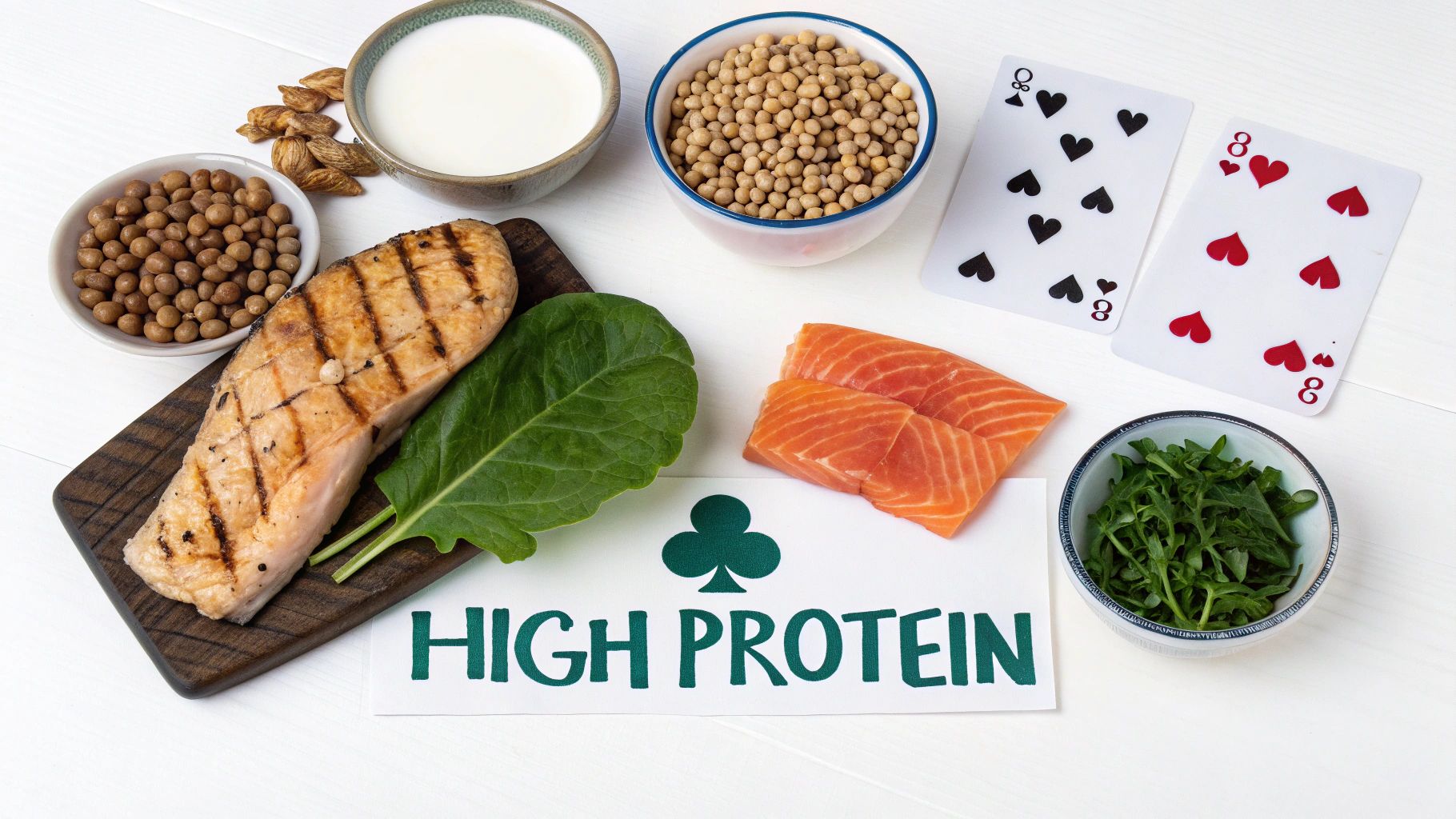
Let's talk about the real MVP of your family's nutrition: protein. It's the powerhouse that keeps everyone feeling full and satisfied, builds strong muscles for all those playground adventures, and delivers the steady energy you need to survive those back-to-back-to-back days. Think of it as the sturdy frame for every meal you build.
This section is your new best friend for all things protein. We're diving deep into a massive food macros list focused squarely on high-protein heroes, so you can effortlessly spot the best buys for your kitchen.
From chicken and salmon to lentils and Greek yogurt, we’ll lay out the macronutrient content for a typical serving. We'll even throw in some ridiculously simple portion-size tricks—like using a deck of cards as a visual for a chicken breast—to make life easier.
Why Is Everyone Obsessed With Protein?
This isn't just another fleeting food trend; families are genuinely doubling down on this essential nutrient. And for good reason! A whopping 61% of Americans reported upping their protein intake recently, a huge leap from 48% back in 2019.
For busy households, this has meant leaning into animal proteins like meat and poultry, which consistently top shopping lists for their powerful nutritional punch and ability to crush hunger. It looks like this focus is here to stay, with U.S. per capita meat consumption projected to climb to 122 kg by 2027. If you're curious to learn more about what's driving this shift, check out the fantastic insights in Cargill's Protein Profile.
A Quick Tip: Making sure there's a quality protein source in every meal is one of the simplest, most effective ways to dodge those dreaded energy crashes and keep hunger from derailing the whole family's day.
Alright, let's get into the nitty-gritty with our go-to list.
Animal-Based Protein All-Stars
Animal proteins are what we call "complete" proteins. That's a fancy way of saying they contain all nine essential amino acids your body can't make on its own. They're incredibly efficient for building and repairing everything from muscles to skin.
- Chicken Breast (Skinless): It's a classic for a reason! Lean, ridiculously versatile, and absolutely packed with protein. A 4-ounce (113g) serving, roughly the size of a deck of cards, is perfect for chopping into salads, shredding for wraps, or dicing for stir-fries.
- Salmon: Not just a protein star, salmon comes loaded with heart-healthy omega-3 fatty acids. A 4-ounce fillet delivers a fantastic one-two punch of both protein and healthy fats.
- Lean Ground Beef (93/7): Your secret weapon for killer tacos, hearty pasta sauces, and juicy burgers. The 93/7 ratio gives you all that protein goodness with way less fat.
- Eggs: The undisputed champion of quick-fix protein. Two large eggs can be scrambled, fried, or hard-boiled in minutes, making them a lifesaver for a fast meal or snack.
- Greek Yogurt (Plain): This creamy, tangy stuff boasts nearly double the protein of regular yogurt. A single cup makes a perfect breakfast base or a powerhouse post-workout snack.
- Cottage Cheese: Don't sleep on this one! It’s a slow-digesting protein, which makes it an amazing choice for a snack that will keep you feeling full for hours.
To make things even easier, here’s a quick-glance table with the numbers you need.
High-Protein Foods Macro Breakdown
This table is your cheat sheet for quickly comparing some of the most popular protein sources. I've pulled together the numbers for protein, carbs, and fat per a standard serving so you can make smart choices in a snap.
| Food Item | Serving Size | Protein (g) | Carbs (g) | Fat (g) |
| Chicken Breast | 4 oz (113g) | 30g | 0g | 3.5g |
| Salmon | 4 oz (113g) | 25g | 0g | 12g |
| Lean Ground Beef | 4 oz (113g) | 23g | 0g | 7g |
| Large Egg | 1 egg (50g) | 6g | <1g | 5g |
| Greek Yogurt | 1 cup (227g) | 23g | 8g | 0-5g |
| Tuna (canned) | 3 oz (85g) | 20g | 0g | 1g |
Remember, these values can vary slightly by brand, so always give the label a quick look!
Plant-Based Protein Powerhouses
Plant-based options are fantastic—and not just for vegetarians! They're an amazing way to add variety, fiber, and a boatload of extra nutrients to any diet. While many are "incomplete" on their own, simply mixing and matching different sources throughout the day ensures you get all the amino acids you need.
- Lentils: These tiny legumes are nutritional giants. Just one cooked cup delivers a hefty dose of protein and fiber, making them perfect for bulking up soups, stews, and salads.
- Chickpeas: Hummus, anyone? Chickpeas are delicious and can be used in so many ways. Try roasting them with some spices for a crunchy snack or tossing them into a curry.
- Tofu (Firm): Made from soybeans, tofu is a brilliant meat substitute that acts like a sponge, soaking up the flavors of whatever you cook it with. A half-cup serving is a great place to start.
- Quinoa: One of the few complete proteins from the plant kingdom! It's a fluffy, nutty-tasting grain that works beautifully as a side dish or as the base for a hearty power bowl.
- Edamame: These young soybeans are a fun, pop-in-your-mouth snack. A cup of steamed edamame is one of the easiest ways to sneak in some extra protein.
This food macros list is designed to be a tool you can actually use. Stock your kitchen with these high-protein staples, and you'll always have the building blocks for a quick, satisfying meal that the whole family will love.
Let's Talk About Good Carbs
Carbs have gotten a seriously bad rap over the years, but let's be real: they are your body's number one choice for fuel. Think of them as the high-octane gas that powers you through a day of chasing toddlers, crushing your to-do list, and still having a little something left in the tank for yourself. The secret isn’t about ditching carbs; it’s about choosing the right ones.
This part of the guide is all about complex carbohydrates. These are the slow-burning, long-lasting heroes that give you steady energy without that awful sugar crash. Simple carbs, like the ones in candy or soda, are like lighting a match—a quick burst of flame that’s gone in a flash. Complex carbs are like a slow-burning log in the fireplace, giving you consistent warmth and energy for hours.
We’re about to jump into a food macros list that puts these nutritional powerhouses in the spotlight. You'll get the real scoop on foods like quinoa, sweet potatoes, and oats, so you can start making smarter, more energizing choices for your whole family.
Grains That Keep You Going
Whole grains are the bedrock of a healthy carb strategy. They're loaded with fiber, which is a game-changer for digestion and for keeping you feeling full and satisfied (goodbye, mid-afternoon pantry raids!). Getting them into your daily routine is way easier than you think.
- Quinoa: This stuff is a true superfood. Quinoa is one of the very few plant-based foods that’s a complete protein, meaning it has all nine essential amino acids your body needs. One cooked cup gives you about 222 calories, with 39 grams of carbs, 8 grams of protein, and 4 grams of fat. It's brilliant as a base for a hearty salad or as a simple swap for rice.
- Oats (Rolled): Ah, the breakfast of champions! A half-cup of dry rolled oats clocks in at around 150 calories, with 27 grams of carbs, 5 grams of protein, and 3 grams of fat. The soluble fiber in oats is also amazing for your heart health.
- Brown Rice: Just switching from white rice to brown can make a massive difference. One cooked cup has about 215 calories, 45 grams of carbs, 5 grams of protein, and less than 2 grams of fat. Pro tip: Cook a huge batch on Sunday. It’s a meal prep hack that will save your sanity all week long.
Nutrient-Dense Veggies and Legumes
Don't sleep on your veggies and legumes! Many are fantastic sources of complex carbs, and they come packaged with tons of vitamins, minerals, and even more fiber. They bring color, texture, and a serious nutritional punch to every single meal.
- Sweet Potatoes: A medium baked sweet potato is a delicious powerhouse, containing roughly 100 calories, 24 grams of carbs, 2 grams of protein, and almost zero fat. Plus, they are absolutely bursting with Vitamin A.
- Chickpeas: Whether you're whipping up hummus or roasting them for a crunchy, salty snack, chickpeas are a carb source that also delivers a solid dose of protein. One cooked cup has about 269 calories, 45 grams of carbs, 15 grams of protein, and 4 grams of fat.
- Lentils: These little guys are incredibly affordable and packed with nutrients. A single cooked cup gives you around 230 calories, 40 grams of carbs, and a whopping 18 grams of protein. They’re perfect for thickening up soups, chilis, and stews.
Smart Swap Strategy: Try making just one simple carb swap a day. Grab whole-wheat bread instead of white for your sandwiches. Try zucchini noodles instead of regular pasta for a lighter dinner. Little changes like these really add up and make a huge impact on your family's health.
Here’s a quick cheat sheet to see how these carb heroes stack up.
| Food Item | Serving Size | Carbs (g) | Protein (g) | Fat (g) |
| Quinoa | 1 cup, cooked | 39g | 8g | 4g |
| Sweet Potato | 1 medium, baked | 24g | 2g | <1g |
| Oats (Rolled) | ½ cup, dry | 27g | 5g | 3g |
| Brown Rice | 1 cup, cooked | 45g | 5g | 2g |
| Lentils | 1 cup, cooked | 40g | 18g | <1g |
By using this carbohydrate-focused food macros list, you can plan meals that will actually keep you and your family going. When you prioritize these kinds of carbs, you’re doing more than just filling plates—you’re fueling a vibrant, active, and healthy week.
Your Ultimate Guide to Healthy Fats
Let's have a real talk about fats. For years, "fat-free" was the buzzword plastered on every package, making us think fat was the ultimate dietary villain. But, just like the story with carbs, it’s not that simple. Good fats aren't just permissible; they're absolutely critical for brain development, keeping hormones in check, and soaking up essential vitamins. Think of them as the master mechanics keeping your body's engine humming along perfectly.
This section is your new best friend for weaving these nutritional superstars into your family’s meals. We've put together a straightforward food macros list zeroing in on the best sources—from creamy avocados and crunchy nuts to rich olive oil—complete with their macro breakdowns. You'll see just how easy it is to make these powerhouses a regular part of your weekly menu.
So, What Are "Good" Fats?
Here's the deal: not all fats wear the same hat. The heroes of this story are monounsaturated and polyunsaturated fats, which include the famous omega-3 fatty acids. These are the good guys you find in plants, nuts, seeds, and fish. They’re fantastic for your heart and help keep inflammation at bay.
On the other side of the tracks, you have trans fats and an overabundance of saturated fats, which often lurk in processed snacks and fried foods. Those are the ones you’ll want to keep on a short leash. The simplest way to get it right? Stick to whole-food sources of fat.
Here’s a simple rule of thumb I live by: If the fat comes from a whole plant or a fish, it’s probably a fantastic choice. These natural sources are loaded with benefits that support everything from your kid's brainpower to your own energy levels.
Let's dive into some delicious and totally practical ways to get more of these amazing nutrients onto your family’s plates.
Plant-Based Fat Champions
Plant-based fats are the MVPs of the kitchen—they’re versatile, delicious, and incredibly easy to add to meals you already make. They bring a ton of flavor, great texture, and a serious nutritional punch.
- Avocado: Seriously, what can't an avocado do? Half of a medium one gets you around 160 calories, a solid 15 grams of healthy fats, 9 grams of carbs (mostly amazing fiber!), and 2 grams of protein. Mash it onto whole-wheat toast, toss it in a salad, or blend it into a smoothie for extra creaminess.
- Olive Oil (Extra Virgin): This is the liquid gold of my pantry. Just one tablespoon has about 120 calories and 14 grams of monounsaturated fat. It's my go-to for whipping up salad dressings or for drizzling over roasted veggies right after they come out of the oven. This little trick helps preserve its incredible flavor and all those health perks.
- Nuts (Almonds, Walnuts): Nuts are the ultimate grab-and-go snack. A one-ounce handful of almonds (that's about 23 nuts) gives you 164 calories, 14 grams of fat, 6 grams of carbs, and 6 grams of protein. Walnuts are especially awesome because they're packed with omega-3s.
- Seeds (Chia, Flax, Pumpkin): Don't let their size fool you; these little guys are nutritional giants. Two tablespoons of chia seeds pack in 138 calories, 9 grams of fat, 12 grams of carbs (a whopping 10 of which are fiber!), and 5 grams of protein. I love sprinkling them on yogurt, blending them into smoothies, or making a simple chia seed pudding for a breakfast I can prep ahead of time.
Here’s a quick-glance table to help you see how these fatty-acid all-stars stack up.
| Food Item | Serving Size | Fat (g) | Carbs (g) | Protein (g) |
| Avocado | ½ medium | 15g | 9g | 2g |
| Olive Oil | 1 tbsp | 14g | 0g | 0g |
| Almonds | 1 oz (28g) | 14g | 6g | 6g |
| Chia Seeds | 2 tbsp | 9g | 12g | 5g |
Animal-Sourced Healthy Fats
Certain animal-based foods are also incredible sources of healthy fats, especially those all-important omega-3s that are like rocket fuel for your brain.
- Fatty Fish (Salmon, Mackerel): Salmon is a superstar for good reason. A 4-ounce (113g) fillet delivers about 200 calories, 12 grams of fat (loaded with omega-3s), 0 grams of carbs, and a hefty 25 grams of protein. Baking or grilling it with a squeeze of lemon and some herbs is one of the easiest, most delicious meals you can make.
- Whole Eggs: Please, don't throw away the yolk! That's where all the good stuff is—the healthy fats and fat-soluble vitamins. One large egg has around 78 calories, 5 grams of fat, less than 1 gram of carbs, and 6 grams of protein.
By using this part of the food macros list, you can confidently add healthy fats to your meals, making sure every dish is not just tasty but perfectly balanced to fuel your family from the inside out.
Your Printable Food Macros Cheat Sheet is Ready to Download
Let's be real: juggling meal prep, grocery runs, and a hectic family schedule is a full-time job in itself. To give you a hand, we’ve wrangled all the need-to-know info from our monster food macros list and squeezed it into one gorgeous, easy-to-read cheat sheet. It’s about to become your kitchen’s new best friend.
This isn’t just some boring spreadsheet. Think of it as your secret weapon for making life simpler. Pin it to your fridge, and you'll have instant answers without digging for your phone. With everything neatly categorized, plus simple portion guides and macro numbers you can see at a glance, it's the perfect tool for making smart choices in a flash.
Your Quick-Reference Kitchen Sidekick
This printable isn't just about the numbers; it's a practical sidekick that works hand-in-hand with your digital tools.
- Instant Answers: Wondering how much protein is in that chicken breast or carbs in a sweet potato? The answer is right there.
- Visual Guides: Our simple portion visuals help you eyeball serving sizes, no food scale required.
- Family-Focused: We’ve highlighted common, family-friendly foods you’re probably already cooking with.
It's the ultimate resource for planning dinner on the fly or grabbing a snack that won't leave you crashing an hour later. It helps you build a balanced plate without overthinking it.
Stop guessing and start knowing. This cheat sheet is the bridge between learning about macros and actually using that knowledge every single day. It makes healthy eating feel way less like a chore.
Ready to make your meal planning a thousand times easier? Click the link below to grab your free PDF!
Download Your Free Food Macros Cheat Sheet PDF Here!
How to Build a Balanced Plate for Your Family
Okay, so you've got this awesome food macros list. That's a huge first step. But the real trick is turning all those numbers into real, delicious meals that your family will actually eat. Don't worry, you can put the calculator and food scale away—this is all about a few simple visual cues and a smarter way of thinking in the kitchen.
We're moving away from painstakingly counting every single gram and toward building plates that just feel balanced. This isn’t about hitting some perfect number every time. It’s about finding a sustainable, low-stress rhythm for feeding your family well, especially when everyone has different needs—from kids who never stop moving to adults with their own health goals.
A Visual Guide to Building a Plate
Let's stop thinking about grams and start thinking about plate real estate. Honestly, this visual trick is a lifesaver on busy weeknights and makes building a macro-balanced meal ridiculously easy without weighing a thing.
Here’s how to eyeball it for a typical adult plate:
- Protein (¼ of your plate): Fill one-quarter of your plate with a solid protein. We're talking a piece of grilled chicken about the size of a deck of cards or a hearty scoop of lentils.
- Complex Carbs (¼ of your plate): The next quarter is for a high-fiber, slow-burning carb. Think quinoa, brown rice, or a baked sweet potato.
- Veggies (½ of your plate): Load up the entire remaining half with colorful, non-starchy vegetables. Pile on the broccoli, spinach, and bell peppers, or just make it a giant side salad. This is where you get volume, fiber, and a boatload of micronutrients.
- Healthy Fats (the finishing touch): Finally, add a little healthy fat to tie it all together. This could be a few slices of avocado, a sprinkle of nuts and seeds, or a good drizzle of olive oil over your salad.
This “plate method” is a foolproof way to get a great mix of all three macros at every meal. It keeps everyone’s energy steady and helps them feel full and satisfied.
The Macro Bowl Bar: A Family Favorite
Want one of my absolute favorite meal prep hacks? The "macro bowl" bar. On Sunday, just batch-cook a few key ingredients and store them in separate containers in the fridge. When dinner time hits, pull everything out and let everyone build their own masterpiece.
This is a fantastic way to handle picky eaters and different nutritional needs without cooking three separate meals. Your growing teen might pile on the rice and chicken, while you might go heavier on the greens and add a smaller scoop of quinoa. It gives everyone a bit of control and makes mealtime fun instead of a fight.
As more people focus on nutrient-dense foods, this kind of balanced approach is becoming more popular. Think about building meals with roughly 40-50% carbs from sources like oats and sweet potatoes, 25-30% protein from eggs and fish, and 20-30% fats from things like avocados. It’s no coincidence that diets like the Mediterranean, often voted the best overall, are built on this same whole-food foundation. You can read more about the latest in nutrition at the Global Wellness Institute.
To make this even easier, our Macros Cheat Sheet is your new best friend for planning these balanced meals. Download it, pin it to your fridge—whatever works for you.
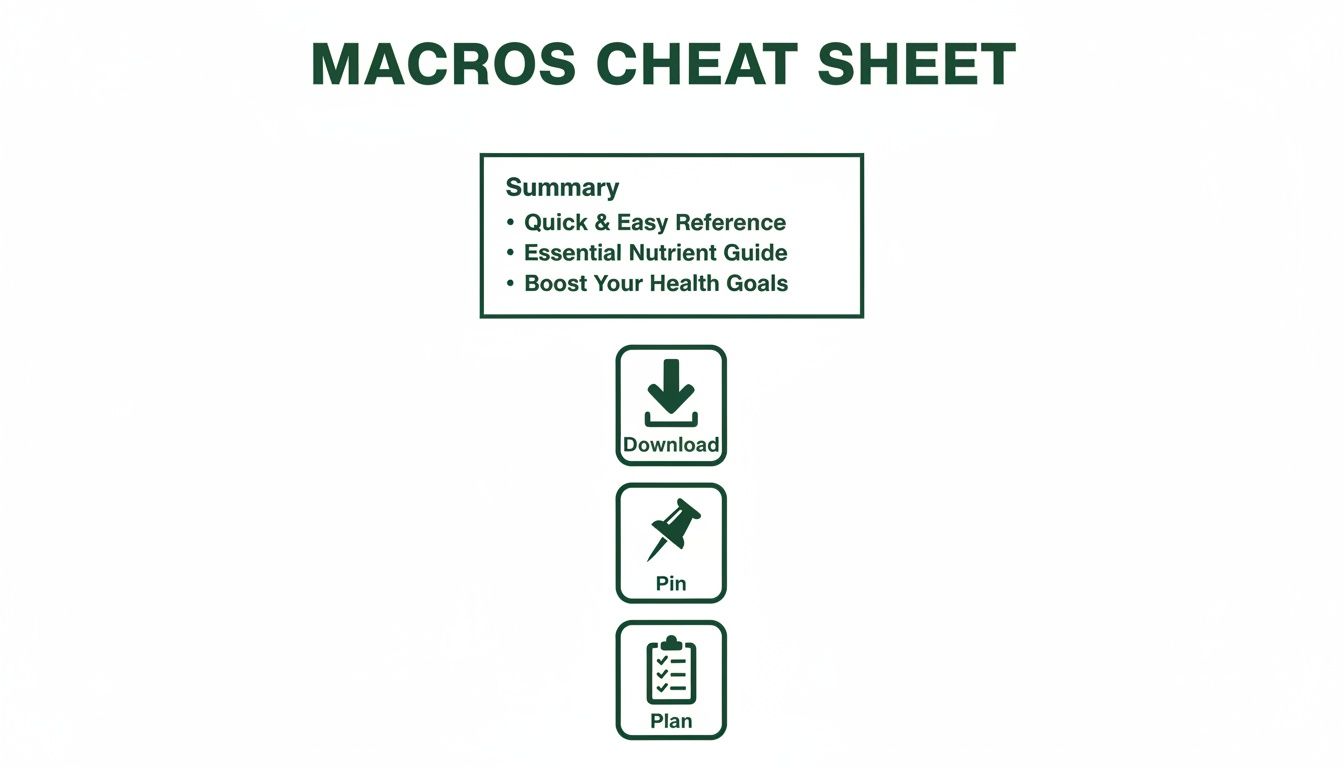
Think of it as your visual shortcut, helping you make smart choices on the fly without having to look up every single ingredient.
Making That Macros List Work For You With Meal Planning Tech
Okay, so you've got this killer food macros list in hand and you know what a balanced plate should look like. Awesome. Now, let’s get into the really fun part—using a bit of tech wizardry to practically automate the whole thing. For busy families, today's meal planning tools are nothing short of a lifesaver, taking what you know about macros and turning it into a complete, ready-to-roll plan in just a few clicks.
Think about it: you tell an app what you're aiming for—maybe a high-protein week to keep everyone feeling full and focused—and it spits out a full meal plan almost instantly. The days of endlessly scrolling through recipes and trying to do all that mental math are over. These tools are built to handle the heavy lifting, translating your macro goals into a delicious, family-approved menu.
Put Your Meal Plan and Shopping List on Autopilot
This is where you seriously get your time back. A smart meal planner, like Meal Flow AI, can take your family's preferences and your new macro-savvy brain and whip up a whole week of meals. For instance, if you just want a solid, balanced week, you set that as your goal, and it will pull together breakfasts, lunches, and dinners that nail it.
But here’s the real kicker: it doesn't just give you a plan. It creates a shopping list with every last ingredient you’ll need. You can then zap that list right over to Instacart for delivery. This is how you completely sidestep the "What are we having for dinner?!" panic and move straight to a stocked fridge and a clear plan. It’s the ultimate stress-buster.
Turning Macro Goals into Meals You Actually Want to Eat
So, how does this play out in the real world for a busy household? Let's walk through it.
- Your Goal: Plan a week of high-protein, balanced meals to keep the hangries at bay.
- Your Action: Hop into a tool like Meal Flow AI and set your preference to "high protein."
- The Result: The app instantly drafts a plan featuring meals like Chicken and Quinoa Bowls for lunch and a hearty Turkey Chili for dinner. It automatically balances out all that protein with the right amount of complex carbs and healthy fats.
This data-first approach works surprisingly well. Looking at the broader dietary data, a typical balanced intake is around 10-15% protein, 55-75% carbs, and 15-30% fats. By using a planner, you can fine-tune your weekly menu to hit these targets, ensuring a serving of that turkey chili gives you a solid 25g of protein alongside a sensible portion of brown rice. As a bonus, this kind of precise planning can slash food waste by up to 30% because your shopping lists are spot-on.
A fantastic way to put your macro knowledge to use is through some smart meal prepping that mixes lean proteins, quality carbs, and plenty of fresh veggies. If you need some ideas to get started, check out Our Simple Guide to Healthy Meal Prep Recipes.
Picture this: It’s Sunday morning. Instead of spending an hour agonizing over a meal plan, you tap a single button. Seconds later, you have a complete, macro-friendly plan for the week, and your groceries are already on their way. This isn't some far-off dream; it's what you can do right now.
If you're ready to get serious about crafting perfectly balanced meals without the headache, you'll love our guide on macro-friendly meal prep recipes, which is packed with ideas to make your week easier and tastier.
Frequently Asked Questions About Macro Tracking
Jumping into the world of macros can feel a bit like learning a new language, but I promise it's way more straightforward than it looks. Before you know it, using a food macros list will be second nature. Let's dig into some of the most common questions that pop up when people start paying more attention to what's on their plates.
Think of this as your friendly guide to clearing up the confusion. My goal is to help you feel totally confident in this new approach to your family's nutrition.
Do I Really Need to Weigh My Food Forever?
Heck no! Let's get that out of the way right now. The whole point of tracking is to learn, not to give yourself a lifelong chore.
Weighing your food for the first week or two is just an incredibly eye-opening exercise. It's the best way to see what real portion sizes look like. You’ll probably have a "wow" moment when you realize your casual scoop of peanut butter is actually two (or even three) official servings.
Once you’ve gone through that initial learning curve, you can totally switch to visual cues. You'll just know that a serving of chicken is about the size of a deck of cards or that a cup of rice looks like your fist. The food scale is just a temporary teaching tool, not a permanent dinner guest.
How Do I Calculate My Own Macro Needs?
This is a fantastic question because everyone's needs are a little different. Your age, how active you are, and your personal health goals all play a huge role. While there are a million online calculators out there, it really helps to understand the why behind the numbers.
Getting a clear picture of how to set your personal targets is the first step toward building a plan that actually works for you. For a detailed, step-by-step walkthrough, you can learn more about how to calculate macros in our comprehensive guide. This will help you nail down a personalized baseline for yourself and your family.
The most important thing to remember is that consistency beats perfection every single time. Just aim for a balanced plate most of the time, and don't sweat hitting your numbers perfectly every single day.
What About Picky Eaters in the Family?
Ah, the ultimate challenge for so many parents! Here's the good news: a macro-conscious approach can actually help. Instead of getting stuck making separate meals, try deconstructing them. A "build-your-own-bowl" night is a total game-changer.
Just lay out a bunch of options and let everyone assemble their own masterpiece:
- Proteins: Shredded chicken, ground turkey, chickpeas.
- Carbs: Brown rice, quinoa, roasted sweet potatoes.
- Fats: Sliced avocado, shredded cheese, a yummy olive oil dressing.
This little trick gives kids a sense of control and encourages them to build a plate with at least one thing from each category. It turns mealtime into a fun activity instead of a nutritional showdown, all while keeping the core principles of a balanced meal front and center. You get to control the options, and they get to feel like the chef.
---
Ready to stop guessing and start planning? Let Meal Flow AI do the heavy lifting. Get personalized, macro-balanced meal plans and automated shopping lists delivered right to your fingertips. Take the stress out of mealtime by visiting https://mealflow.ai and start your journey to easier, healthier family meals today