Healthy Eating On A Budget Without The Stress
Discover how to master healthy eating on a budget. Get practical tips for meal planning, smart grocery shopping, and easy meal prep that save you money.
Love This Article?
Get personalized meal plans with recipes like this, automatically matched to your nutrition targets.
Let's be honest, trying to feed your family healthy meals without completely torching your bank account can feel like a mission impossible. It's that constant tug-of-war between the kale and quinoa aisle and, well, what's actually affordable. But I'm here to tell you that you can have both: delicious, wholesome food that fuels your family and respects your budget.
Why Does Healthy Eating Feel So Expensive?
It’s not just in your head—the financial squeeze on families is real. The global average cost of a healthy diet has crept up to $4.46 per person per day, a hefty increase thanks to worldwide food price inflation. If you're a parent juggling work, kids, and trying to get dinner on the table, that number isn't just a statistic; it's the tightrope you walk every single week. You can dig into the full data on global healthy eating costs from the World Bank.
This guide is designed to give you a simple, repeatable system to wrestle back control of that grocery bill. The goal? To turn a stressful, budget-busting chore into a smooth, automated, and maybe even enjoyable part of your week.
Your Game Plan for Affordable Nutrition
We're going to skip the fluff and dive straight into a practical blueprint that actually works in the chaos of real life. This isn't about spending your Sunday clipping a thousand coupons or resigning yourself to a life of bland chicken and broccoli. It's about building smart, sustainable habits that stick.
Here’s what you'll learn to do:
- Build a real system: Go from last-minute, chaotic grocery runs to a streamlined weekly flow for planning, shopping, and prepping.
- Master your pantry: A well-organized kitchen is your secret weapon for budget cooking. Learning how to strategically stock your shelves is the first step, and we've got you covered on how to organize your kitchen to make it happen.
- Shop with a purpose: We'll turn those aimless, expensive grocery trips into targeted missions that save you cash every single time.
- Prep without the stress: Discover simple, time-saving hacks to get food ready for the week, ensuring a healthy meal is always just minutes away.
To get us started, here’s a quick-and-dirty summary of the core strategies we'll be diving into. Think of this as your cheat sheet for making the biggest impact, fast.
Your Quick-Start Guide To Budget-Friendly Healthy Eating
| Strategy Area | Key Action | Why It Works |
| Budgeting & Tracking | Set a realistic weekly grocery budget and track every dollar spent. | Puts you in control and immediately shows where your money is *really* going. |
| Meal Planning | Plan your meals for the week *before* you shop. No exceptions. | Prevents impulse buys and ensures you only purchase what you absolutely need. |
| Smart Shopping | Build your shopping list based on your meal plan and what's on sale. | Slashes costs by leveraging store discounts and avoiding "aisle-wandering." |
| Pantry & Staples | Keep a well-stocked pantry of versatile, low-cost ingredients. | Allows you to build dozens of meals from a core set of items you bought in bulk. |
| Meal Prep & Batching | Cook key ingredients (grains, proteins) in larger batches. | Saves immense time during the week and drastically reduces the temptation for takeout. |
This table is just the beginning.
The real secret to eating healthy on a budget isn't a single magic trick. It's about building a reliable system that removes the guesswork and makes the smart choice the easiest choice.
By the time you're done with this guide, you’ll have the confidence and the tools to serve up amazing food that makes your family happy and your wallet even happier. Let's get to it.
The Smart Meal Plan That Saves You Hours
Meal planning is the secret weapon for eating well without breaking the bank. But let's be honest, the old way—staring at a blank notepad on Sunday, waiting for inspiration to strike—is a recipe for disaster. Most of us give up by week two. It's time for a new approach that actually fits into a busy, modern life.
This isn't about militant, inflexible rules. It’s about building a smart, flexible system that kills decision fatigue and gives you back your weekends. The first move? Stop trying to reinvent the wheel every single week.
Create Your Family's Flavor Library
Think about the meals your family actually gets excited about. You know, the ones that get cheers instead of dramatic sighs and eye-rolls. These are your greatest hits, your go-to recipes. Go ahead and write them down. This isn't just a list; it's your Flavor Library.
Having a core list of about 10-15 of these proven winners is a total game-changer. Whenever you’re feeling stuck, you just pull from this library instead of getting lost in a black hole of online recipes. It's the ultimate cure for "what's for dinner?" paralysis.
Here’s a little inspiration to get you started:
- Quick & Easy Dinners: Turkey Meatballs with Zucchini Noodles, Sheet Pan Sausage and Veggies, Black Bean Burgers
- Cozy Comfort Food: Hearty Lentil Soup, Baked Chicken Parmesan, Slow Cooker Pulled Pork
- Kid-Approved Hits: Homemade Mac and Cheese (with a secret veggie puree!), Build-Your-Own Pizza Night
Give Your Week a Rhythm with Theme Nights
Got your Flavor Library? Awesome. Now, let’s give your week a little structure with theme nights. This isn’t about forcing your family to eat tacos every single Tuesday until the end of time. It's a mental shortcut that dramatically narrows down your options and puts planning on autopilot.
By assigning a theme to each night, you're not just planning dinner; you're creating a simple, repeatable system that frees up your mental energy for more important things—like actually enjoying your family.
This simple trick transforms the usual planning chaos into a calm, predictable routine. You just plug a meal from your Flavor Library into its matching theme night, and bam—your week starts to fall into place. For more tips on making this stick, check out our guide on healthy weekly meal prep techniques.
Use a Reusable Meal Template
Okay, let's pull this all together with a template. A meal template is just a reusable skeleton for your week's breakfasts, lunches, and dinners. You're not starting from scratch each time; you're just filling in the blanks.
Let’s see how a busy mom—we'll call her Sarah—uses this system to map out her week:
- She sets her themes: Meatless Monday, Taco Tuesday, Pasta Wednesday, Slow Cooker Thursday, and Pizza Friday.
- She pulls from her Flavor Library: Lentil Soup for Monday, Ground Turkey Tacos for Tuesday, Spaghetti with Turkey Meatballs for Wednesday... you get the idea.
- She plans breakfasts and lunches: She defaults to oatmeal with berries for breakfast and leftovers for lunch, which simplifies things even more.
This entire process boils down to a super simple, three-step cycle: Plan your meals, Shop for your ingredients, and Prep your food for the week ahead.
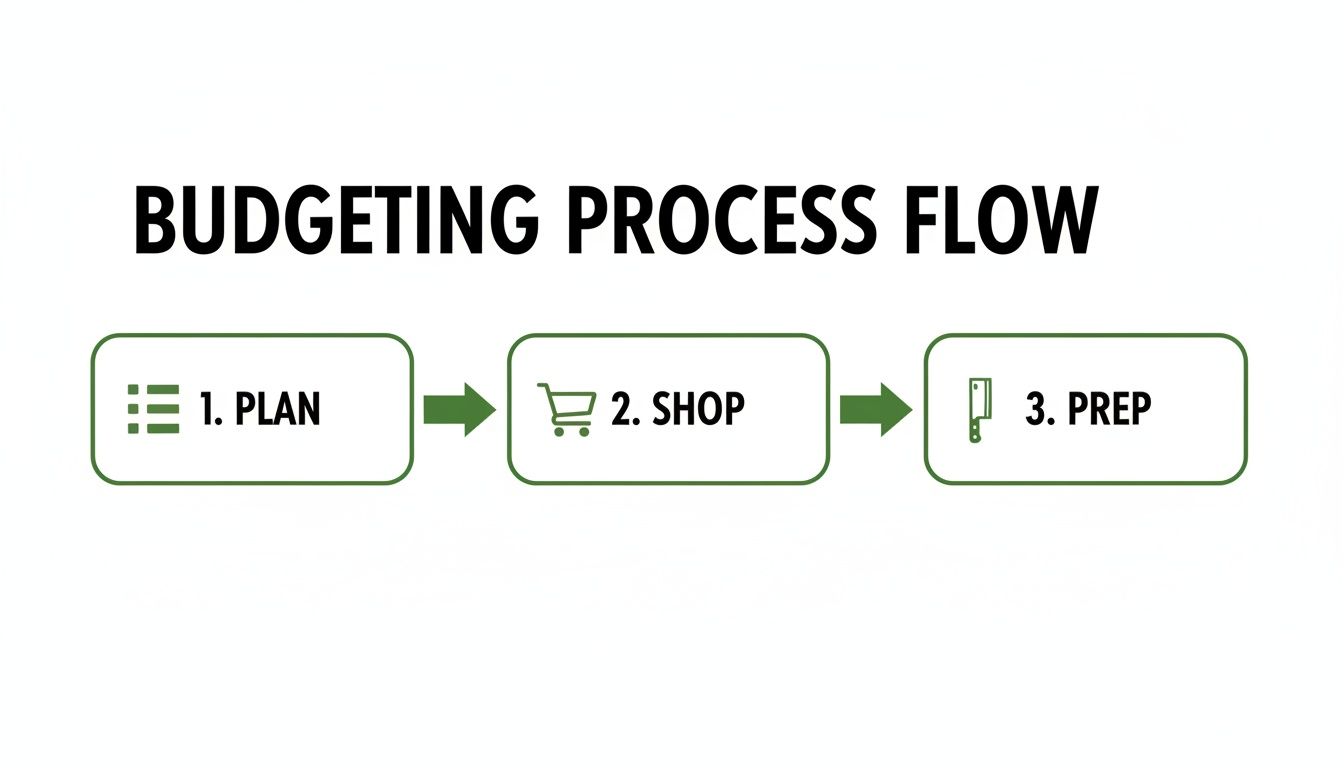
This little flow turns a massive chore into a manageable cycle, saving you stress and a surprising amount of cash. To really nail your budget and avoid those afternoon vending machine runs, find some good ideas for healthy snacks for work you can prep ahead of time.
What used to take Sarah over an hour of painful guesswork now takes her less than 20 minutes. She knows exactly what to buy, she sidesteps those tempting impulse purchases at the grocery store, and she has a solid plan for the entire week. This is how you win at eating healthy on a budget—not with complicated spreadsheets, but with a simple, smart system.
Become A Grocery Shopping Ninja
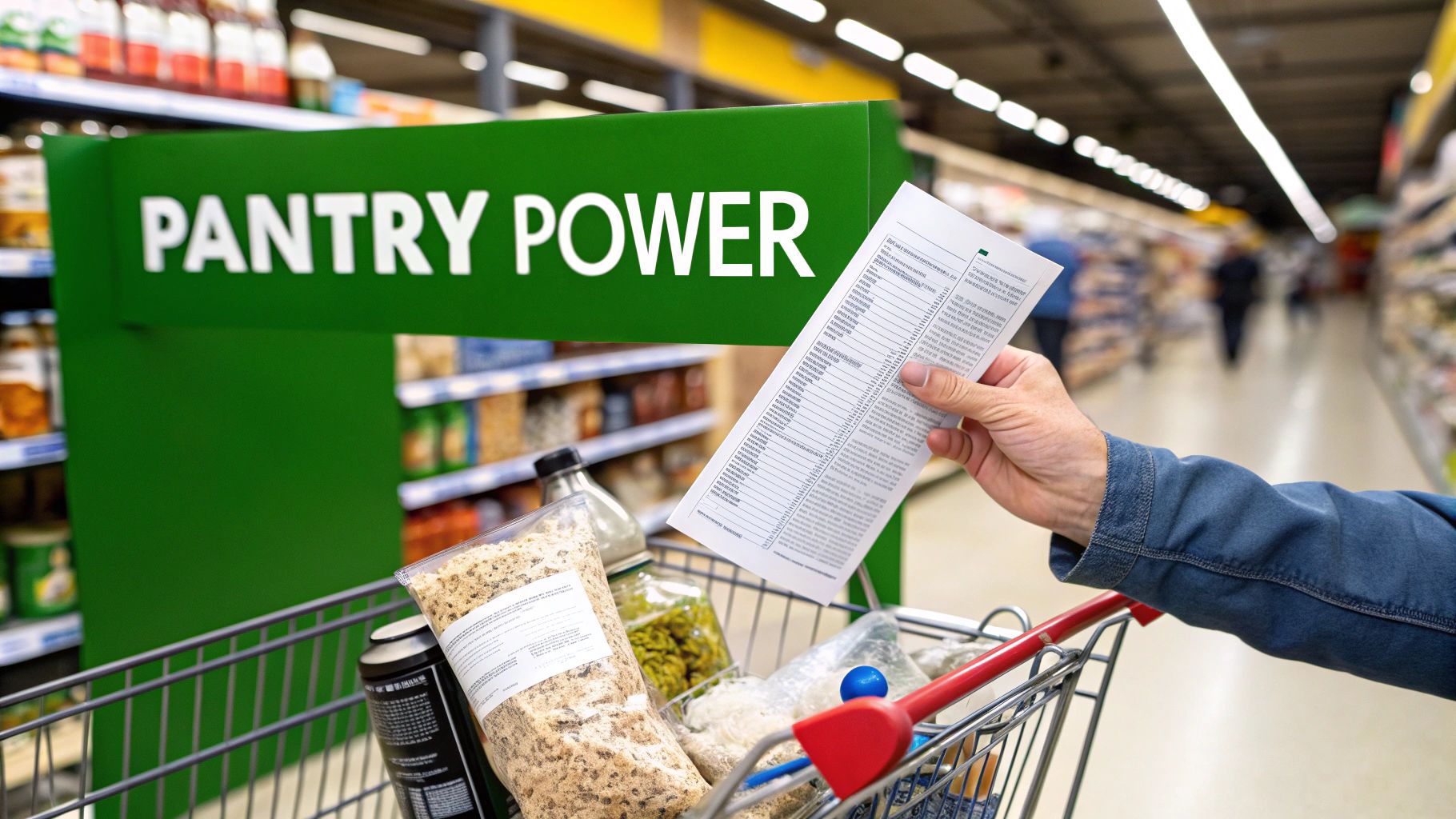
Alright, you've got your meal plan—that's your map. Now it's time for the real adventure: the grocery store. This is the battlefield where your budget is either defended or completely obliterated.
Becoming a shopping ninja isn't about spending hours clipping coupons. It’s about having a simple, repeatable game plan that saves you cash every single trip.
It all boils down to two golden rules for healthy eating on a budget. First, never, ever shop when you're hungry. Second, always, always stick to your list. A rumbling stomach and no plan is the perfect storm for a cart overflowing with impulse buys you’ll be kicking yourself for later.
Master The Store Layout
Let's be real: grocery stores are designed to make you spend more. They're a maze of tempting end-caps and strategically placed junk food. Your first ninja move is to ignore their map and create your own.
Hug the perimeter of the store. Seriously. This is where all the real, whole foods live—fresh produce, meat, dairy, and eggs. The inner aisles? That's a danger zone of processed, packaged goods with higher price tags and way less nutrition. Fill your cart with the good stuff from the outer ring first, and you'll have less room and less budget for the junk.
The smartest shoppers don't just follow a list; they follow a path. By strategically navigating the store, you sidestep marketing traps and keep your focus on nutrient-dense, affordable foods.
Another pro move is mastering unit pricing. Ignore the big, flashy sale price for a second and look for the smaller price-per-ounce or price-per-pound on the shelf tag. This little number is the only way to know if that giant "family size" box is actually a better deal than the store-brand version. Spoiler: it often isn't. To refine your strategies and discover more tips on how to effectively manage your spending while grocery shopping, check out this guide on What Can Help You Meet Your Budget When Shopping.
Decode Sales and Choose Your Brands Wisely
Think of the weekly sales flyer as your pre-mission intel. Scan it before you finalize your meal plan. If chicken thighs are on a deep discount, guess what's for dinner? They just became the star of a couple of meals instead of their pricier cousin, the chicken breast.
This is also where you learn to love store brands. From canned tomatoes to whole-wheat pasta and spices, generic products are often made in the exact same factories as the name brands, just without the fancy label. The savings are no joke, easily adding up to 15-30% off your total bill over time.
Build A Pantry Powerhouse
Your pantry is your secret weapon. A well-stocked pantry is the foundation for countless cheap, healthy, and fast meals. When you have the essentials on hand, you can throw dinner together in minutes without a last-minute, budget-busting trip to the store.
We all know the cost of food is climbing. Animal-sourced foods can cost over $1.00 per day, but staples like grains and legumes often cost just pennies per serving. Focusing your shopping trips on building this arsenal is how you fight back against food inflation.
Keep an eye out for sales and stock up on these versatile, nutrient-dense workhorses:
- Whole Grains: Rolled oats, brown rice, quinoa, and whole-wheat pasta are your best friends. They're filling, packed with fiber, and cheap.
- Legumes: Dried or canned beans (black, kidney, chickpeas) and lentils are protein-packed powerhouses. Use them to stretch meat dishes further or as the star of the show.
- Canned Goods: Tuna or salmon, diced tomatoes, and veggies (grab the low-sodium options) are lifesavers for quick meals.
- Healthy Fats & Flavor: Olive oil, nuts, seeds, onions, and garlic are non-negotiable. A solid collection of dried herbs and spices will turn a bland meal into something you actually want to eat.
By mastering these simple strategies, you'll transform the weekly shop from a chore into a tactical mission. For a complete walkthrough of these techniques, check out our deep-dive guide to grocery shopping tips to save even more.
The Sunday Reset: Your Secret Weapon for an Effortless Week
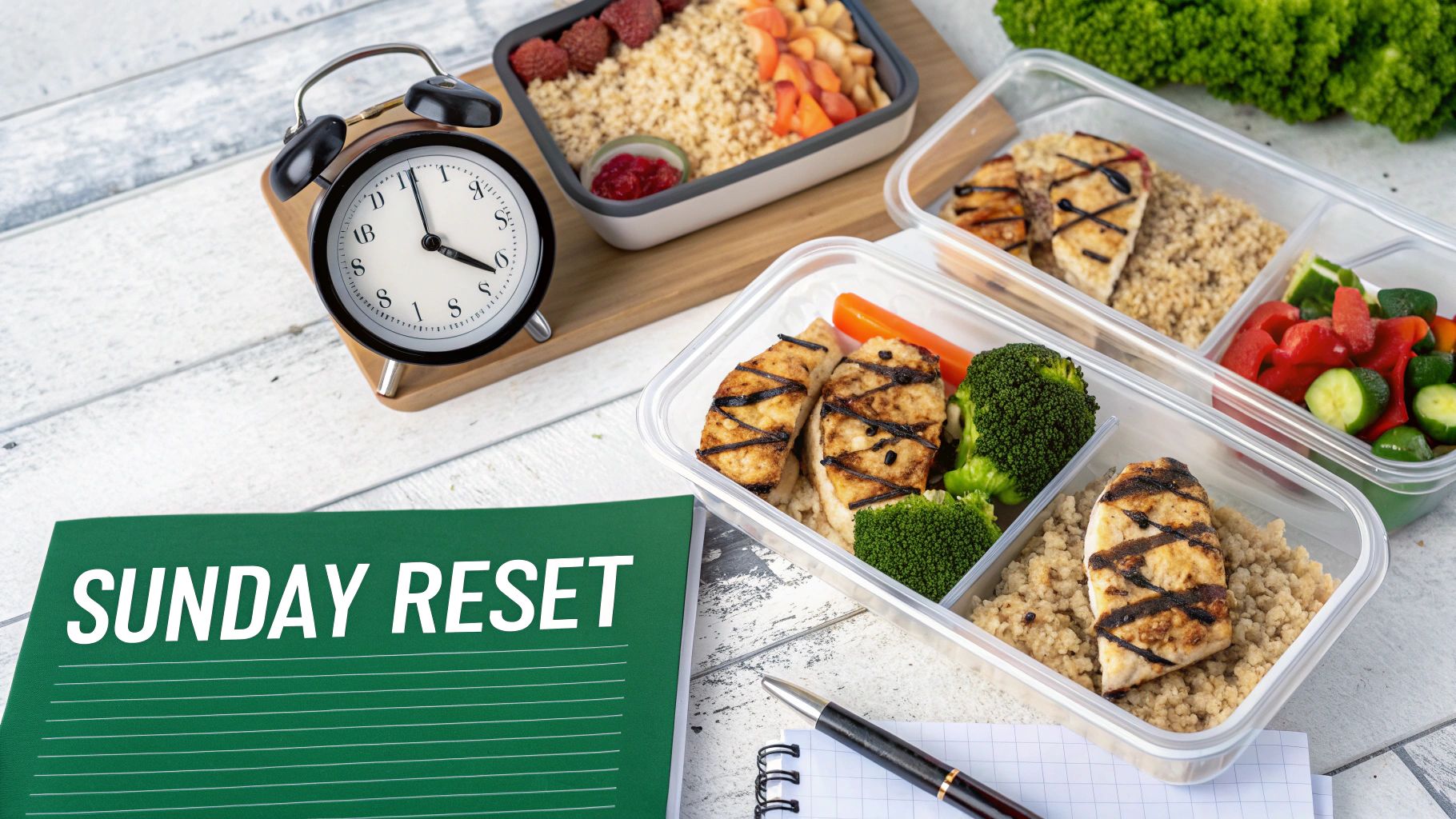
Alright, this is where the magic happens. Your beautiful meal plan is about to jump off the page and into your fridge, ready to save you time, money, and sanity.
Forget those intimidating images of spending an entire Sunday chained to the stove. We're not doing that. Instead, let's rebrand it as the Sunday Reset—a quick, focused session that sets your week up for a massive win. This is your insurance policy against chaotic Tuesdays, ensuring a healthy, affordable meal is always just minutes away.
Pick Your Prep Style
Look, nobody wants to eat the exact same pre-portioned meal five days straight unless they're a competitive bodybuilder. The best meal prep system is the one you’ll actually use. So, let's find the right vibe for your household.
The Mix-and-Match Method
This one’s for the foodies who crave flexibility. I call it Component Prep. Instead of boxing up five identical lunches, you cook individual ingredients in batches. Think of it as creating a personalized build-a-bowl station right in your own fridge.
You might grill a pack of chicken, roast a pan of sweet potatoes, cook a big pot of quinoa, and chop up a bunch of fresh veggies. Throughout the week, you can assemble endless combinations. Chicken and quinoa bowl on Monday, veggie-packed salad on Tuesday, a quick chicken wrap for Wednesday's lunch. It keeps things interesting and is perfect for families with different tastes.
The Grab-and-Go Game-Changer
This is for anyone who values pure, unadulterated convenience. Full Meal Prep is exactly what it sounds like: you cook and portion complete meals into containers. Done.
This approach is an absolute lifesaver for hectic workdays or evenings jammed with soccer practice and homework. When hunger strikes, you just grab a container, heat it, and eat. No thinking, no cooking, no cleanup. Just a delicious, ready-made meal.
Your Two-Hour Sunday Reset Schedule
The trick is to work smarter, not harder. This isn't a marathon cooking session; it’s all about strategic multitasking. Here’s how you can knock this out in just two hours and reclaim your weeknights.
First 30 Minutes: Get the Oven Fired Up
- Crank your oven to 400°F (200°C).
- Wash and chop your heartiest veggies—broccoli, bell peppers, carrots, sweet potatoes. You know, the sturdy ones.
- Toss them on a big baking sheet with a drizzle of olive oil, a sprinkle of salt, and your go-to spices. Shove them in the oven. They’ll be happily roasting while you tackle everything else.
Next 60 Minutes: The Stovetop Shuffle
- Get a big pot of grains going on the back burner. Brown rice, quinoa, farro—whatever you’ve planned for. Let it simmer away.
- Now, focus on your protein. Pan-sear a batch of chicken breasts, brown some ground turkey, or hard-boil a dozen eggs for easy breakfasts and snacks.
- While things are cooking, wash and slice your fresh stuff. Cucumbers, cherry tomatoes, lettuce... get it all ready for quick salads and wraps.
Final 30 Minutes: Cool Down & Pack Up
- By now, everything should be cooked. Pull the veggies from the oven and turn off the stovetop. Let everything cool down completely—this is non-negotiable if you want to avoid soggy, sad meals.
- Once cool, start assembling! Portion out your full meals or pack up your individual components into airtight containers.
- Do a quick kitchen cleanup, and you're done. High-five yourself. You just bought back hours of your future time.
Meal prep isn't about giving up your weekend. It's about investing a tiny piece of it to win back your weeknights. A little focus now prevents a whole lot of takeout-induced panic later.
Pro Storage Hacks to Protect Your Investment
All your hard work goes down the drain if your food goes bad by Wednesday. Proper storage is key to preventing food waste, which is basically tossing cash in the compost bin.
Here are the rules I live by:
- Let It Chill: Seriously, never put hot food straight into the fridge. Let it cool to room temperature on the counter first. This prevents condensation that leads to mushy textures and invites bacteria to the party.
- Go with Glass: Plastic containers are fine in a pinch, but quality glass containers are a fantastic investment. They don't stain (no more orange-tinted containers!), hold onto smells, and are safe for the microwave, oven, and dishwasher. They last practically forever.
- Seal the Deal: Air is the enemy of fresh food. Use containers with high-quality, airtight lids. This makes a massive difference in how long your prepped ingredients last.
- Layer Like a Pro: When packing salads or bowls for the week, layer them strategically. Dressing goes on the very bottom, followed by hardier ingredients like grains or chickpeas, then your protein, and finally, your delicate leafy greens on top. No more wilted lettuce
A Delicious Week For Under $150
Okay, enough with the theory. Let's see what this looks like on the plate. It's one thing to talk about strategies, but it's another thing entirely to see a real-world, no-nonsense roadmap for feeding a family well without breaking the bank.
I’ve put together a complete 7-day meal plan for a family of four, designed to come in at under $150. And no, this isn't some sad, boiled-potatoes-and-cabbage menu. We're talking about delicious, satisfying meals that everyone will actually look forward to eating.
This plan is built on all the principles we've just covered: shopping our pantry first, leaning on affordable workhorses like chicken thighs and beans, and, most importantly, making sure nothing goes to waste.
The Complete Grocery List
This is your shopping battle plan for the week. Before you even think about heading to the store, raid your own kitchen. You probably have a good chunk of this stuff already. This list assumes you've got the basics like olive oil, salt, pepper, and your favorite spices on hand.
- Produce: 3 lbs sweet potatoes, 5 yellow onions, 2 heads garlic, 1 bunch celery, 2 lbs carrots, 1 bunch fresh parsley, 2 lemons, 2 large heads of broccoli, 8 oz fresh spinach, 3 avocados, 2 bell peppers (any color), 1 bag mixed salad greens.
- Protein: 1 dozen eggs, 2 lbs boneless, skinless chicken thighs, 1 lb lean ground turkey, 2 (15-oz) cans black beans, 2 (15-oz) cans lentils.
- Dairy & Alternatives: 1 gallon milk (or your favorite alternative), 1 large container plain Greek yogurt, 8 oz block of cheddar cheese.
- Pantry & Grains: 1 large container rolled oats, 1 loaf whole-wheat bread, 1 box whole-wheat pasta, 1 large bag brown rice, 1 (28-oz) can crushed tomatoes, 1 (32-oz) container low-sodium chicken or vegetable broth, 1 jar salsa, 1 bag whole-wheat burger buns, 1 bag corn tortillas.
Sample Weekly Meal Plan And Estimated Costs
Here’s a snapshot of how that grocery list transforms into a week of fantastic meals. The real magic here is in the lunches—they are almost always leftovers from the night before. This single habit is the ultimate cheat code for slashing your food budget and saving a ton of time.
| Day | Breakfast Idea | Lunch Idea (Using Leftovers) | Dinner Idea | Estimated Daily Cost |
| Monday | Oatmeal with sliced banana & Greek yogurt | Salad with hard-boiled eggs & veggies | Sheet Pan Lemon Herb Chicken with Roasted Broccoli & Sweet Potatoes | ~$22 |
| Tuesday | Scrambled eggs with whole-wheat toast | Leftover Lemon Herb Chicken & veggies | Hearty Lentil Soup with whole-wheat bread | ~$18 |
| Wednesday | Greek yogurt with a drizzle of honey | Leftover Hearty Lentil Soup | Turkey & Veggie Pasta with tomato sauce | ~$21 |
| Thursday | Oatmeal with a sprinkle of cinnamon | Leftover Turkey & Veggie Pasta | Homemade Black Bean Burgers on whole-wheat buns with a side salad | ~$20 |
| Friday | Scrambled eggs with spinach mixed in | Leftover Black Bean Burger (crumbled over a salad) | Turkey Tacos on corn tortillas with salsa & avocado | ~$24 |
| Saturday | Greek yogurt parfait with leftover fruit | Leftover Turkey Taco filling in a rice bowl | "Clean Out the Fridge" Frittata with leftover veggies & cheese | ~$19 |
| Sunday | Oatmeal with a spoonful of peanut butter | Leftover Frittata | Simple Brown Rice Bowls with black beans, salsa & avocado | ~$17 |
As you can see, a little planning goes a long way. For snacks during the week, think simple: apples, carrots, or a few extra hard-boiled eggs you made during your Sunday prep session.
This isn’t a rigid rulebook; it's a flexible template. The goal is to show you a system that works, proving that with a little planning, you can feed your family nutritious, delicious meals for around $21 a day.
This whole approach is about making affordable, healthy eating feel less like a chore and more like a series of small, repeatable wins. It's about smart choices that add up to big savings for your wallet and even bigger benefits for your family's health.
Got Questions? Let's Troubleshoot Your Budget Kitchen
Even the most perfect plan runs into real life. It’s totally normal! So, let's talk about some of the common hurdles that can trip you up on your quest for affordable, healthy eating.
Think of this as your personal FAQ for when things get tricky. When you hit one of these roadblocks, just pop back here for a quick, no-nonsense answer to get you moving again.
Is Cooking at Home Really That Much Cheaper?
Oh, absolutely. And we’re not talking about saving a few cents here and there—the difference is staggering. A single fast-food trip for a family of four can easily make $40 vanish into thin air. By contrast, you can cook a far healthier, more filling meal at home for under $15.
The real magic happens when all the steps we’ve covered start working together. Planning your meals, shopping with a list, leaning on your pantry, and using leftovers for lunch—each action multiplies your savings. The cost per serving just plummets. This is where you see the huge financial win of taking back your kitchen.
Cooking at home isn't about saving money on a single dinner. It's about a system that rewires your spending habits, turning a major expense into a source of savings and better health.
How on Earth Do I Get My Picky Kids to Eat This Stuff?
Ah, the million-dollar question for every parent. The secret is to stop being a short-order cook and start being a (fun) project manager. Your best tools are involvement and a bit of clever psychology.
First off, give them a little power. But not too much. Never ask the dreaded, "What do you want for dinner?" That’s a direct flight to chaos. Instead, give them a choice between two healthy, budget-friendly options you’re already cool with. "Hey, should we do Taco Tuesday or Pizza Friday this week?" This tiny shift makes them feel like they have a say in the matter.
Next, make dinner interactive. "Build-your-own" nights are an absolute game-changer.
- Taco Bars: Set out bowls of seasoned ground turkey or black beans, shredded lettuce, cheese, and salsa.
- Personal Pizzas: Use whole-wheat pitas for the crust and let them go wild with sauce, cheese, and chopped veggies.
- Rice Bowls: Put out a base of brown rice and let them pile on toppings like chicken, beans, corn, and avocado.
Kids are a million times more likely to eat something they had a hand in creating. Just getting them to wash veggies or stir a pot makes unfamiliar foods feel less scary and more like their own masterpiece.
What’s a Realistic Meal Prep Schedule for a Super Busy Person?
Let's be real: forget the Instagram fantasy of spending eight hours on a Sunday creating a sea of identical, perfectly portioned containers. For most of us, that's a recipe for burnout. The best, most sustainable approach is what I call "Component Prepping."
Instead of making complete meals, just focus on prepping 2-3 key building blocks that will make your week incredibly easy.
- Cook a big batch of a versatile grain, like brown rice or quinoa.
- Roast a massive sheet pan of hearty veggies like broccoli, bell peppers, and sweet potatoes.
- Grill or bake a simple protein like chicken thighs, or hard-boil a dozen eggs.
With these components chilling in your fridge, you can assemble amazing meals in minutes. Throw some chicken, rice, and roasted veggies into a bowl. Toss the veggies and some chickpeas with leafy greens for a salad. Wrap the chicken and rice in a tortilla with a little salsa. This approach gives you flexibility and saves a ton of time without the soul-crushing pressure of a massive prep day.
Are Organic Foods Worth the Extra Cost on a Tight Budget?
You absolutely do not need an all-organic shopping cart to eat healthy, especially when you’re watching every dollar. The smartest path forward is a hybrid approach—you get the benefits where they count the most without blowing your budget.
Your best friend for this is the Environmental Working Group's annual "Dirty Dozen" and "Clean Fifteen" lists.
- The Dirty Dozen: This is the list of 12 produce items with the highest pesticide residue. If your budget allows, try to buy organic versions of these foods, which often include things like strawberries, spinach, and kale.
- The Clean Fifteen: These are the 15 items with the lowest pesticide levels. Feel totally confident buying the conventional (non-organic) versions of produce like avocados, onions, and sweet corn.
This strategy lets you put your grocery dollars where they’ll have the biggest impact, giving you peace of mind without the financial strain.
---
Feeling like this is a lot to juggle? Meal Flow AI can take the mental load off your plate. It whips up personalized meal plans that fit your family's tastes and budget, then automatically creates an Instacart shopping list to make grocery day a total breeze. Stop the guesswork and start enjoying delicious, affordable meals.