How to Cook With a Crockpot Like a Seasoned Pro
Unlock the secrets to flawless slow cooking. Learn how to cook with a crockpot, from mastering ingredient layers to game-changing meal prep hacks.
Love This Article?
Get personalized meal plans with recipes like this, automatically matched to your nutrition targets.
Figuring out how to use a crockpot is actually pretty straightforward. It all boils down to layering your ingredients the right way, picking a heat setting, and then walking away to let the magic happen. The basic game plan? Hard veggies go in first on the bottom, your protein sits in the middle, and you pour some liquid over the top. Set it and forget it.
Your Crockpot Cooking Cheat Sheet
Let's put an end to the era of bland, watery slow cooker meals. Seriously. The secret to an amazing crockpot dish isn't some complicated culinary technique—it's all about a smart setup. Get that right, and this humble appliance will become the MVP of your kitchen. It's no surprise the global market for these things is expected to hit USD 3.064 billion by 2031. They're just that useful for busy people. You can read more about the slow cooker boom over at reports.valuates.com.
A good slow cooker is a must-have, right up there with a trusty skillet and a sharp knife. If you're building out your kitchen, you should take a peek at our complete kitchen essentials checklist.
Mastering the Art of Layering
If you learn one thing today, make it this: layering is everything. Not all food cooks at the same speed, so the order you put things in the pot directly impacts the final result. You want everything to finish cooking at the same time, right?
Root vegetables like potatoes, carrots, and onions need the most heat and time, so they always go on the bottom, right against the heat source.
This little guide shows you exactly how to stack your ingredients for a perfect meal every single time.
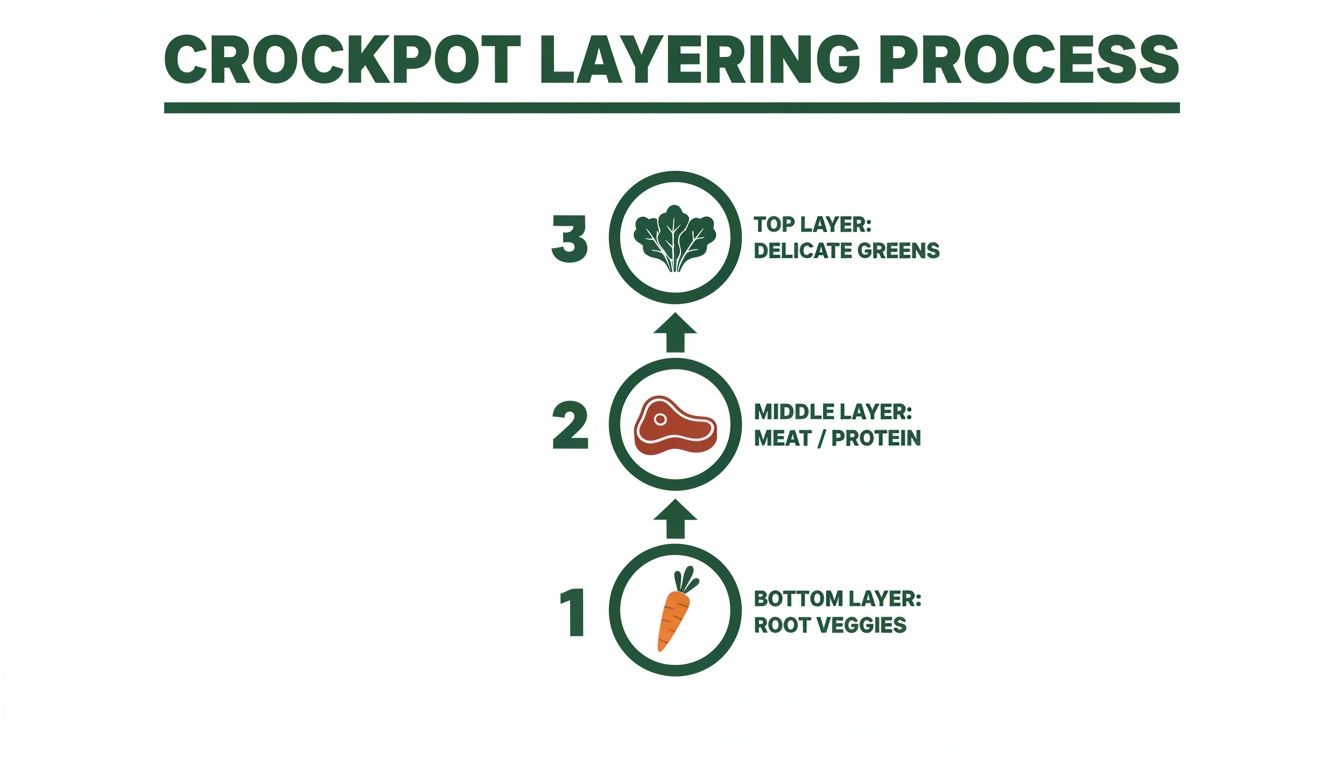
See? This simple stacking method keeps delicate foods from turning to mush while giving those tougher ingredients the direct heat they need to get tender.
Low vs. High: A Simple Breakdown
So, what's the real difference between the "Low" and "High" settings on your crockpot? You might be surprised to learn it's not the final cooking temperature. Both settings will eventually get your food to the same simmering point (around 209°F).
The only difference is how long it takes to get there.
- Low Setting: This is the true "slow" in slow cooking. It takes its time, usually 7-8 hours, to reach that simmer. It’s perfect for tough, cheap cuts of meat, as the long, gentle heat breaks down all the connective tissue and makes them incredibly tender. Think fall-apart pot roast.
- High Setting: This is the express lane. It gets up to that simmering temperature much faster, typically in about 3-4 hours. High is your go-to when you're shorter on time or cooking leaner proteins like chicken breasts that don't need a full day of cooking.
Need to swap a recipe's timing to fit your schedule? No problem. A good rule of thumb is that one hour on High is roughly equal to two hours on Low.
Pro-Tip: If you have a recipe that calls for 4 hours on High but you'll be out of the house for 8, just switch it to the Low setting. Easy.
Here's a handy little chart to help you convert cooking times from a conventional oven recipe to your crockpot.
Crockpot Cooking Time Conversion Chart
| Conventional Oven Time | Crockpot LOW Setting | Crockpot HIGH Setting |
| 15 to 30 minutes | 4 to 6 hours | 1.5 to 2.5 hours |
| 35 to 45 minutes | 6 to 8 hours | 3 to 4 hours |
| 50 minutes to 3 hours | 8 to 10 hours | 4 to 6 hours |
Just remember, these are estimates! Every slow cooker is a little different, so the first time you try a new recipe, you might want to check on it an hour or so before it's "supposed" to be done.
The Unspoken Laws of Slow Cooking
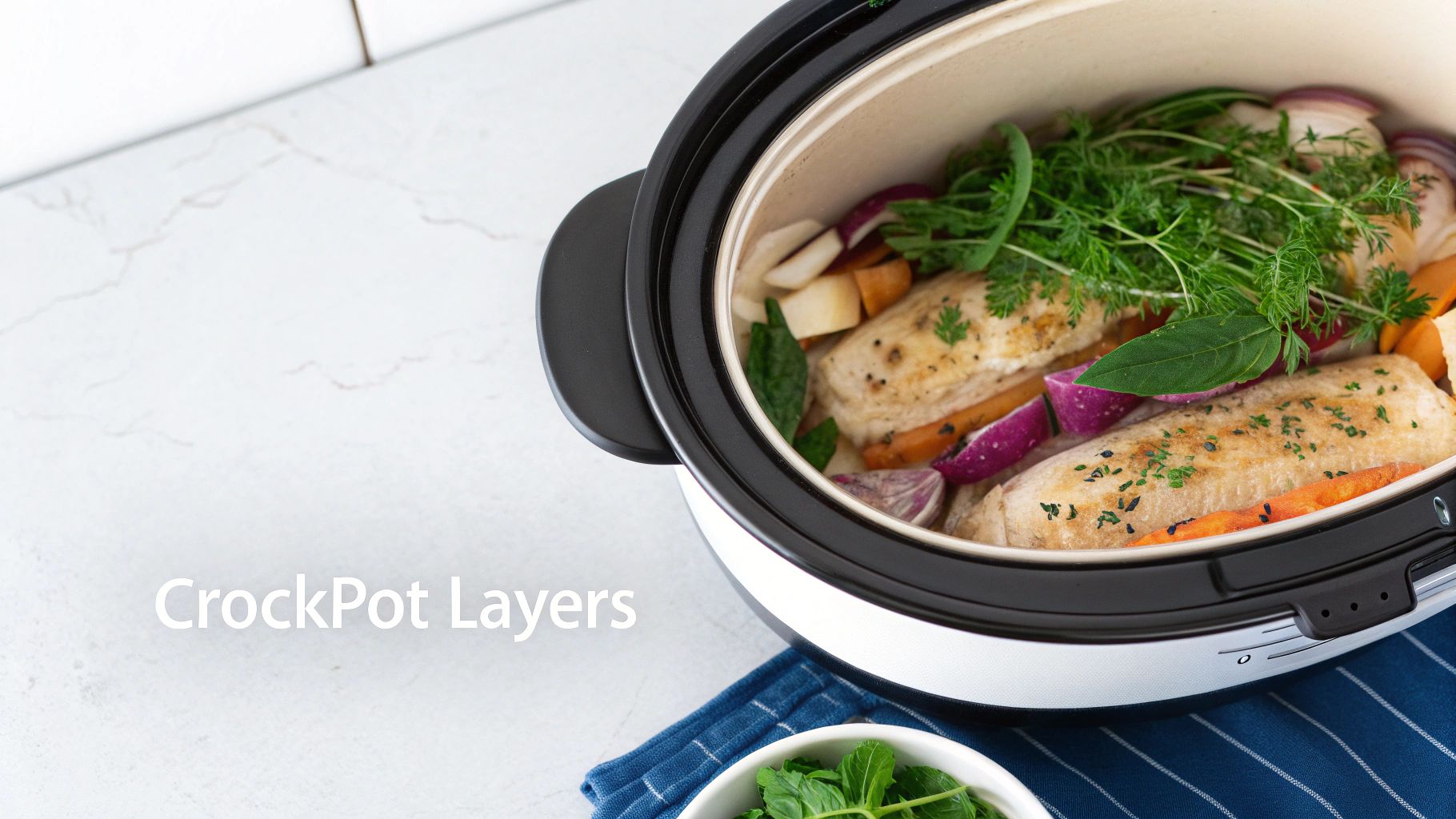
So, you've got the basics down pat. Fantastic. Now, let's get into the nitty-gritty—the little things that transform a decent crockpot dinner into something truly spectacular. Think of these as the time-honored commandments for getting rich flavors, perfect textures, and safe, delicious results every single time.
First and foremost, we need to talk about the cardinal sin of slow cooking: no peeking! I know, it's tempting. But every time you lift that lid, you're letting a huge cloud of precious heat escape. Just one little look can set your cooking time back by 20 to 30 minutes. Trust the magic happening under that lid.
Next up is liquid control. A slow cooker is a sealed environment, unlike a pot on the stove where steam constantly escapes. This means you need way less liquid than you think—often half of what a standard recipe might suggest. Go overboard, and you'll end up with a watery, bland mess instead of a rich, concentrated sauce.
Building Flavor from the Ground Up
Want to know a little secret that separates the home cooks from the pros? It's all about creating layers of flavor before anything even hits the crockpot.
Giving your meat a good sear in a hot pan is a total game-changer. That beautiful brown crust you get from the Maillard reaction adds a depth of savory, complex flavor that you simply can't achieve otherwise. Don't skip this step!
The same goes for your aromatics. Spending just five minutes to sauté onions, garlic, and celery unlocks their natural sweetness and takes your dish from "meh" to "more, please." For an extra flavor punch, don't be shy with seasonings. A good dry rub can make all the difference—check out these Wild Fennell Meat Rubs for some great ideas.
Safety First, Flavor Last
When it comes to food safety, there are a few rules that are absolutely non-negotiable.
- Always Thaw Your Meat: Never, ever toss frozen meat into your slow cooker. It heats up so gradually that the meat will spend hours in the bacterial "danger zone" (40°F to 140°F). Always thaw it completely in the fridge first.
- Fill 'Er Up (But Not Too Much): The sweet spot for your crockpot is between one-half and two-thirds full. If it's too empty, your food might burn. Too full, and it won't cook evenly and might just bubble over, creating a mess.
Finally, let's talk about the finishing touches. Delicate ingredients have no place in an eight-hour cook-a-thon. They'll turn to mush and lose all their vibrancy.
Hold back your tender ingredients for the very end. Things like fresh herbs, pasta, cream, or cheese should be stirred in during the last 15-30 minutes. This keeps their flavors bright and prevents dairy from curdling. It’s the trick to a fresh, dynamic finish.
Let Your Crockpot Automate Your Week
Your crockpot isn't just another kitchen gadget collecting dust. It's your secret weapon for taking back your weeknights. Seriously. Picture this: you walk in the door after a brutal day, and instead of facing the dreaded "what's for dinner?" question, you're greeted by the incredible smell of a home-cooked meal that's already done. This isn't a fantasy—it’s just smart crockpot meal prep.
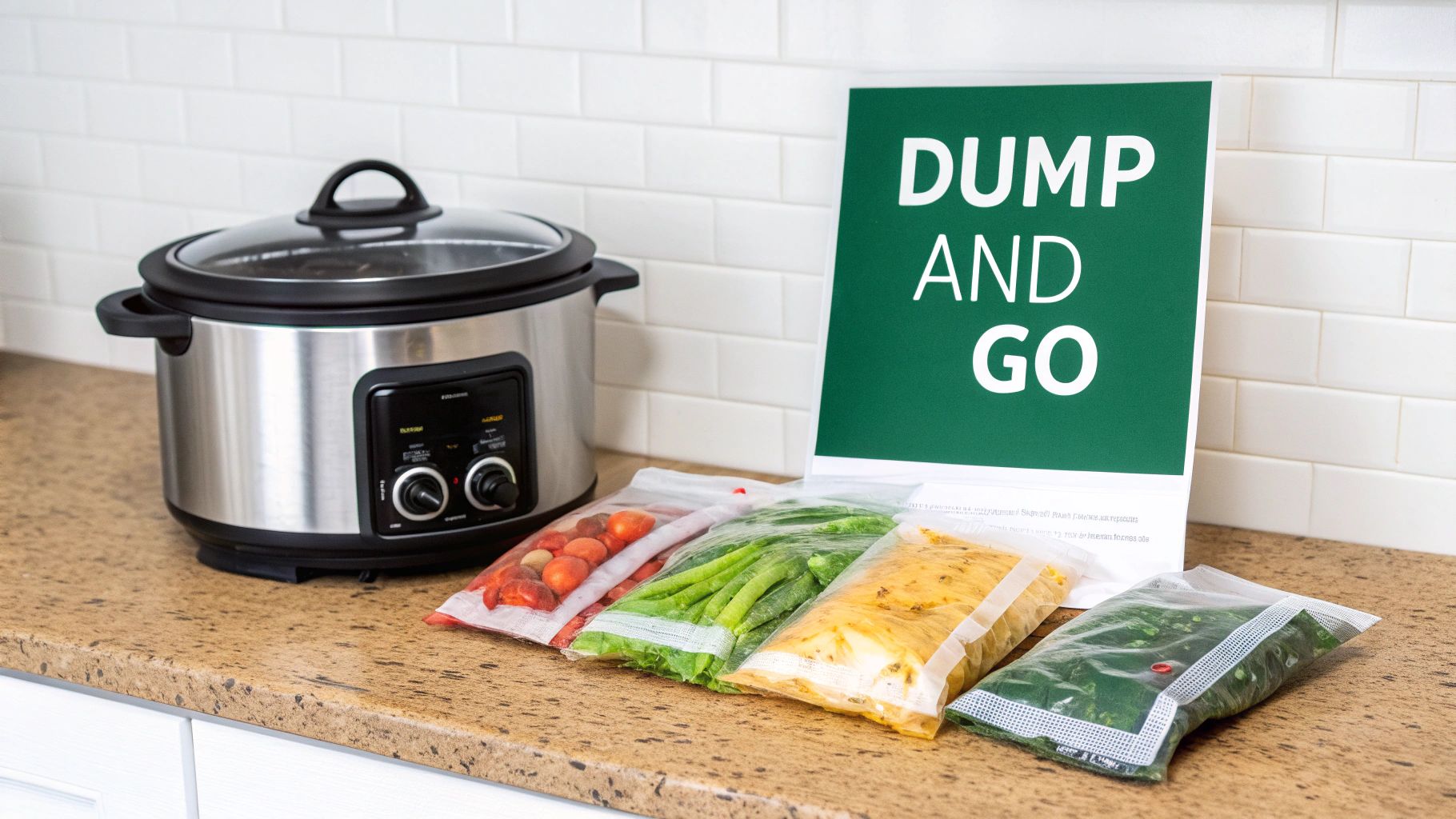
The whole concept boils down to one brilliantly simple idea: crockpot freezer packs. Think of them as ready-to-cook meal kits you make yourself. You set aside maybe an hour on a Sunday to chop veggies, portion out your proteins, and mix up some sauces. Then, you dump it all into labeled freezer bags.
When a chaotic Tuesday morning rolls around, you just stumble to the freezer, grab a bag, and empty it into the crockpot. Add a splash of broth or water, turn it on, and you’re out the door. It is a complete and total game-changer.
The Magic of Dump-and-Go Dinners
What makes this method so fantastic is its sheer efficiency. You're not just cooking one meal; you're prepping five or six in roughly the same amount of time. It streamlines everything, from the initial planning right down to the cleanup.
It’s no surprise that slow cookers are flying off the shelves. People are craving convenience, especially in households where everyone is running in a million different directions. We're all looking for ways to save time without resorting to takeout every night, and that's driving a bigger trend toward healthier, easier cooking. You can actually see the full market analysis on dataintelo.com to get a sense of how popular these things have become.
If you're new to this whole freezer meal thing, don't worry. We have a complete guide to creating amazing crockpot freezer meals that walks you through every step. It’s got everything you need to stock your freezer with incredible dinners.
Think about it. Your freezer, fully loaded with zesty Salsa Chicken, a hearty Beef Stew, and some classic Italian Meatballs. Every morning, you have a grab-and-go dinner solution that guarantees a wholesome meal later. This isn't just meal prep; it’s a system for a less stressful life.
Taking Automation to the Next Level
Okay, so the freezer packs solve the nightly cooking scramble. But what about the planning and shopping? Deciding what to make, hunting down recipes, and then building a grocery list—that’s a chore in itself and can easily eat up a couple of hours. This is where you can truly put your meal prep on autopilot.
Meal planning tools are designed to get rid of that friction completely. Instead of doomscrolling through recipe blogs on Sunday afternoon, you can get a full weekly plan done in seconds.
For instance, a tool like Meal Flow AI can instantly spit out a crockpot-focused plan tailored to you.
That screenshot shows a personalized meal plan being generated right before your eyes, saving you from all that mental gymnastics. Once the plan is set, it automatically creates your shopping list. You can even send that list straight to Instacart for delivery. The whole process, from idea to ingredients at your door, is handled.
When you pair smart planning tech with the simple practicality of a crockpot, a good idea becomes an effortless weekly routine. You’re not just learning to use a slow cooker; you’re building a sustainable system that hands you back hours of your precious time. It’s all about working smarter, not harder, in the kitchen.
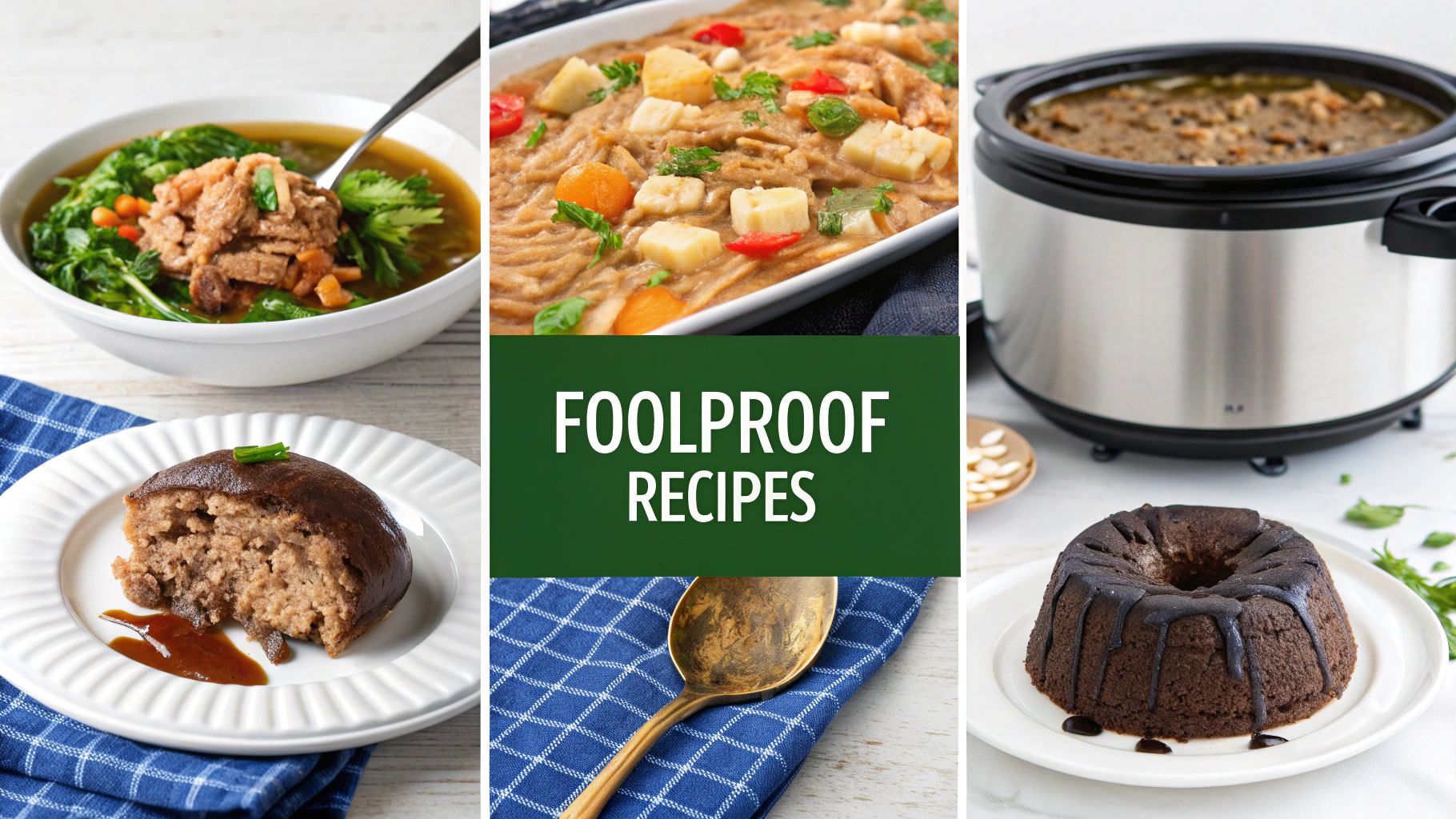
Three Foolproof Recipes to Get You Started
Alright, enough theory. The best way to get comfortable with your crockpot is to get your hands dirty and score a few delicious wins. Let's walk through three of my favorite, can't-mess-it-up recipes.
These aren't just recipes; they're your training wheels. Each one is designed to teach you a core slow-cooking principle, so you’ll understand the why behind what you're doing. We'll start with a classic, move to a cozy soup, and finish with a dessert that’s pure magic.
Don't worry about what kind of crockpot you have. Whether it's a fancy new model from Instant Brands or a trusty old Hamilton Beach, these basics work every time. Most of us have a medium-sized 3 to 7-quart cooker, which is perfect for these meals.
The Easiest Pulled Pork You'll Ever Make
This is the quintessential "set it and forget it" meal. It’s the perfect lesson in how low-and-slow heat can turn a cheap, tough cut of meat into something unbelievably tender.
- The Big Idea: This one is all about trusting the Low setting. Over several hours, it magically breaks down all the tough connective tissues in a pork shoulder until it literally falls apart.
- The Game Plan: Grab a 4-pound pork shoulder and plop it in the crockpot. In a small bowl, whisk together 1 cup of your favorite BBQ sauce, 1/4 cup of apple cider vinegar, and 2 tablespoons of brown sugar. Pour that glorious mixture right over the pork.
- The Magic Part: Put the lid on, set it to Low for 8 hours, and go live your life. When you come back, just shred the meat with two forks right in the pot. Done.
My biggest piece of advice here? Resist the urge to add extra liquid! The pork releases a ton of its own juice, creating a ridiculously rich and concentrated sauce all on its own.
Hearty Chicken and Veggie Soup
Next up, a lesson in layering and timing. This recipe shows you how to get perfectly tender chicken without turning all your beautiful vegetables into mush.
First things first, layer your hardiest veggies on the bottom—think chopped carrots, celery, and potatoes. This protects them and lets them cook gently.
Then, place about 1.5 pounds of chicken breasts right on top of the vegetable bed. Pour in 6 cups of chicken broth until everything is submerged. Set it to Low for 6 hours, and that's it! Everything will finish cooking at the exact same time.
For more simple dinner inspiration, check out our guide on 10 crockpot meal prep recipes for your family.
Ridiculously Simple Chocolate Lava Cake
Yes, you read that right. Dessert! In a crockpot! This recipe is my secret weapon for looking like a baking genius with almost zero effort. The slow cooker's gentle, even heat creates an incredibly moist cake with a gooey, molten chocolate center.
It's almost embarrassingly easy. Just mix up a box of chocolate cake mix according to the package directions. Pour the batter into your greased slow cooker, pop the lid on, and cook on High for 1.5 to 2 hours.
Once you've mastered this mind-blowing dessert, you'll be ready to tackle just about anything, even a perfect slow cooker fried rice.
How to Fix Common Crockpot Cooking Fails
We've all been there. After a long day, you walk in the door, ready for that glorious slow-cooked meal, only to lift the lid and find a watery mess or meat tougher than shoe leather. It’s a soul-crushing moment. But don't throw in the towel just yet!
Most of these so-called "crockpot fails" are completely salvageable. Think of this as your personal troubleshooting guide. With a few pro tricks, you can rescue dinner and learn exactly what went wrong for next time.
My Sauce is Way Too Watery
Ah, the classic crockpot soup-ocalypse. This is probably the number one issue people face, and it makes sense—that tightly sealed lid means almost no liquid evaporates. But fixing it is a piece of cake.
- The Quick Fix: A simple cornstarch slurry is your best friend here. Just whisk one tablespoon of cornstarch with two tablespoons of cold water until it's perfectly smooth.
- The Method: Crank the slow cooker up to High, take off the lid, and slowly stir in that slurry. Let it bubble away for about 10-15 minutes, and watch the magic happen as your sauce thickens right up.
Another easy trick? Just take the lid off for the last 30 to 45 minutes of cooking. This lets the steam escape and allows your sauce to reduce and concentrate its flavor all on its own.
My Personal Trick: If I’m making a creamy soup or a hearty stew, I’ll just mash a few of the cooked potatoes or beans right in the pot with a fork. It works as a fantastic natural thickener and adds a ton of body to the dish.
My Vegetables Turned to Mush
Unless you were trying to make baby food, mushy vegetables are a huge letdown. The secret to avoiding this sad, soggy fate is all about timing. Not all veggies are created equal, and delicate greens can't hang on for an eight-hour cook time.
Think of it as a staggered entry. The tough guys—your dense root vegetables like potatoes, carrots, and onions—go in at the very beginning. They need that long, slow cook to get tender.
Your softer, more delicate veggies, however, should be fashionably late to the party.
- Zucchini and bell peppers: Toss these in for the final 45-60 minutes.
- Peas, corn, and spinach: These need almost no time at all. Stir them in during the last 5-10 minutes.
This little adjustment is a total game-changer. By adding ingredients in stages, you guarantee everything is cooked perfectly. Say goodbye to mush forever.
Got Crockpot Questions? I've Got Answers.
Alright, even after you've got the basics down, a few questions always pop up. It's totally normal. Think of me as your crockpot guru, here to tackle those nagging "what ifs" that stand between you and slow-cooking bliss. Let's get these sorted so you can fire up that cooker with confidence.
You're not just learning a new kitchen trick; you're unlocking the secret to way easier, more delicious weeknights.
Can I Really Just Leave This Thing on All Day?
Heck yes! That's the whole point. Modern slow cookers are built for exactly that—set it and forget it while you're at work for 8 to 10 hours. They're incredibly safe for cooking while you're out.
Just make sure it's sitting on a flat, sturdy surface, well away from anything that could catch fire (like a stack of mail or a dish towel). For those marathon cooking sessions, always stick to the Low setting.
A pro tip I live by: keep the pot at least halfway full, but never more than two-thirds. This little rule prevents your food from getting scorched on the bottom and stops a bubbling-over catastrophe from happening on your countertop.
Seriously, Do I Have to Brown the Meat First?
Let's get real. Technically? No. Your crockpot will cook the meat just fine without a pre-sear. But should you? If you want mind-blowing flavor, then absolutely, one hundred percent, yes!
Taking just 5-10 minutes to brown your meat in a hot skillet before adding it to the crockpot creates this gorgeous, caramelized crust. It's all thanks to a magical little process called the Maillard reaction, which adds a layer of deep, savory flavor you just can't get any other way. It's the difference between a "meh" pot roast and one that people talk about for weeks.
Look, if you're in a mad dash, you can skip it. But if you have the time, searing your meat is the single biggest upgrade you can make to your crockpot game. It takes a dish from good to unforgettable.
How Do I Convert My Favorite Recipe for the Crockpot?
Turning a beloved stovetop or oven recipe into a slow-cooker classic is way easier than you'd think. You just have to make a few tweaks to work with the crockpot's low-and-slow, sealed environment.
- Cut Back on the Liquid: This is the big one. Your crockpot lid traps all the steam, so almost no liquid evaporates. A great rule of thumb is to cut the liquid from the original recipe by about half. You can always add more later if it looks dry, but you can't take it out.
- Rethink the Cook Time: The time conversion is actually pretty simple. For every hour of regular cooking (in an oven, for example), plan on about four hours on Low or two hours on High in the crockpot.
- Hold the Delicate Stuff: Nobody wants mushy herbs or curdled cream. Add delicate ingredients toward the very end. Things like fresh herbs, dairy (cheese, milk, sour cream), or fast-cooking veggies like peas and spinach should be stirred in during the last 15-30 minutes.
Nail these three little adjustments, and you'll be able to confidently adapt pretty much any recipe you find.
---
Ready to let a robot do all this planning for you? Meal Flow AI can whip up your weekly crockpot meal plan and a shopping list that’s ready for Instacart in just a few seconds. You'll get hours of your life back. Stop stressing and start cooking—check it out at https://mealflow.ai today.