How to Meal Prep Eggs a Busy Mom’s Guide to Smart Breakfasts
Learn how to meal prep eggs with five easy methods. Get storage tips and a weekly meal plan to save time and make mornings stress-free.
Love This Article?
Get personalized meal plans with recipes like this, automatically matched to your nutrition targets.
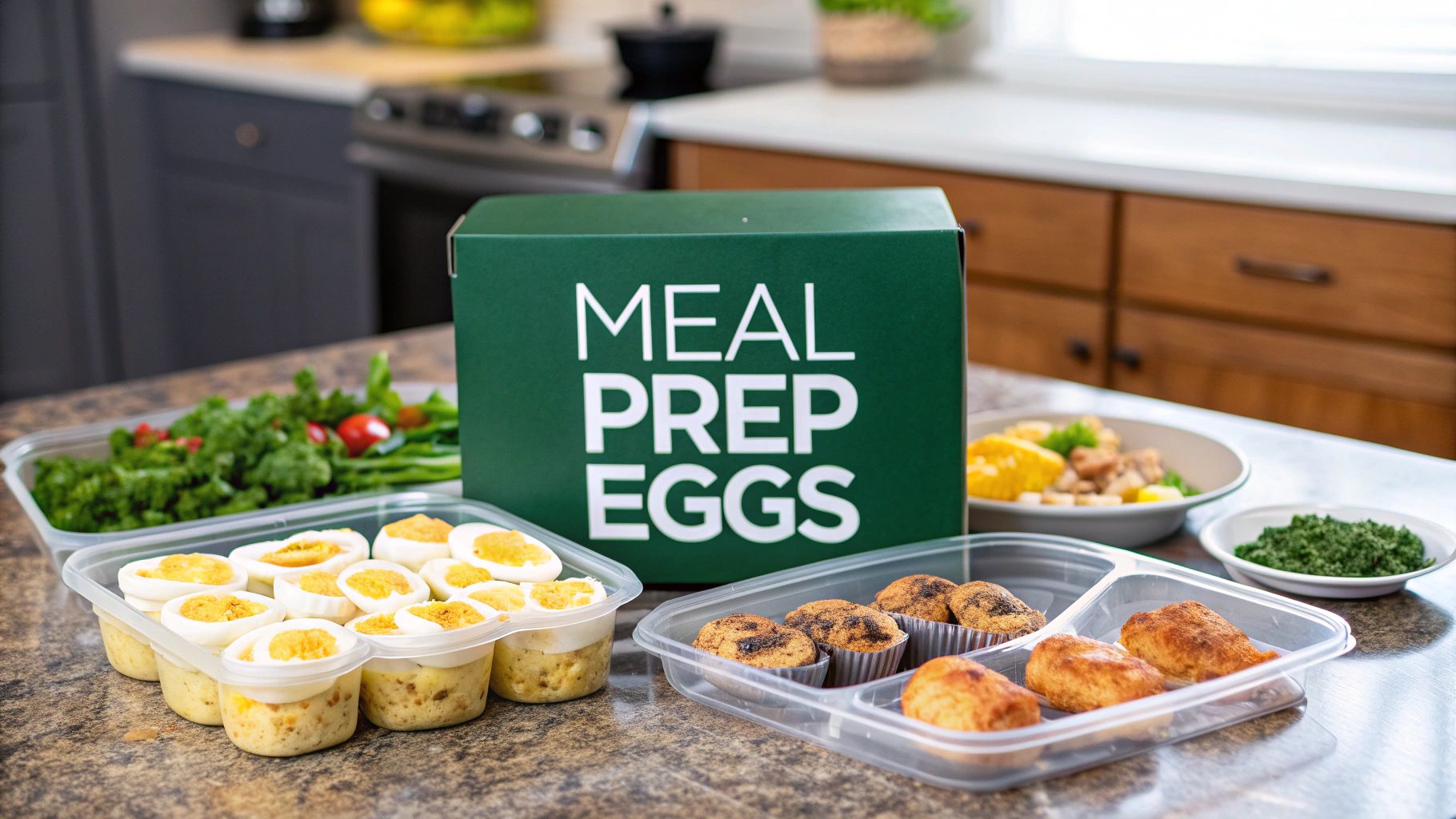
Let’s be honest, mastering the art of meal-prepped eggs is really about one thing: buying back your time. Seriously, spending an hour on a Sunday getting your eggs in order can completely flip the script on your week, turning chaotic mornings into calm, grab-and-go moments. It's the ultimate hack for busy moms who need something nutritious and fast, like, yesterday.
Why Prepping Eggs Is a Total Game-Changer
Ever find yourself staring into the fridge at 7 AM, a tiny human attached to your leg, wondering what on earth to make for breakfast? Yeah, you're not alone. The morning rush is real, but a little egg prep can totally change that frantic energy. This isn't just about boiling a few eggs; it's a strategic move to guarantee you and your family have healthy, protein-packed meals ready to go without the daily scramble (pun intended).
Imagine a week where breakfast is a no-brainer. Picture grabbing perfectly baked egg muffins on your way out the door or slicing a pre-peeled hard-boiled egg over a salad for a lunch that takes seconds to assemble. That's what a little egg prep can do for you. It's a small investment of about an hour over the weekend that pays you back in time, energy, and sanity all week long.
The Little Nutritional Powerhouse
There's a reason eggs are a meal prep staple for busy moms. They are a powerhouse of nutrition and convenience, making them a perfect fit for planning tools like Meal Flow AI. For anyone prepping ahead, eggs are a dream. You can batch-cook hard-boiled eggs that last up to a week in the fridge, each one packing 6 grams of high-quality protein. That’s about 12% of what the average adult needs in a day! For more stats and trends, check out the latest reports from The Poultry Site.
But it’s not just about protein. Eggs are also loaded with important nutrients like Vitamin D, B12, and choline, which is a big deal for brain health. Kicking off your day with a protein-rich meal helps keep blood sugar levels steady, meaning you'll feel full and focused, and you'll be less likely to raid the pantry for snacks mid-morning.
Unbeatable Versatility (And They're Easy on the Wallet!)
One of the best things about prepping eggs? They are never boring. Think of them as a blank canvas for whatever flavors you're craving.
- Endless Flavor Combos: Throw in some spinach and feta, or go classic with bacon and cheddar. You can switch it up every week so no one ever gets tired of them.
- Not Just for Breakfast: Prepped eggs are multitaskers! Use them for quick egg salad sandwiches, a protein boost for salads, or just a simple, satisfying snack on its own.
- Budget-Friendly Protein: Let's face it, feeding a family can get expensive. Compared to other protein sources, eggs are incredibly affordable, making them a smart choice for any budget.
The real magic here is how simple it all is. With just a few core methods, you can create a whole menu of options that makes your week run smoother. And when you pair this habit with a smart tool like Meal Flow AI, you can automate your planning and shopping, turning a simple kitchen routine into a full-blown efficiency machine.
Egg Prep Methods and Their Best Uses
Feeling inspired? Here’s a quick summary of five popular egg prep methods, their ideal storage times, and the best ways to use them for quick and easy meals.
| Prep Method | Best For | Fridge Life | Freezer Friendly? |
| Hard-Boiled | Salads, snacks, egg salad | Up to 7 days | No |
| Baked Egg Muffins | Grab-and-go breakfast | Up to 4 days | Yes (up to 3 months) |
| Scrambled Portions | Burritos, bowls, tacos | Up to 4 days | Yes (up to 3 months) |
| Sous-Vide Egg Bites | A "fancy" coffee-shop style breakfast | Up to 7 days | Yes (up to 3 months) |
| Sheet-Pan Eggs | Breakfast sandwiches | Up to 4 days | Yes (up to 3 months) |
Having this little cheat sheet handy helps you decide what to make based on how you plan to eat during the week. Now, let’s get into the nitty-gritty of how to actually make these happen.
Five Foolproof Methods for Batch Prepping Eggs
Alright, let's get cracking. If you're tired of the morning scramble (pun intended), you've come to the right place. We're about to walk through five dead-simple, totally reliable ways to prep a week's worth of eggs. Think of this as your secret weapon for turning an hour on Sunday into a full week of easy, protein-packed breakfasts and lunches.
Whether you're a purist who loves a classic hard-boiled egg or you're trying to replicate those fancy coffee-shop egg bites at home, I guarantee there's a method here for you. I've included the exact times, temps, and little tricks I've learned over the years to make sure they come out perfect every single time.
This little visual sums up the whole game plan. It's not about complicated chef skills; it's about a simple flow.
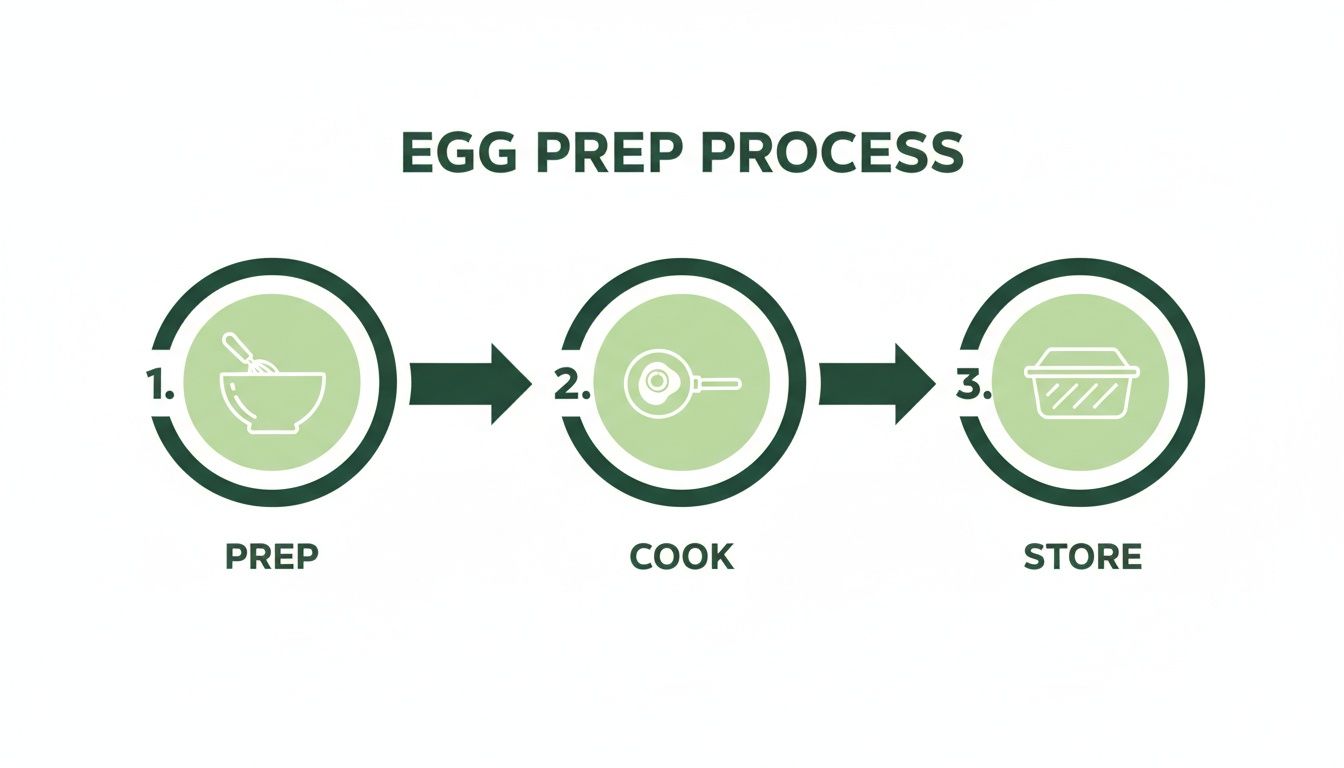
See? Prep your ingredients, cook a big batch, and store it right. That's the core of it. Now for the fun part—the methods.
The Classic Hard-Boiled Egg
You can't talk about egg prep without starting with the GOAT: the hard-boiled egg. It's the king of grab-and-go snacks, a perfect salad topper, and the foundation for a lightning-fast egg salad sandwich. The only trick is avoiding that dreaded grey-green ring around the yolk. Nobody wants that.
Here's my never-fail method. Place your eggs in a single layer in a pot and cover them with about an inch of cold water. Crank the heat and bring it to a rolling boil. The moment it does, kill the heat, pop a lid on the pot, and let the eggs hang out in the hot water for 10-12 minutes.
When the timer goes off, fish them out with a slotted spoon and plunge them straight into an ice bath for at least five minutes. This shocks them, stops the cooking cold, and—bonus!—makes them way easier to peel. Store them unpeeled in the fridge, and they’re good for up to 7 days.
Family-Favorite Baked Egg Muffins
These are a game-changer for chaotic mornings. Think of them as mini, portable frittatas you can customize with whatever your family likes. They are also incredibly freezer-friendly, making them a pillar of any serious batch cooking meal prep routine.
To make a dozen, just whisk 12 large eggs with a splash of milk and whatever seasonings you're feeling. Pour the mix into a greased muffin tin, filling each cup about two-thirds of the way. Now, let's get creative with the fillings:
- The Crowd-Pleaser: Diced ham, shredded cheddar, and a sprinkle of chives.
- Green Machine: Sautéed spinach, chopped bell peppers, and crumbled feta.
- Southwest Kick: Black beans, corn, and a little pepper jack cheese for heat.
Bake at 350°F (175°C) for 15-20 minutes, or until the centers don't jiggle. Let them cool down completely before you pack them away. They'll keep in an airtight container in the fridge for about four days, or you can freeze them for up to three months.
Freezer-Friendly Scrambled Egg Portions
Yes, you can freeze scrambled eggs, and no, they don't have to be rubbery. The secret is to slightly undercook them. This method is brilliant for future breakfast burritos, tacos, or quick protein bowls.
For about eight servings, whisk up 12 eggs with a bit of milk, salt, and pepper. Cook them over medium-low heat, stirring gently and constantly. Pull them off the heat when they are just barely set but still look a little glossy and wet.
Let the eggs cool completely before you do anything else. Then, divide them into single-serving portions in freezer-safe bags or containers. They'll keep for up to 3 months in the freezer. To reheat, just pop a portion in the microwave for 60-90 seconds, and they'll taste like you just made them.
Sheet-Pan Eggs for Easy Breakfast Sandwiches
If your family runs on breakfast sandwiches, this will change your life. Baking eggs in a sheet pan gives you a perfectly even, thin layer that's a dream to slice into neat squares. Say goodbye to frying up a single egg every morning.
First, preheat your oven to 350°F (175°C) and give a 15x10-inch rimmed baking sheet a good spray of cooking oil. Whisk 12 eggs with a half-cup of milk—or even better, cottage cheese for a creamy, protein-packed boost—plus salt and pepper. Pour it all into the pan.
Bake for 15-20 minutes, until the center is firm to the touch. Let it cool in the pan for about 10 minutes, then slice it up into sandwich-sized squares. They're perfect for stacking on English muffins, bagels, or croissants.
It's not just you—the whole world loves eggs. The global egg market was worth a staggering USD 352.17 billion in 2025 and is expected to climb to USD 585.37 billion by 2033. Why? People want convenient, high-protein foods, and eggs are the perfect fit for batch cooking. Interestingly, brown eggs, which make up 62.7% of the market, are fantastic for boiling because their shells are a bit tougher.
Sous-Vide Egg Bites (Coffee-Shop Style)
Ever wonder how coffee shops get those egg bites so velvety and perfect? It's sous-vide, and you can totally do it at home with an immersion circulator or even the sous-vide setting on an Instant Pot. The texture is just incredible.
You'll start by blending 6 eggs, a half-cup of cottage cheese, and a half-cup of shredded Gruyère or cheddar until it's perfectly smooth. Pour this mixture into small, greased 4-ounce canning jars, filling them about three-quarters full. Now's the time to toss in your favorite extras, like crumbled bacon or roasted red peppers.
Seal the jars until they're just "fingertip-tight" (don't crank them down). Place them in your sous-vide water bath, preheated to 172°F (78°C), and let them cook for 1 hour. When they're done, you can keep them right in the jars in the fridge for up to a week. They're amazing reheated or even eaten cold on the run.
Smart Storage and Reheating Without the Rubber
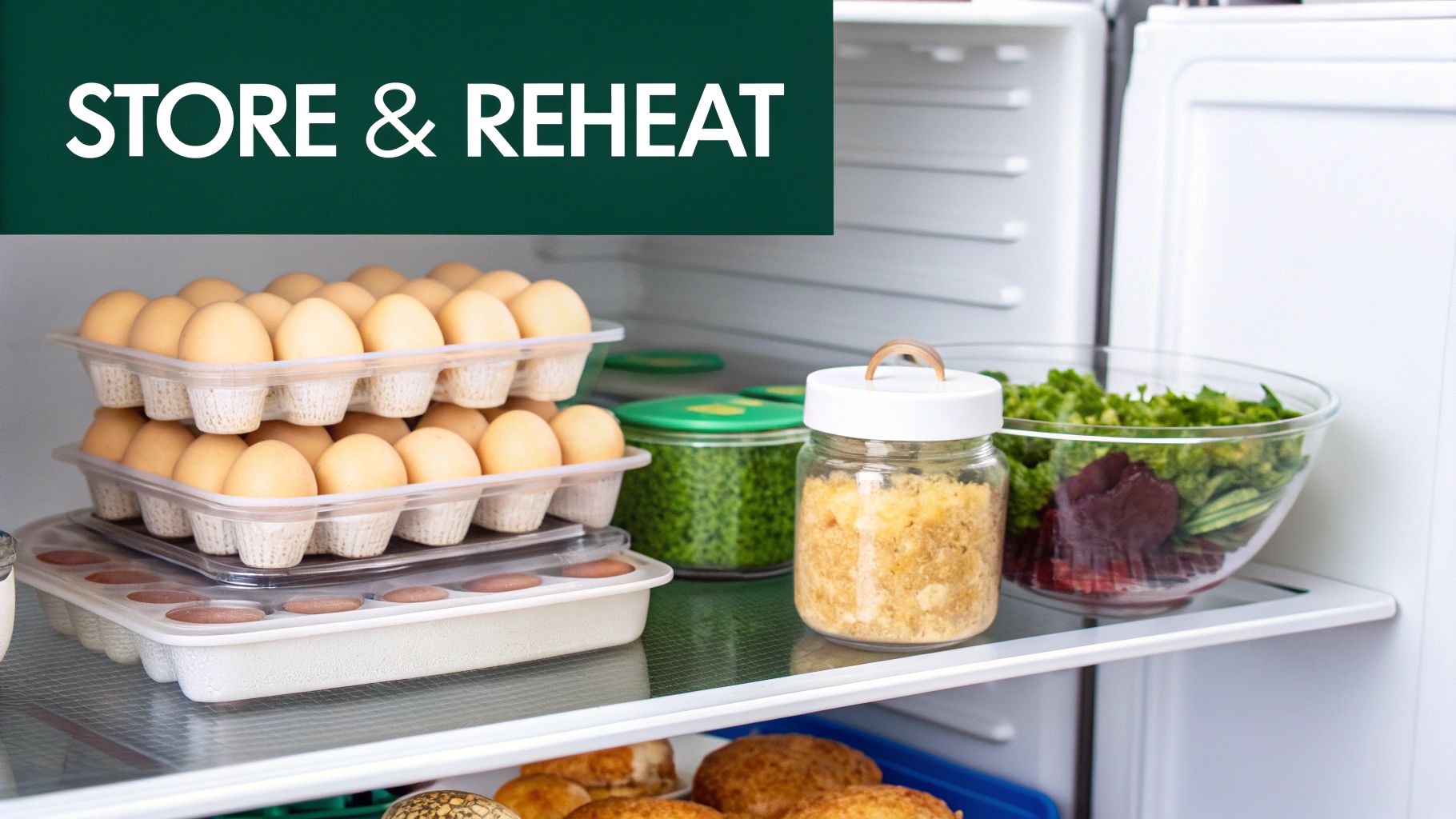
You’ve officially conquered the prep phase—high five! Now for the moment of truth: making sure your perfectly cooked eggs don't turn into sad, rubbery pucks by Tuesday morning.
Getting storage and reheating right is what separates a week of delicious, easy meals from a week of disappointment. Let's make sure all that Sunday effort pays off.
Essential Storage Rules for Prepped Eggs
First things first: cool everything completely before it even sees the inside of a container. Trapping steam is the fastest way to get soggy eggs and invite unwanted bacteria. Patience here is key.
Your choice of container also makes a huge difference. You absolutely need something airtight to keep your eggs from absorbing that weird fridge smell. Nobody wants their egg muffin tasting like last night's leftover garlic bread.
Here’s the breakdown for each prep method:
- Hard-Boiled Eggs: Keep them unpeeled in an airtight container or even their original carton. They’ll stay fresh for a full 7 days. If you peel them ahead of time, store them with a damp paper towel to prevent them from drying out, but know they'll only last about 5 days this way.
- Egg Muffins & Sheet-Pan Eggs: Once cool, stack 'em in a glass container with a little parchment paper between layers to stop them from sticking together. They're good for up to 4 days in the fridge.
- Scrambled Portions & Sous-Vide Bites: Pop these into individual airtight containers. They'll last up to 4 days in the fridge. If you want to freeze them, wrap portions tightly or use freezer-safe bags. They’ll keep for up to 3 months!
A tidy fridge can be a meal prep game-changer. When you have a designated spot for your prepped meals, you're more likely to grab them. Some clever Fridge Organization Ideas can seriously extend the life of your food and make those grab-and-go moments even faster.
The Art of Reheating Without the Rubber
The microwave can be your best friend or your worst enemy. The secret? Go low and slow. Blasting your beautiful egg muffins on high is a one-way ticket to a tough, chewy mess.
The goal is to gently warm them, not cook them all over again.
Reheating That Actually Works
Different eggs need different kinds of love. Here’s how to nail it every single time:
- For Egg Muffins and Sheet-Pan Squares:
- Microwave: My go-to trick is to wrap one in a damp paper towel and heat it on 50% power for 30-60 seconds. The steam keeps it unbelievably moist.
- Toaster Oven/Air Fryer: The best method, hands down. A few minutes at 300°F (150°C) makes them taste like they just came out of the oven, with perfectly crispy edges.
- For Scrambled Egg Portions:
- Microwave: Use a covered dish and heat on 50% power, stirring every 30 seconds until they’re just warmed through. This prevents any dreaded hot spots.
- Stovetop: For the absolute best texture, melt a tiny bit of butter in a non-stick skillet over low heat and gently warm the eggs. It makes a world of difference.
- For Sous-Vide Egg Bites:
- Microwave: These are practically foolproof. Take the lid off and heat on 50% power for about 45-60 seconds. They reheat beautifully.
And of course, hard-boiled eggs are fantastic cold. Slice them onto a salad, mash them for a quick sandwich, or just eat one with a sprinkle of everything bagel seasoning. If you must warm one up, just let it sit in a bowl of hot tap water for a few minutes. Please, never microwave a whole hard-boiled egg unless you enjoy cleaning up explosions.
Egg Storage and Reheating Cheat Sheet
Here's a handy table to keep all this straight. No more guessing!
| Egg Prep Method | Storage Container | Max Fridge Time | Max Freezer Time | Best Reheating Method |
| Hard-Boiled | Airtight container (unpeeled) | 7 days | Not recommended | Eat cold or warm in hot water |
| Egg Muffins | Airtight container (with parchment) | 4 days | 3 months | Toaster oven or microwave (50% power) |
| Sheet-Pan Eggs | Airtight container (with parchment) | 4 days | 3 months | Toaster oven or microwave (50% power) |
| Scrambled Eggs | Individual airtight containers | 4 days | 3 months | Stovetop (low heat) or microwave (50% power) |
| Sous-Vide Bites | Original jars or airtight container | 4 days | Not recommended | Microwave (50% power) |
Bookmark this page or screenshot this table—it'll save your breakfast more times than you can count.
If you’re ready to become a true meal prep master, check out our complete guide on https://mealflow.ai/blog/how-to-store-meal-prep for even more tips and tricks.
Putting It All Together: Your Weekly Plan and Shopping List
Okay, so you've just rocked your Sunday meal prep. You have a beautiful lineup of hard-boiled eggs, egg muffins, and more sitting in your fridge. Now for the fun part: turning that prep work into a week of ridiculously easy, stress-free meals.
This isn't just a list of vague ideas. I’m going to show you exactly how that hour you just spent saves you from the daily "what's for breakfast/lunch?" scramble. You'll see how those perfect hard-boiled eggs become a power salad in seconds and how those sheet-pan eggs make breakfast burritos a breeze.
A Sample 5-Day Meal Plan to Get You Started
Here’s a sneak peek at what a week could look like when you have your eggs ready to go. Think of this as a template—feel free to mix and match days to fit your family’s ever-changing schedule.
- Monday Morning: Kick off the week by grabbing two Baked Egg Muffins on your way out the door. It’s the perfect portable breakfast for a chaotic Monday, loaded with protein to keep everyone going until lunch.
- Tuesday Lunch: Need a fast, healthy lunch? Slice up two Hard-Boiled Eggs and toss them over a big bowl of mixed greens with your favorite vinaigrette. Bam. Lunch is served in under two minutes.
- Wednesday Breakfast: Treat yourself to a café-style breakfast at home by reheating a couple of Sous-Vide Egg Bites. They feel so luxurious, especially paired with some fresh fruit.
- Thursday Dinner: It’s "brinner" night! Warm up some of your Freezer-Friendly Scrambled Egg Portions and roll them into tortillas with a sprinkle of cheese, a dollop of salsa, and maybe some avocado. So easy, so good.
- Friday Breakfast: Cruise into the weekend with the ultimate quickie breakfast sandwich. Just slide a square of your Sheet-Pan Eggs onto a toasted English muffin. Done.
While eggs are the hero here, you don't want to get stuck in a rut. It’s always a good idea to find other delicious recipes to sprinkle throughout the week and keep your taste buds happy.
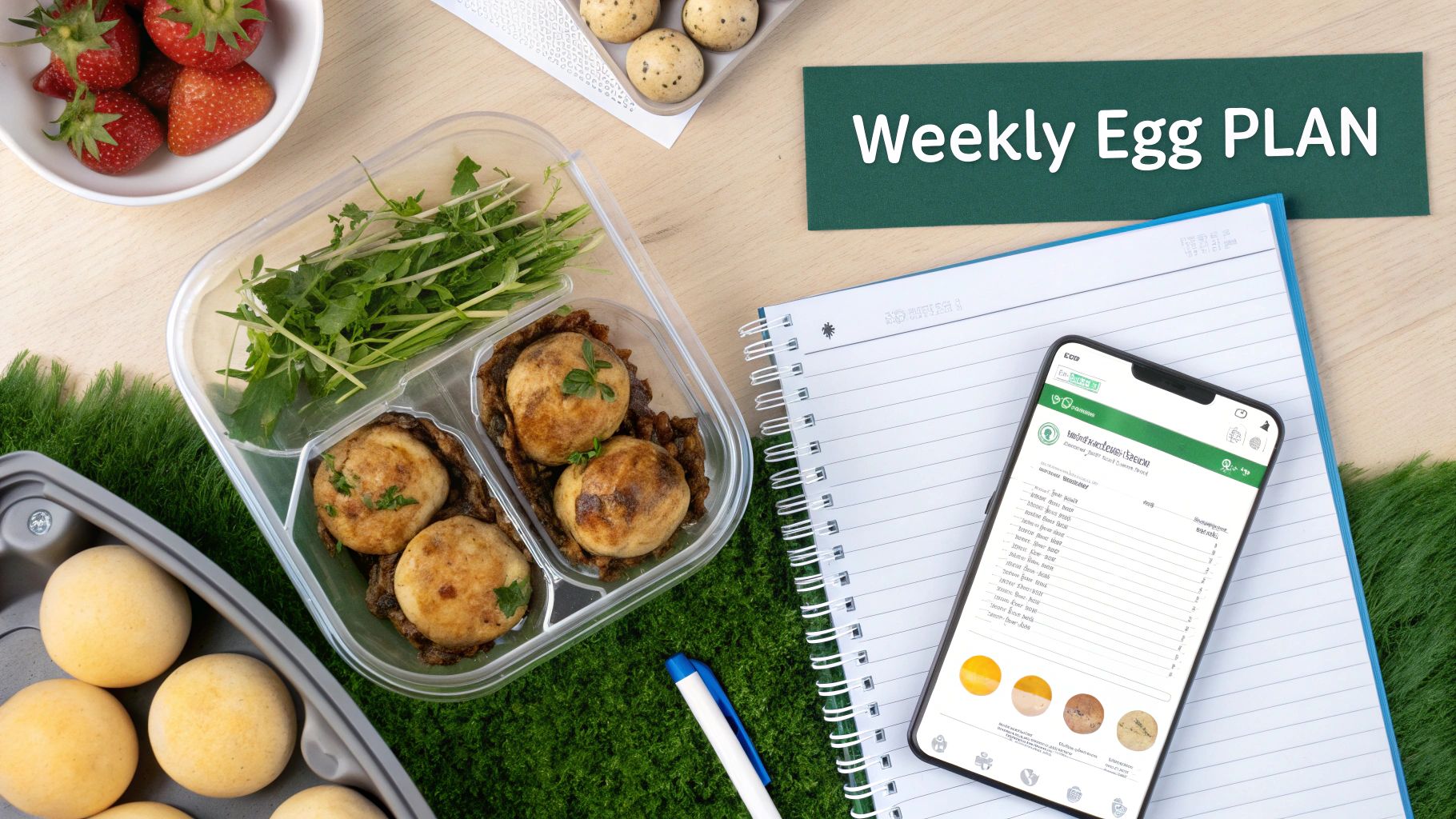
Making Your Grocery Run Effortless
Now for the part we all dread: the shopping. Instead of scribbling down a list on a napkin that you’ll probably lose anyway, let's get smart about it.
For a busy mom, prepping eggs can free up 2-3 hours a week. That's huge! Especially with U.S. egg prices predicted to jump by a staggering 41.1% in 2025. Smart planning isn't just a time-saver; it's a money-saver.
An app can analyze your meal plan, figure out exactly what you need, and even build a shopping list for you. It knows your family eats about 24 eggs per person annually and can help you buy in bulk to get ahead of those price hikes.
Your Instacart List, Done in a Click
Imagine your meal plan magically turning into a ready-to-order Instacart list. That's the idea. It takes your planned meals and breaks them down into a precise grocery list, so you don't overbuy or forget the salsa.
Here's what a shopping list for our 5-day plan would look like:
Produce:
- Mixed greens (1 large container)
- 1 Avocado
- 1 bag of your go-to fresh fruit (like apples or oranges)
- Veggies for your egg muffins (spinach, bell peppers, onions—you pick!)
Dairy & Eggs:
- 2 dozen large eggs (the main event!)
- Milk (1 half-gallon)
- Shredded cheddar cheese
- Cottage cheese
- Optional fancy cheese: Feta or Gruyère always elevates things.
Protein:
- Diced ham or cooked bacon for mix-ins (optional but encouraged!)
Pantry & Bakery:
- Whole wheat tortillas
- English muffins
- Salsa
- Your favorite salad dressing
A smart app can take this list and drop it right into your virtual cart. No more wandering the aisles or impulse-buying that bag of chips. You just review, click, and wait for your groceries to arrive. It’s a total game-changer.
Making Your Egg Prep Routine Effortless
And just like that, you’re an egg-prepping pro.
You're now loaded with the know-how, storage secrets, and meal ideas to make your weeks run smoother than you thought possible. Learning how to meal prep eggs isn’t just about cooking—it’s about reclaiming your time and sanity, especially on those chaotic weekday mornings.
We've covered why eggs are basically a superfood, walked through five ridiculously easy prep methods, and cracked the code on perfect storage and reheating. The big idea is simple: an hour of prep on a Sunday can literally save you from a week of stress and last-minute breakfast scrambles.
Your New Egg Prep Mindset
Start thinking of this as less of a chore and more of an investment in your future self. Every tray of baked egg muffins or pot of perfectly hard-boiled eggs is a high-five to the you who's going to be tired, hungry, and pulled in a million directions on Wednesday morning.
Here are the key things to keep in your back pocket:
- Keep It Simple: Don't try to master all five methods at once. Just pick one that sounds tasty and give it a whirl.
- Make It Your Own: The only meal prep that works is the one you actually want to eat. Go wild with different spices, veggies, and cheeses until you find your signature combo.
- Let Tech Help: Tools like Meal Flow AI are built to take the grunt work out of planning, making the whole process feel less like a project and more like magic.
The real goal here is to build a system that feels like your own personal superpower. You're not just making food; you're engineering a calmer, more delicious week for yourself.
By putting these techniques into practice, you're creating a routine that supports your health, your wallet, and your peace of mind. If you’re hungry for more ways to make life easier, our guide on making meal planning easy is the perfect next read.
So go ahead, grab that extra carton of eggs. You're officially ready to enjoy all the perks of being an egg prep master. Future you is already thanking you.
Got Questions About Prepping Eggs? I've Got Answers.
Alright, let's talk about the nitty-gritty. Even the most seasoned meal prepper runs into a few head-scratchers now and then, especially with something as seemingly simple as eggs. Think of this as your personal troubleshooting guide—a place to get quick, clear answers so you can prep with total confidence and keep your breakfast game on point.
Let's dive into some of the questions I hear all the time from fellow meal prep warriors.
How Long Do My Prepped Eggs Actually Last?
This is the big one, and for good reason! Nobody wants to put in all that work just to have it go bad. The real answer depends entirely on how you cooked them.
Here’s a quick rundown you can mentally bookmark:
- Hard-Boiled Eggs: These are the marathon runners of the egg prep world. Keep them unpeeled in an airtight container, and they’ll last a solid 7 days in the fridge.
- Baked Egg Muffins & Sheet-Pan Eggs: Your grab-and-go heroes for the first half of the week. Stored properly, they’ll be fantastic for 3-4 days.
- Sous-Vide Egg Bites: That fancy cooking method pays off. These also hold up beautifully for 3-4 days in the fridge.
- Scrambled Egg Portions: These are best enjoyed fresh. They'll keep for 2-3 days in the fridge, but they're absolutely brilliant for the freezer, where they'll stay good for up to 3 months.
This is exactly why a little planning goes such a long way. Knowing your hard-boiled eggs will last all week means you can make a big batch on Sunday and have them ready for snacks and salads right through Friday.
Can I Throw Veggies in My Egg Bakes?
Absolutely! In fact, you should. Loading up your egg muffins or sheet-pan bakes with veggies is my favorite way to make them more flavorful and nutritious. It's also a sneaky-smart trick for getting more greens into your family’s diet.
There is one little catch, though: water content.
Some veggies—like fresh mushrooms, tomatoes, or zucchini—can release a ton of moisture as they cook, turning your fluffy eggs into a soggy, watery mess. To dodge this bullet, just give those high-moisture vegetables a quick sauté in a pan first. This cooks off the excess water and ensures your final product is perfect, not spongy.
Pro Tip: My secret weapon is using leftover roasted vegetables from dinner. They're already cooked, packed with flavor, and have very little moisture left. They are the perfect, zero-effort addition to any egg bake.
What's the Secret to Avoiding Rubbery Reheated Eggs?
Ah, the dreaded rubbery egg. We’ve all been there. You nuke your beautiful egg muffin on high and end up with something that could bounce. The good news? This is totally avoidable.
The golden rule of reheating eggs is to be gentle. Remember, you’re just warming them up, not cooking them all over again.
Here are the methods that actually work:
- The Microwave Trick: The key is to dial it back. Set your microwave to 50% power and heat in short 30-second bursts. For muffins or squares, try wrapping them in a damp paper towel. It creates a little steam bath that keeps them incredibly moist.
- The Toaster Oven or Air Fryer Method: This is, hands down, the best way to reheat baked eggs. A few minutes at a low temp, around 300°F (150°C), warms them perfectly and even crisps up the edges a bit. It’s a game-changer.
- The Stovetop Solution: For scrambled eggs, a non-stick skillet over low heat with a tiny bit of butter is the only way to go. It revives their texture beautifully.
Eggs are unbelievably versatile, which is why so much of the commercial supply goes toward processed products. The numbers are pretty wild—U.S. per capita egg consumption is projected to be 262 eggs in 2025, and a huge 32.3% of all egg production is slated to be broken for processing. It just shows how valuable eggs are for convenient, ready-to-use meals. You can dig into all the egg industry statistics and see the full forecast here.
Can I Freeze All Types of Prepped Eggs?
While your freezer is a meal prepper's best friend, not all egg dishes play nicely with the cold. Some freeze like a dream, while others... well, not so much.
Here's the scoop:
- Excellent for Freezing: Baked egg muffins, sheet-pan egg squares, and slightly undercooked scrambled eggs are freezer superstars. Wrap them individually and tightly to fend off freezer burn, and they’ll be ready to save a busy morning for up to 3 months.
- Not Recommended for Freezing: Hard-boiled eggs are a definite no-go. The whites become tough, watery, and just plain weird after thawing. It's a texture you don't want to experience, trust me. Sous-vide bites can also get a bit funky, so it’s best to enjoy those fresh.
By knowing which methods are freezer-friendly, you can build up a fantastic stash of breakfasts and lunches for those weeks when life gets extra chaotic.
---
Ready to transform your weekly routine? With Meal Flow AI, you can create personalized meal plans and automatically generate Instacart shopping lists, making your grocery runs effortless. Stop stressing and start planning with Meal Flow AI today!