How to Start Eating Healthier Without the Overwhelm
Feeling overwhelmed? Discover how to start eating healthier with a stress-free guide. Get practical meal prep tips and a plan designed for real life.
Love This Article?
Get personalized meal plans with recipes like this, automatically matched to your nutrition targets.
Ready to finally start eating healthier but don't know where to begin? It all starts with one simple, surprisingly powerful step: awareness.
Before you go on a pantry purge or buy a single new cookbook, you’ve got to get real about what you’re doing right now. This isn't about judgment or guilt. It's about taking an honest look at your current habits to build a foundation for changes that will actually stick.
Your Honest Look at What's Really on Your Plate
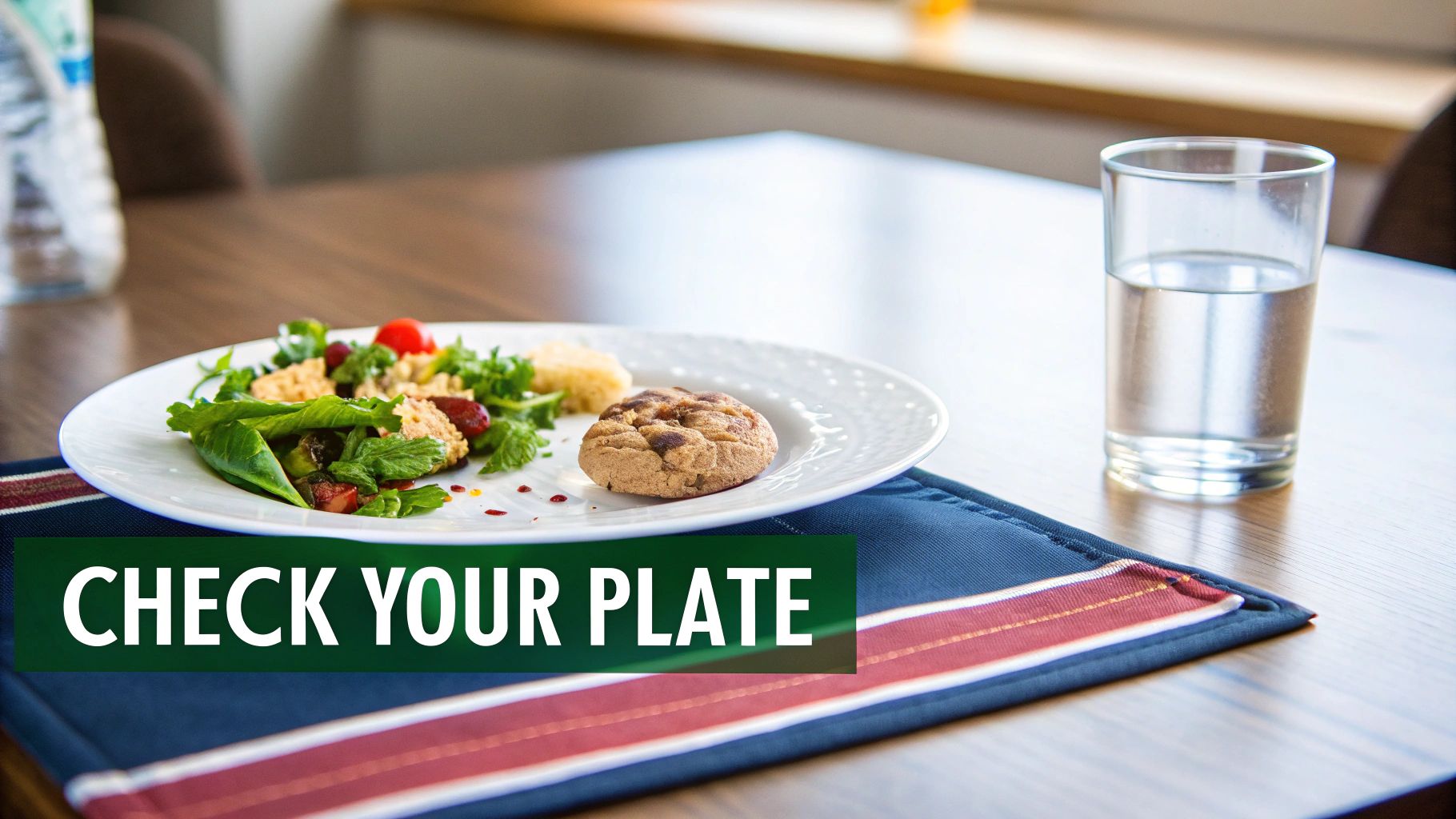
Jumping into a new eating style without knowing your starting point is like trying to use a map without knowing where you are. So, the first move in figuring out how to start eating healthier isn't about restriction; it's about observation.
For the next three days, just pay attention to what you and your family eat. That’s it.
This isn’t about meticulously counting every calorie. Think of it more like a gentle audit to spot the patterns that have become your default settings. The goal is to get a clear, honest picture of your household's true relationship with food.
Uncovering Your Food Habits
Grab a notebook or open a notes app and just jot down what you see. Don't overthink it—just be a curious observer. After a few days, I guarantee you'll start to see some obvious trends pop up.
You might notice things you never really thought about before, like:
- The 3 PM Sugar Rush: Is everyone automatically grabbing cookies or a soda to get through that afternoon slump?
- Convenience Creep: How often are frozen pizzas or takeout really saving the day during a chaotic week?
- Mindless Munching: Do you find yourself snacking in front of the TV after the kids are asleep, even when you aren't truly hungry?
- The Hydration Gap: Is water the main drink of choice, or have sugary sodas and juices quietly taken over?
Just identifying these habits is a massive win. Each one tells a story about your daily pressures—whether it’s a lack of time, stress, or just old routines that have been on autopilot for years. This isn't about feeling bad; it's about finding the cracks where small, powerful changes can make a real difference.
Acknowledging your current eating habits without judgment is the most powerful first step. It transforms the vague goal of "eating healthier" into a concrete, actionable plan tailored to your real life.
As you take stock of what's on your plate, it’s also a good time to think about what you’re cooking with. Making a conscious switch to something like PFOA and PTFE free cookware ensures your healthy efforts aren't being sabotaged by nasty chemicals.
Taking this holistic view—from the food itself to the pans you cook it in—sets a seriously strong foundation. Once you understand the "what" and the "why" of your current routine, you’re officially ready to build a realistic roadmap for change.
Building Balanced Meals That Actually Taste Good
Let's get one thing straight: "healthy eating" doesn't have to mean choking down bland, joyless food. The whole idea that you need a PhD in nutrition and a long list of "forbidden" foods is what makes people give up before they even start.
The real secret? It’s all about building a better plate. One that's balanced, keeps you full, and—most importantly—is loaded with flavors you actually crave.
The Anatomy Of A Perfect Plate
Forget the complicated math, the calorie-counting apps, and the endless stress. The easiest way to visualize this is to think of your plate as a simple pie chart. It’s a trick I’ve used for years, often called the Healthy Plate Method, and it works wonders.
Here's how to mentally divide up your dinner plate:
- Half Your Plate (50%): Load this up with colorful, non-starchy vegetables. I'm talking broccoli, bell peppers, leafy greens like spinach or kale, zucchini, cauliflower—you get the idea. These are your nutritional powerhouses, packed with fiber to keep you feeling satisfied.
- One Quarter (25%): This spot is reserved for lean protein. Think grilled chicken, salmon, tofu, or even plant-based options like lentils and beans. Protein is the key to feeling full and staying full, which stops you from raiding the pantry an hour after dinner.
- One Quarter (25%): Finally, fill the last bit with high-fiber carbohydrates. This is where things like quinoa, brown rice, sweet potatoes, or whole-wheat pasta come in. These complex carbs give you steady, sustained energy, not the quick spike and inevitable crash you get from the refined stuff.
This simple 50-25-25 split is your blueprint. It’s not a strict rule, but a flexible guide that naturally balances your meals without you having to think too hard about it. It just works.
Of course, a balanced plate starts long before you sit down to eat—it begins at the grocery store. It's no secret that food prices are a huge concern. A recent survey found that a whopping 90% of Americans feel healthy food has gotten more expensive.
But here's a fascinating insight from that same data: people who cook at home daily are more than twice as likely to call their diet healthy compared to those who cook less. It really drives home the point that taking control in your own kitchen is a game-changer. You can dig into the full report on how cooking habits influence healthy eating from Pew Research Center.
Simple Swaps for Healthier Meals
Building better meals is usually about making small, clever upgrades, not a dramatic diet overhaul. I'm a huge fan of these simple swaps because they boost the nutrition in your favorite dishes without anyone even noticing. Your family gets the flavors they love, and you know you're packing in more of the good stuff.
Here are a few of my go-to swaps that make a huge difference over time:
| Instead Of This | Try This Healthy Swap | Why It's Better |
| White Rice | Quinoa or Brown Rice | Adds a significant boost of fiber and protein, keeping you fuller for longer and stabilizing blood sugar levels. |
| Sour Cream | Plain Greek Yogurt | Offers a similar creamy texture but is packed with protein and probiotics for gut health, with much less fat. |
| Sugary Cereal | Oatmeal with Berries | Provides sustained energy from complex carbs and fiber, avoiding the mid-morning sugar crash from processed cereals. |
| Creamy Salad Dressing | Olive Oil & Vinegar | Delivers healthy monounsaturated fats and antioxidants without the hidden sugars and preservatives found in bottled dressings. |
Making these kinds of tiny adjustments consistently is where the magic happens. It proves that eating healthier is about adding more, not just taking things away.
The Sunday Reset That Transforms Your Week
The secret weapon against weeknight dinner chaos isn't some mythical kitchen gadget—it's a simple, two-hour ritual I’ve come to call the "Sunday Reset." This little block of time is your best defense against decision fatigue, saving you from that dreaded 5 PM scramble all week long.
This is the exact blueprint I use to make sure my week is calm, organized, and filled with delicious, healthy food. It’s not about spending your entire Sunday chained to the stove; it's about smart, focused action that pays off in a big way.
Plan Before You Shop
First things first: a quick brainstorm. Before you even think about heading to the grocery store, grab a piece of paper (or your phone) and pick just 3-4 main dinners for the week. That’s it. The key is to plan for leftovers, which can instantly cover a couple of lunches or even another dinner. Seriously, mastering how to plan weekly meals is a simple act that sets you up for major success.
Once you have your meal ideas, it’s time to get your shopping list in order. I’ll be honest, this used to be the part I dreaded most—scribbling down ingredients on a crumpled note, forgetting half of them, and wandering aimlessly through the aisles. Now, I let technology handle the heavy lifting.
A tool like Meal Flow AI takes my chosen meals and instantly generates a perfectly categorized shopping list. From there, I can send it straight to Instacart. This one move completely eliminates impulse buys and ensures I get exactly what I need, saving me both time and money.
Your Post-Grocery Prep Flow
Okay, groceries are home. Now the real magic happens. Setting aside just 60-90 minutes for prep will give you back hours during the week. My workflow is simple but wildly effective.
My non-negotiable prep tasks are:
- Wash and Chop Veggies: Onions, bell peppers, broccoli, and carrots all get chopped and stored in airtight containers. This makes them ridiculously easy to grab for stir-fries, omelets, or snacks.
- Cook a Grain: I always cook a big batch of quinoa or brown rice. Having a ready-to-go carb makes building a balanced bowl for lunch or dinner incredibly fast.
- Prep Your Protein: Marinate some chicken breasts, grill a few salmon fillets, or hard-boil a half-dozen eggs. Pre-cooked protein is an absolute lifesaver for quick salads and wraps.
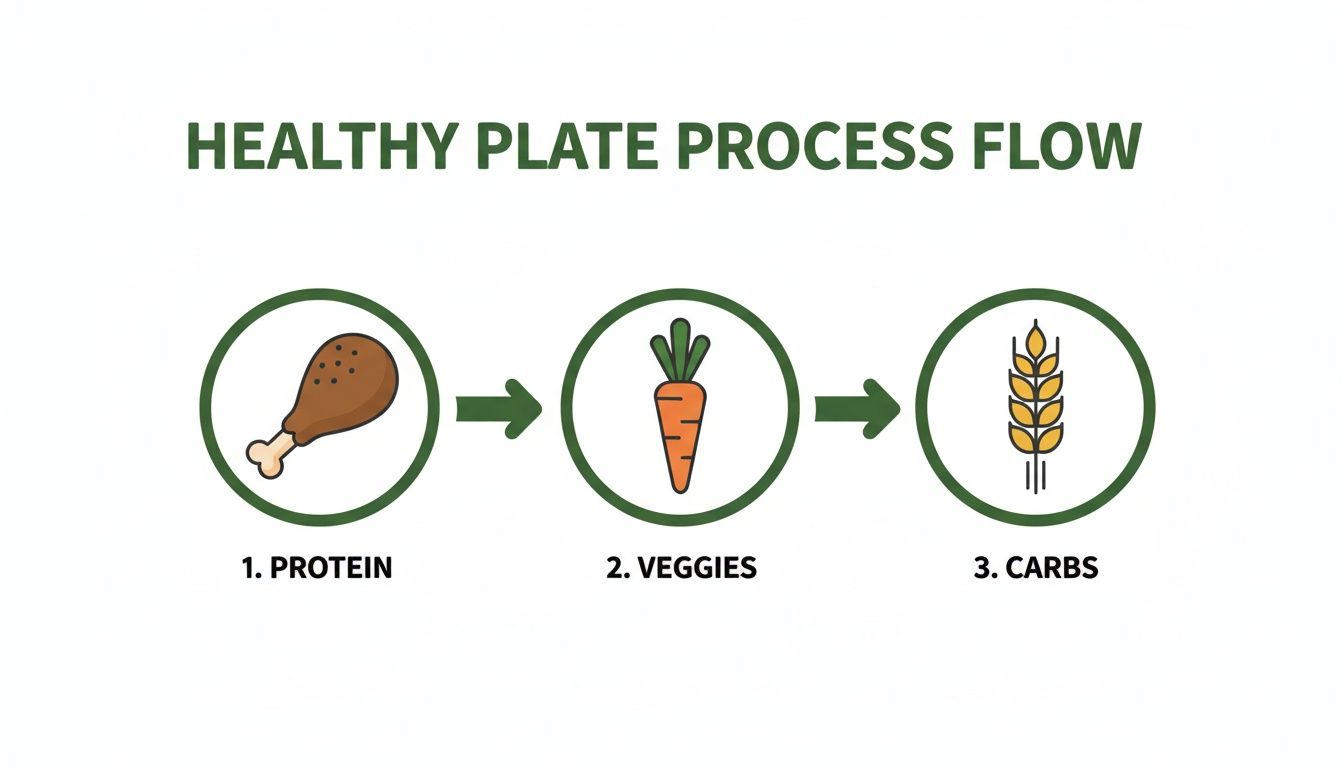
By prepping your protein, veggies, and carbs separately, you make it effortless to assemble a healthy, satisfying plate in just minutes.
Your future self will thank you. When you’re exhausted on a Tuesday night, the last thing you want to do is chop an onion. Having everything ready to go makes cooking a healthy meal feel just as easy as ordering takeout.
This Sunday Reset isn't just about food; it's about reclaiming your weeknights. It turns the dreaded question of "what's for dinner?" from a source of stress into a moment of calm. For an even deeper dive, check out our guide on https://mealflow.ai/blog/how-to-meal-prep-for-the-week to become a true prep master.
Navigating the Grocery Store Like a Pro
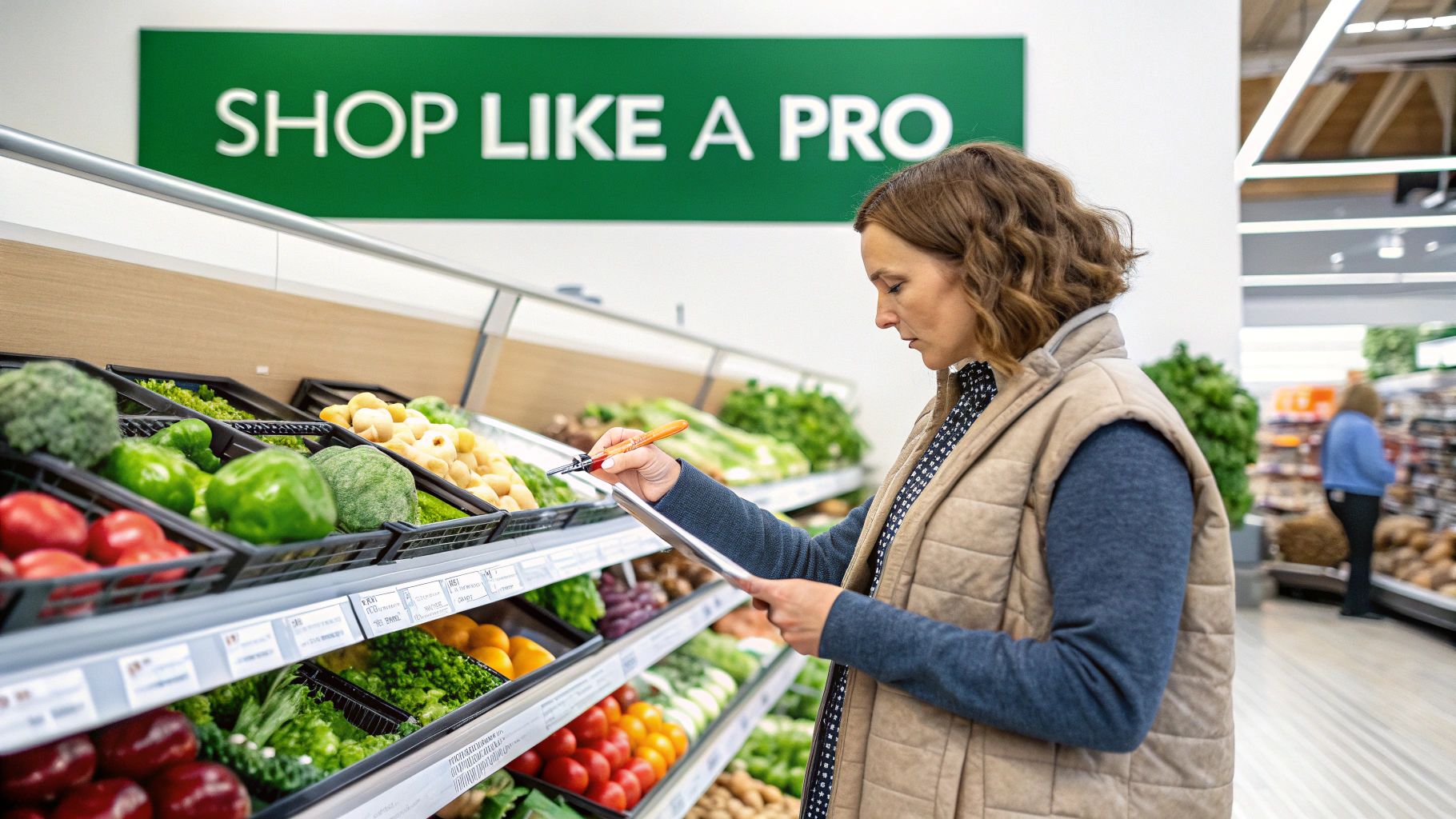
We've all been there. You walk into the grocery store with the best of intentions, ready to buy a mountain of kale. You walk out an hour later, cart full of impulse buys, wondering how that family-sized bag of chips got in there.
The grocery store is a minefield of temptation, but your meal plan is your secret weapon. Think of it less as a list and more as a treasure map leading you directly to the good stuff, helping you sidestep the siren call of the snack aisle. It's the simple shift that turns you from a wandering browser into a focused, mission-driven shopper.
Stick to the Perimeter
Here’s a trick I swear by: shop the perimeter of the store first. This is where all the fresh, whole foods hang out—the vibrant produce, lean meats, fresh seafood, and dairy. I make it a personal rule to do a full lap around the outer edges before I even think about venturing into the middle aisles.
This strategy ensures my cart is at least 75% full of real, unprocessed food before I even see the brightly colored boxes of packaged goods. It sets the tone for the entire trip, framing it around what actually nourishes my body.
The center aisles? That’s where the highly processed, shelf-stable stuff lives, all dressed up in clever packaging designed to pull you in. Fill up on the good stuff first, and you’ll find you have less room—and less desire—for the junk.
Debunking the High Cost of Healthy Eating
Let's bust a huge myth: eating healthy does not have to be outrageously expensive. Sure, some specialty organic products can be pricey, but a diet built around whole foods is often far more affordable than one that leans on takeout and convenience meals.
Smart grocery shopping isn't just about what you buy; it's about what you don't buy. A well-crafted meal plan is your best tool for avoiding the costly impulse purchases and food waste that destroy a budget.
Recent data shows the global average cost of a healthy diet was just $4.46 per person per day. Yet, it remains unaffordable for about one-third of the world's population, which just goes to show how critical smart planning and budgeting really are. You can dig into the global food affordability data from the World Bank if you're curious.
Here are a few of my favorite budget-friendly tactics:
- Buy Produce In-Season: Fruits and veggies that are in season are not only way cheaper, but they also taste a million times better and pack more nutrients.
- Embrace the Freezer Aisle: Don't sleep on frozen foods! Frozen fruits, vegetables, and fish are flash-frozen at their peak freshness, making them just as nutritious as fresh—but often at a fraction of the cost. They’re my secret weapon for quick smoothies and weeknight stir-fries.
- Become a Label Detective: Ignore the flashy promises on the front of the package. The real truth is on the back. Look for short ingredient lists filled with words you can actually pronounce. If it reads like a science experiment, it’s probably best to leave it on the shelf.
When you combine a solid meal plan with these savvy shopping habits, you take back control of your cart, your health, and your wallet. For more battle-tested advice, check out our complete guide on grocery shopping tips for healthy eating.
Your Foolproof Two-Week Starter Plan
Okay, enough talk. Let’s get our hands dirty.
It’s one thing to read about eating healthy, but it's another thing entirely to see how it fits into a real, chaotic week. This isn't some miserable, restrictive diet. Think of it as a flexible game plan designed to build your confidence and prove this whole "healthy eating" thing is actually doable.
This is your launching pad. The recipes are simple, family-friendly, and require zero chef skills. We're talking about delicious, easy wins that make you feel like a kitchen superhero on a hectic Tuesday night.
Week 1 At-a-Glance Meal Inspiration
Let's kick things off with a sample week that’s all about great flavor and zero fuss. The real goal here is to introduce game-changing habits, like strategically repurposing leftovers, without adding a bunch of stress to your schedule. You’ll save a ton of time and cut way down on food waste.
Here’s a little snapshot of what your first week could look like. Pay close attention to how Monday’s dinner heroically reappears as Tuesday’s lunch—that’s the magic we’re after.
| Day | Breakfast | Lunch | Dinner |
| Monday | Greek Yogurt with Berries | Quinoa Salad with Chickpeas | One-Pan Lemon Herb Salmon & Asparagus |
| Tuesday | Oatmeal with Nuts & Seeds | Leftover Salmon Salad | Sheet-Pan Sausage with Peppers & Onions |
| Wednesday | Scrambled Eggs with Spinach | Leftover Sausage & Veggies | Hearty Turkey Chili |
| Thursday | Smoothie with Protein Powder | Leftover Turkey Chili | Chicken Stir-fry with Brown Rice |
| Friday | Whole-Wheat Toast & Avocado | Leftover Stir-fry | DIY Pizza Night on Whole-Wheat Naan |
Remember, this is just a springboard! Feel free to swap days or switch out proteins based on what your family actually eats. The secret sauce is the structure—planning ahead vaporizes that daily 5 PM panic of "what's for dinner?"
This two-week plan isn't about perfection; it's about practice. Each meal you prepare is a small victory that builds momentum. You're not just cooking food; you're building a new routine, one delicious plate at a time.
Week 2: Leveling Up Your Skills
By week two, you’ll start to get into a groove. Now we build on the skills you’ve already picked up, like cooking in batches and getting creative with leftovers. The meals are still quick and painless, but they might introduce a new ingredient or a simple technique to expand your repertoire.
Your mission this week is consistency and observation. How do you feel? Do you have more energy in the afternoon? Feeling less bloated and more satisfied? Those are the real rewards that keep you going long after the initial motivation fades.
Here are a few ideas to get you started for the second week:
- Breakfast Win: Make a big batch of egg muffins on Sunday. They're amazing grab-and-go options for busy mornings. Just pack them with your favorite veggies like bell peppers, onions, and spinach.
- Lunch Strategy: Embrace the "build-a-bowl" concept. Use a pre-cooked grain from your weekend prep, throw in a protein (like shredded chicken or black beans), pile on the chopped veggies, and finish with a simple vinaigrette.
- Dinner MVP: A giant pot of lentil soup is a total game-changer. It’s incredibly cheap, loaded with fiber and protein, and honestly tastes even better the next day. Serve it with a side of whole-grain bread for a cozy, satisfying meal.
This two-week journey is all about showing you that learning how to start eating healthier is just a series of small, totally manageable steps. When you're ready to explore more, you can dive into our full library of two-week meal plans that fit any lifestyle.
Got Questions About Healthy Family Eating? Let's Talk.
Let’s be real. Deciding to eat healthier is one thing; getting your entire family on board is a whole different ballgame. You're not just changing your own habits—you're dealing with picky toddlers, hectic schedules, and the occasional dinnertime meltdown. It's bound to get a little messy.
So, let's dive into the nitty-gritty and tackle the questions I hear all the time. No fluff, just honest answers for when the going gets tough.
"What Do I Do About My Picky Eater?"
Ah, the age-old dinner table standoff. My secret weapon? Deconstructed meals. Instead of a one-pot dish where everything is mixed together, I lay out all the ingredients separately. Think of it like a mini buffet—a taco bar, a DIY pizza night, or a build-your-own-bowl station. Everyone becomes the master of their own plate.
Another trick that works wonders is letting the kids help in the kitchen. A kid who helps wash the lettuce or slice a (soft) mushroom with a butter knife is way more likely to actually eat it. It gives them a sense of ownership.
Here's the thing to remember: patience is your best friend. It can take over 10 tries before a kid might even consider a new food. Your job is to offer the good stuff without turning it into a battle. Their job is to decide what and how much to eat from what you’ve provided.
"How Do I Stick With This When I'm Exhausted?"
We’ve all been there. It's 6 PM, you're wiped out, and the thought of cooking makes you want to crawl into bed. You have to plan for your tired self! This is where that Sunday Reset you did becomes your saving grace.
Having pre-chopped veggies, a cooked grain, and some grilled chicken ready to go is a game-changer on those low-energy nights. It means a healthy meal is just minutes away. I also keep a stash of "emergency" healthy frozen meals for the days when I have absolutely nothing left in the tank. Give yourself permission to have those days.
Keep a list of 10-minute lifesaver meals on your fridge. Seriously, write it down.
- Scrambled eggs with a fistful of spinach and cheese.
- A big bowl of Greek yogurt topped with berries, nuts, and a drizzle of honey.
- A quality frozen meal you can feel good about (they do exist!).
"Is Eating Healthy Actually Cheaper?"
This is the big one, right? And my answer is a huge, resounding YES—but with a catch. You have to plan. It’s easy to think it’s more expensive when you’re looking at a single carton of organic berries versus a box of cheap crackers. But the real savings aren't in comparing item to item; they're in what you stop buying.
A solid meal plan completely eliminates food waste and kills those impulse buys at the grocery store—two of the biggest budget vampires. The trick is to build your meals around powerhouse staples that don't cost a fortune. I'm talking about beans, lentils, eggs, and seasonal produce that’s on sale. When you use a smart tool to map it all out, you stick to your list, and you’ll quickly see that eating well can absolutely save you money.
---
Ready to stop guessing and start planning? Meal Flow AI takes all the stress out of the equation. It creates personalized meal plans and Instacart-ready shopping lists in seconds. Take control of your kitchen and your budget today at https://mealflow.ai.