Instacart vs Amazon Fresh Which Grocery Giant Wins Your Kitchen
Deciding between Instacart vs Amazon Fresh for your weekly shop? We compare costs, selection, and reliability to find the best grocery delivery service for you.
Love This Article?
Get personalized meal plans with recipes like this, automatically matched to your nutrition targets.
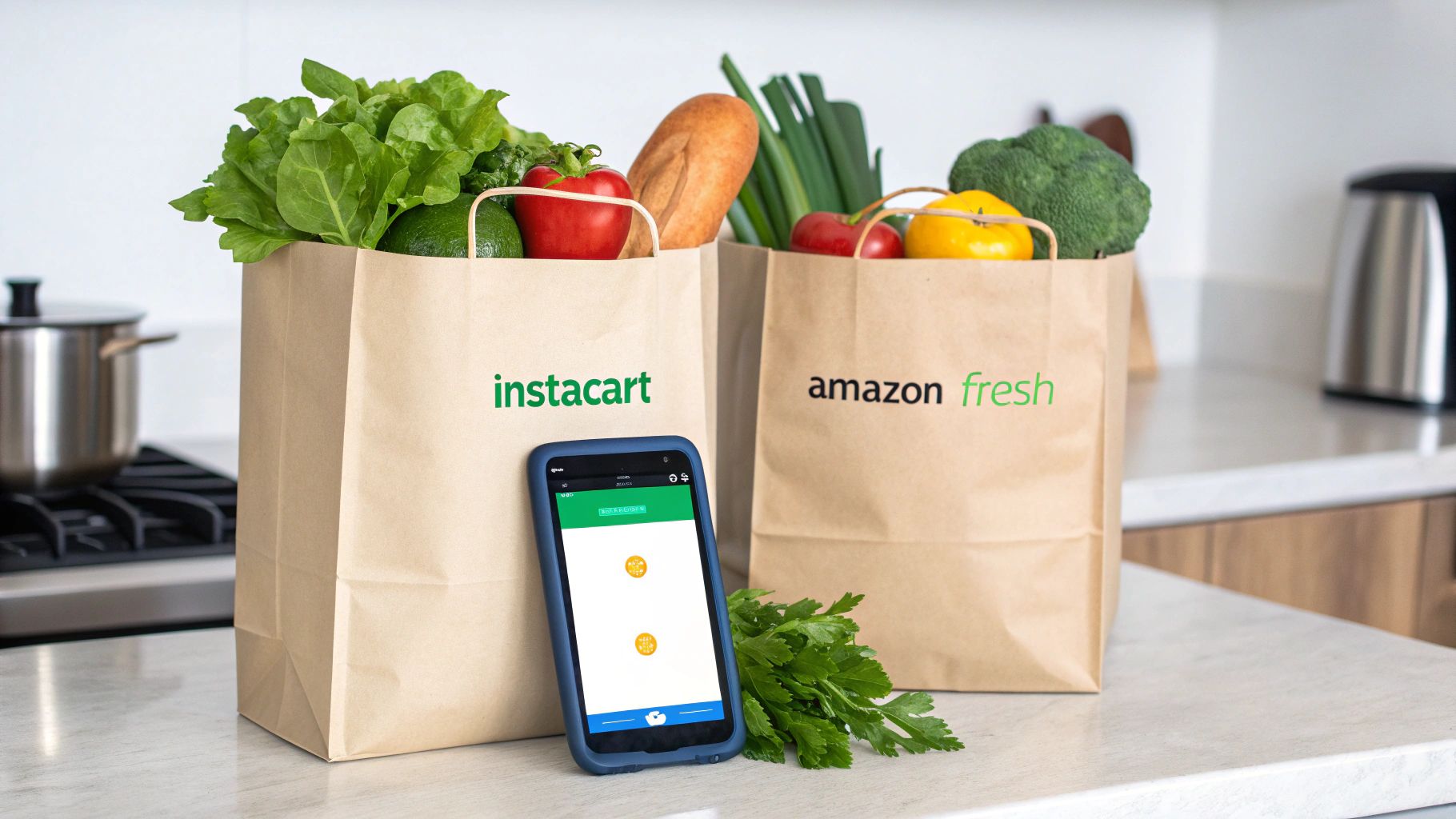
When you're trying to figure out the winner in the Instacart vs Amazon Fresh cage match, it really comes down to what you value more: endless choice or seamless convenience. Instacart is your personal shopping sidekick, giving you the keys to almost every local grocery store. Amazon Fresh, on the other hand, is a well-oiled machine, pulling from its own massive inventory and plugging directly into the Prime universe you already know.
The Grocery Delivery Grudge Match
Alright, let's get ready to rumble. In one corner, you've got Instacart, the scrappy go-getter that connects you with an army of personal shoppers ready to raid your favorite local stores. In the other corner, the heavyweight champion, Amazon Fresh, leveraging its global logistics empire to drop groceries right on your porch.
For anyone juggling meal planning, work, and family chaos, this isn't just a simple choice. It's about winning back precious hours, sidestepping the headache of crowded aisles, and actually getting the brand of Greek yogurt your kid will eat.
This isn't about crowning one service the undisputed champion. It’s about figuring out which one slots perfectly into your life. Are you a die-hard fan of the local butcher's marinated steak tips? Or do you just want the predictable efficiency of a one-stop-shop that knows your order history by heart?
Core Business Models Compared
Instacart is essentially a middleman—a marketplace that lets you hire a personal shopper. They head to the actual brick-and-mortar stores you love, like Costco, Kroger, or that fancy organic market downtown, and do the shopping for you. This model is brilliant because it opens up a huge variety of products from stores you're already loyal to.
Amazon Fresh plays a different game. It operates like a classic grocer that just happens to live online, with its own warehouses and stock. Sure, they're tight with Whole Foods, but the main event is shopping from Amazon's own curated selection. This direct pipeline gives them iron-fisted control over their inventory, pricing, and delivery logistics.
The Key Takeaway: Instacart sells you access to other stores through a personal shopper. Amazon Fresh sells you groceries from its own shelves.
This one core difference sends ripples through everything else—the variety of items you can get, how much you'll pay, and whether your "similar item" substitution makes any sense. It's a big deal when you're meticulously planning meals for the week. Instacart's model has clearly resonated with people, capturing a solid 21.6% market share. That means nearly one in every five dollars spent on online groceries in the U.S. goes through them, signaling a level of reliability that households count on.
Before we get into the nitty-gritty, let's zoom out for a quick look at how these two giants stack up. For a wider view, you can also check out our guide on local delivery groceries for more general tips.
At a Glance How Instacart and Amazon Fresh Stack Up
Here’s a quick rundown to see the core differences in a single glance. Think of it as the tale of the tape before the main event.
| Feature | Instacart | Amazon Fresh |
| Business Model | Third-party personal shopper service | Direct-to-consumer grocery warehouse |
| Store Selection | High (Varies by location) | Low (Primarily Amazon & Whole Foods) |
| Membership | Instacart+ ($99/year) | Amazon Prime ($139/year) |
| Best For | Brand-specific shoppers, store variety | Prime members, budget-conscious shoppers |
This table gives you the 30,000-foot view, but the real devil is in the details, which we'll dive into next.
Aisle Wars: Unpacking Store Selection and Product Variety
This is where the Instacart vs. Amazon Fresh showdown gets personal. We're not just talking about getting groceries delivered; we're talking about getting your groceries. You know, the specific brand of salsa your family obsesses over, the gluten-free bread that doesn't taste like cardboard, or that perfect cut of meat from a butcher you actually trust.
The core difference here boils down to their entire business model. Instacart is like a universal remote for grocery shopping, giving you access to dozens of local and national stores in your zip code. Picture a massive food court where you can order from pretty much any spot you want.
Amazon Fresh, on the other hand, is the restaurant. It’s a single, massive, self-contained grocery store with its own inventory, plus a handy express lane for items from its fancy sibling, Whole Foods Market.
The Freedom of Choice with Instacart
For the meal planner who lives for variety and specific ingredients, Instacart is an absolute playground. One week you might be loading up a virtual cart from Costco for bulk pantry staples, and the next you're snagging specialty items from that cute local organic market down the street.
This multi-store access is a total game-changer in a few key situations:
- Hunting for Niche Ingredients: Your recipe calls for gochujang or a specific type of artisanal cheese? Instacart lets you pinpoint and shop from stores most likely to have it, like an Asian market or a high-end grocer.
- Loyalty to Specific Brands: If you’re ride-or-die for a certain brand of organic milk or your favorite local bakery's sourdough, Instacart is really your only shot at getting it delivered straight from the source.
- Navigating Dietary Restrictions: The power to shop from places like Sprouts or dedicated health food markets opens up a much wider world of gluten-free, vegan, or keto-friendly products.
The online grocery world has absolutely exploded, with sales recently rocketing to $8.7 billion in a single month. This massive shift shows why a service offering broad access is so compelling; people want the convenience of delivery without sacrificing the brands and products they already know and love. You can discover more insights about the booming eGrocery market and its performance.
Key Takeaway: Instacart doesn't sell groceries; it sells access. This distinction is everything for someone whose meal plan hinges on specific items from specific stores. If variety is your north star, the Instacart vs. Amazon Fresh debate often ends right here.
The Curated Catalog of Amazon Fresh
Amazon Fresh offers a much more streamlined, but ultimately more limited, universe of products. Its strength is in consistency and its deep integration with the whole Amazon ecosystem, not in a bottomless selection. You’re shopping from Amazon's own warehouse inventory and, to a lesser extent, Whole Foods.
While the selection is huge and covers all the basics extremely well, it can feel a bit restrictive if your needs are particular. For instance, you'll find plenty of options for ground beef, but you won't find that specific grass-fed blend from your trusted local butcher.
This centralized approach works best for:
- The "Good Enough" Shopper: If you’re flexible on brands and mostly just need standard pantry items, produce, and household goods, Amazon Fresh is incredibly efficient.
- Budget-Conscious Planners: Amazon's own brands, like 365 by Whole Foods Market and Amazon Kitchen, are often priced very competitively for everyday essentials.
- Whole Foods Devotees: The seamless ability to toss Whole Foods products into your cart is a massive perk for fans of the brand.
Ultimately, your choice comes down to a simple question for your meal planning style. Do you build your meals around what's available, or do you need a service that can hunt down the exact items you've already decided on? Your answer will quickly tell you whether Instacart’s sprawling marketplace or Amazon Fresh’s efficient superstore is the right fit for your kitchen.
Decoding the Checkout Costs: Fees and the Bottom Line
Alright, let's talk about the money. Both Instacart and Amazon Fresh try to lure you in with a premium membership—Instacart+ and Amazon Prime—that promises a magical world of free deliveries. But the real story is always in the fine print, isn't it? The final number on your bill is a mix of service fees, subtle price hikes, and tips that can easily sneak up on you.
Figuring out these costs is the secret to winning the grocery budget battle.
The Membership Face-Off
On the surface, the memberships seem pretty simple. Instacart+ will set you back about $99 per year, while Amazon Prime is a bit pricier at $139 per year. But you’re really comparing apples to oranges here.
Prime is a massive lifestyle package. You're getting two-day shipping on basically everything, a huge library of shows on Prime Video, Amazon Music, and a ton of other perks. For a lot of people, grocery delivery is just one small benefit of a subscription they were going to have anyway.
Instacart+, on the other hand, is a specialist. Its one and only job is to save you cash on grocery delivery. You get free delivery on orders over $35, smaller service fees, and even credit back if you choose to pick up your order. If you don't already have Prime and your main goal is grocery delivery, Instacart+ is the more direct and cheaper way to go.
The Hidden Costs and Sneaky Fees
This is where your grocery bill can suddenly get a lot bigger. The delivery fee is just the opening act; a whole cast of other charges is waiting in the wings.
On the Instacart side, you’ll run into:
- Service Fees: This is a variable fee that helps Instacart keep the lights on. It’s usually lower for Instacart+ members, but it never completely disappears.
- Item Markups: This is the big one. To cover the cost of partnering with Instacart, some stores inflate their prices on the app. You'll pay more for that carton of milk than you would if you walked in and bought it yourself. Instacart is usually upfront about it, but you have to pay attention.
- Heavy Item Fees: Planning on stocking up on cases of La Croix or a giant bag of dog food? Expect to pay a little extra for the muscle required to haul it.
- Driver Tip: While technically optional, a tip is absolutely expected. It's a huge part of your shopper's income, so plan on adding it to your total.
Amazon Fresh keeps things a bit simpler:
- Delivery Fees: Prime members get free delivery on orders over a certain amount (usually $100 or more). Smaller carts will get hit with a fee that can range from $3.95 to $9.95.
- No Item Markups: What you see is what you get. Because Amazon is the store, there’s no partner to pay, so the prices aren't secretly inflated.
- Driver Tip: Just like Instacart, tipping your driver is standard procedure and very much appreciated.
The real game-changer here is Instacart's item markups. You get access to way more stores, but it makes your final bill a guessing game unless you’re meticulously comparing prices. Amazon Fresh gives you predictable pricing, but you sacrifice that broad store selection.
Sample Weekly Grocery Bill Breakdown
Let's run the numbers on a hypothetical $150 weekly grocery order to see how this plays out in the real world. We'll assume you have the premium membership for each service.
| Cost Component | Instacart (with Instacart+) | Amazon Fresh (with Prime) |
| Subtotal | $150.00 | $150.00 |
| Potential Item Markup (Est. 5%) | +$7.50 | +$0.00 |
| Delivery Fee (Order over $35/$100) | $0.00 | $0.00 |
| Service Fee (Reduced for members) | ~$3.50 | $0.00 |
| Driver Tip (10%) | $15.00 | $15.00 |
| Estimated Total | $176.00 | $165.00 |
As you can see, the Amazon Fresh order comes out ahead in this scenario, mostly by dodging those pesky service fees and item markups. For a meal planner laser-focused on sticking to a budget, Amazon's simple, predictable pricing is a huge win.
But if your meal plan calls for something specific from a specialty store that only Instacart delivers from, that slightly higher cost might be a price worth paying to get exactly what you need.
The Delivery Dance: Speed, Reliability, And The Dreaded Substitution Game
You've spent your Sunday morning crafting the perfect meal plan. It's a work of art. But all that glorious planning can crash and burn if your groceries don't show up on time, or worse, if a key ingredient gets swapped for something totally bizarre. This is where the delivery logistics of Instacart and Amazon Fresh really show their true colors. It’s a classic showdown: human intuition vs. machine-like predictability.
Ultimately, a successful delivery comes down to two things: getting your stuff when you need it and getting the right stuff. Each service tackles this in a completely different way, leading to some serious perks and, let's be honest, some hilarious fails.
Speed and Scheduling Flexibility
Need that forgotten onion for your chili... like, right now? Instacart is your hero. Because it relies on a local fleet of freelance shoppers, you can often get a delivery slot in as little as 30-60 minutes. It’s the perfect save for those last-minute recipe pivots or mid-cooking "oh no!" moments.
Amazon Fresh, on the other hand, runs a tighter ship. It's all about reliable, pre-booked two-hour delivery windows. While you won't get that lightning-fast service, the predictability is a dream for organized planners. You lock in your time slot and know exactly when that doorbell will ring, making it easy to schedule the rest of your day around it.
For meal planners, the choice is pretty clear. Instacart brings the speed for grocery emergencies, while Amazon Fresh delivers the steady, scheduled reliability that fits perfectly into a well-oiled weekly routine.
This whole debate often feels like the modern version of delivery vs. in-store shopping. If you're someone who craves absolute control and wants to lay eyes on your produce yourself, exploring a **grocery store pick up service** can be a great middle ground, giving you online convenience without the delivery gamble.
The Substitution Game: May The Odds Be Ever In Your Favor
Okay, this is where the two services couldn't be more different. Getting a substitution can feel like playing culinary roulette, and how each platform handles it can make or break your entire week of meals.
Instacart’s secret weapon is the human touch. Your shopper is a real person, walking the same aisles you would, who can see that the organic baby spinach is gone. Better yet, they can text you right from the produce section. This opens up a real-time negotiation.
Here’s how a typical Instacart swap goes down:
- Shopper Text: "Hey! They're out of the organic baby spinach. They have conventional spinach or a bag of organic power greens. What works?"
- Your Reply: "Power greens are perfect, thanks!"
That quick back-and-forth gives you total control and ensures the replacement actually works with your recipe.
Amazon Fresh, pulling from a massive warehouse, leans on an automated system. This means an algorithm or a warehouse picker with zero context about your dinner plans is making the call. And this, my friends, leads to some truly infamous substitution shenanigans.
We've all heard the horror stories:
- You order hot dog buns and get hamburger buns. Close, but no cigar.
- You ask for a bag of fresh lemons and receive a bottle of lemon juice. Not quite the same for zesting.
- You need cilantro for your salsa and get parsley instead. The ultimate culinary betrayal.
Sure, you can opt out of substitutions on Amazon, but then you might just not get that crucial item at all, which is a whole different kind of meal-plan derailment.
How to Outsmart the System and Minimize Surprises
No matter which service you pledge allegiance to, being proactive is your best defense against substitution disasters. Both platforms give you some tools to guide the process.
On Instacart, take a minute to set your substitution preferences for each item. You can choose "Find best match," "Pick specific replacement," or the all-powerful "Don't replace." Even better, leave a friendly note for your shopper—something like, "Any brand of whole milk Greek yogurt is fine!" goes a long way.
For Amazon Fresh, your best strategy is to be ruthless. Disable substitutions for any absolute "must-have" ingredients that don't have a good alternative. If that specific brand of coconut milk is essential to your curry, it's better to know it's unavailable than to end up with a useless replacement.
Getting Your Meal Plan Into Your Shopping Cart
This is where the rubber meets the road. A great meal plan is one thing, but turning it into a box of groceries on your doorstep with minimal fuss? That's the real win.
The question is, how easily do Instacart and Amazon Fresh plug into a modern meal planning routine? For anyone trying to reclaim their weekends, this is a huge deal. It's the difference between a one-click checkout and a tedious, item-by-item search.
Let's be real, this isn't just about convenience. It's about getting back the 1-2 hours a week most of us lose to grocery shopping and list-making.
The Magic of One-Click Shopping
The dream for any meal planner is simple: finish your plan, click one button, and watch every single ingredient magically appear in your online cart. That’s the power of direct integration, and it’s where Instacart shines.
Because Instacart partners with so many different stores and apps, it’s become the default choice for tools like Meal Flow AI. This connection creates a ridiculously smooth workflow that looks something like this:
- You finalize your meal plan for the week.
- The app instantly generates a complete, categorized grocery list.
- You hit a button, and poof—the whole list is sent over to your Instacart account.
- From there, you just pick your favorite local store and head to checkout.
This automated handoff is a total game-changer. It kills the soul-crushing task of manually typing out a long list of ingredients and eliminates the risk of forgetting that one crucial item.
Here’s a peek at how a meal planning tool can get your list perfectly organized before sending it off for delivery.
Starting with a list this clean makes the final checkout on Instacart unbelievably quick.
The "Two-Screen" Method for Amazon Fresh
So what if you're an Amazon Fresh loyalist? Since it operates inside Amazon’s more walled-off ecosystem, direct integrations are rare. But don't despair! You can still build a super-efficient system with a simple workaround.
Instead of a one-click transfer, you'll be doing a "two-screen" transfer. It’s not quite as slick, but it’s a heck of a lot better than scribbling a list on the back of an envelope.
- Generate Your List: First, let your meal planning app, like Meal Flow AI, create its perfectly optimized grocery list.
- Split Your Screen: Pop open your meal planning app on one side of your screen (or on your phone) and the Amazon Fresh website on the other.
- Search and Add: Just work your way down the generated list, using the search bar in Amazon Fresh to find and toss each item into your cart.
While Instacart holds a 21.6% market share, Amazon Fresh is right there with it at 22%. The real story is in the growth: Instacart is projected to grow 11.9% annually, outpacing Amazon’s 8.23%. For app developers, that momentum makes Instacart a more attractive and reliable partner for building integrations. Learn more about Instacart's market statistics and growth.
This manual method takes a few extra minutes, but it still gives you the massive advantage of shopping from a well-thought-out, recipe-driven list. The organizational tips in our guide on creating an effective Instacart grocery list work just as well here—because a smart list is a smart list, no matter where you shop.
The Final Verdict: Which Service Is Right For You?
After throwing these two grocery giants into the ring, one thing is clear: there's no single champion in the "Instacart vs. Amazon Fresh" showdown. Instead, we have two winners who dominate completely different events. The right service for your kitchen boils down to your personal shopping philosophy and how you approach meal planning.
It’s the classic head-versus-heart dilemma. Does your heart lead you to the specific brands and local shops you know and love, or does your head demand the most streamlined, predictable, and budget-conscious route to a full fridge?
Choose Instacart If You're The Culinary Explorer
Instacart is for the foodie, the brand loyalist, and the meal planner who won’t settle for "close enough." It’s for anyone whose weekly menu requires a multi-store strategy—we’re talking bulk buys from Costco, that one special spice from a local grocer, and your everyday produce from Wegmans.
You're a perfect fit for Instacart if you:
- Crave variety: You want the freedom to shop from practically any grocery store in your area, not just a single, curated warehouse.
- Need specific items: Your meal plan hinges on finding particular brands or niche ingredients that one store just doesn't stock.
- Value a human touch: You appreciate having a real person in the aisle you can text about substitutions, making sure a questionable swap doesn't torpedo tonight's dinner.
If you see grocery shopping as an act of curation and need a service that bends to your will, Instacart is the undisputed winner.
This little decision tree shows the two main ways you can get from a meal plan to a stocked kitchen.
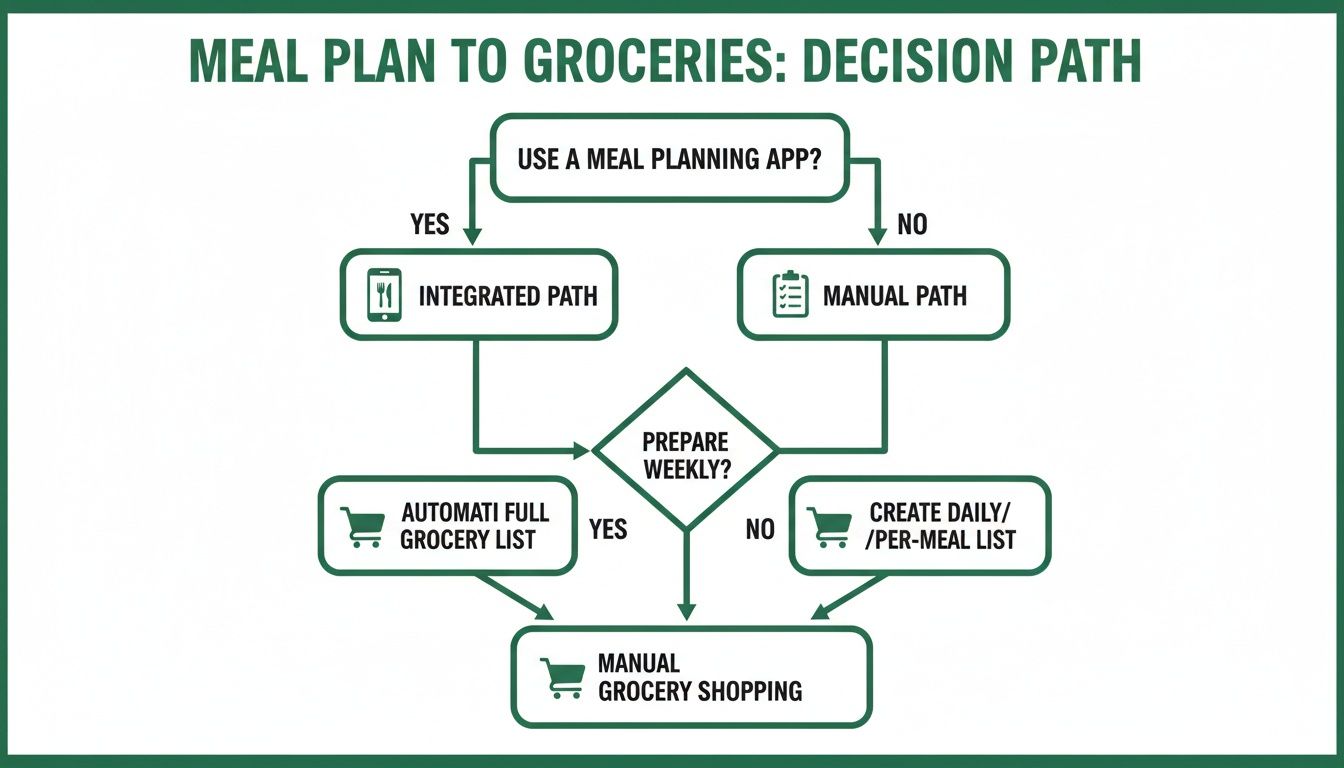
The flowchart really nails the core difference: you're either choosing an automated, integrated workflow or a manual process that's still incredibly effective.
Choose Amazon Fresh If You're The Efficiency Expert
Amazon Fresh is purpose-built for the pragmatist, the budget optimizer, and the busy family who’s already all-in on the Prime ecosystem. This service is for the meal planner who values consistency, predictable pricing, and the sheer, unadulterated convenience of a one-stop-shop.
The Bottom Line: Amazon Fresh is the ultimate utility player for Prime members who want to set it and forget it. Its no-fuss pricing and reliable delivery windows are designed to simplify your life.
Amazon Fresh is your go-to if you:
- Are budget-focused: You want to sidestep hidden service fees and random item markups, ensuring your final bill has zero surprises.
- Prioritize reliability: You'd rather book a dependable two-hour delivery window that fits perfectly into your schedule.
- Are flexible with brands: You’re perfectly happy with Amazon’s own brands or major national labels and aren’t hunting for anything too obscure.
For anyone who sees grocery shopping as just another task to check off the list as efficiently as possible, Amazon Fresh delivers a straightforward, cost-effective solution that gets the job done with minimal drama.
Got a Few Lingering Questions?
Alright, even after breaking it all down, there are always a few "what if" scenarios that pop into people's minds. Let's tackle those common questions head-on so you can pick your service with zero doubts.
What Happens If I Get a Terrible Substitution?
This is the stuff of meal-planning nightmares, right? You plan for chicken breast, and you get chicken nuggets.
With Instacart, your first line of defense is your shopper. If you catch the swap while they're still shopping, you can message them directly. But if that ship has sailed, both Instacart and Amazon Fresh have a simple process in their apps to report the wrong item. A few taps usually gets you a refund or credit.
Amazon Fresh often feels a bit faster with automated refunds because it's their own inventory—no middleman. Instacart might have an extra step while they sync up with the grocery store, but honestly, both services are pretty good about fixing these mistakes.
My Two Cents: Don't ever just eat the cost of a bad swap. These platforms expect things to go wrong sometimes, and their customer service is built to handle it. The sooner you report it, the faster they fix it.
So, Who Has Better Customer Support?
This really depends on the type of problem you're having.
Instacart's magic is that direct line to your shopper. Being able to text them a picture of the exact brand of yogurt you want can prevent a problem before it even starts. For issues after the delivery, you'll use their in-app help center, which is mostly chat-based.
Amazon Fresh, on the other hand, plugs you into the massive, well-oiled Amazon customer service machine. You get the same support you'd expect for any Amazon package. If you just need a quick, no-questions-asked refund for a missing bag of chips, their automated system is lightning-fast.
Is One Clearly Better for Bulk Shopping?
Oh, absolutely. If you're looking to stock up like you're preparing for a zombie apocalypse (or just have a hungry family), Instacart is the hands-down winner.
Why? Because Instacart connects you to wholesale clubs like Costco, Sam's Club, and BJ's. This is your ticket to giant packs of paper towels, vats of olive oil, and all the pantry staples you can imagine. Amazon Fresh just can't compete on that scale.
Think of Amazon Fresh as your go-to for the weekly grocery run. It's perfect for topping off the fridge, but it won't replace that true bulk-buying trip to a warehouse store.
---
Ready to stop wrestling with grocery lists and start enjoying a seamless path from meal plan to checkout? Meal Flow AI generates personalized meal plans and automatically sends your shopping list directly to Instacart. Simplify your shopping and reclaim your time. Get started with Meal Flow AI today!