The Ultimate Low Carb Diet Meal Plan for Busy Families
Tired of mealtime chaos? Get our ultimate low carb diet meal plan for busy families. Features a 7-day guide, grocery lists, and family-friendly swaps.
Love This Article?
Get personalized meal plans with recipes like this, automatically matched to your nutrition targets.
A truly successful low-carb diet meal plan isn’t about a bunch of rigid, soul-crushing rules. It's about getting back to basics with whole foods—think colorful veggies (the non-starchy kind!), lean proteins, and healthy fats—while dialing way back on sugars and starches. For busy families, this isn't just a diet; it's a sanity-saver that cuts down on decision-making and makes meal prep feel less like a marathon.
Your Sanity-Saving Low Carb Meal Plan Starts Here
Let's be honest. When you're juggling kids, work, and a million other things, figuring out healthy, low-carb meals can feel completely overwhelming. But that’s about to change. We're going to ditch the complicated diet-guru noise and get straight to a practical plan that doesn’t require a culinary degree or hours you don't have.
The name of the game is progress, not perfection. It's about finding a rhythm that works for your real, often chaotic, life—one simple, delicious meal at a time. This guide is for you, the caregiver holding it all together.
Why a Flexible Plan Beats Strict Rules Every Time
Forget every all-or-nothing diet you've ever tried. The secret to a low-carb lifestyle you can actually stick with is flexibility. This is about making smart swaps, not banning entire food groups your family actually enjoys. It’s a lifestyle shift, not a temporary punishment.
And the market is catching on. While the super-intense keto trend has cooled off (social media mentions dropped 18.5% and keto items on restaurant menus fell 12.3% by mid-2025), the broader low-carb food market is absolutely exploding. It’s set to nearly double from USD 6.1 billion in 2025 to a massive USD 11.8 billion by 2035. You can read more about this low-carb market evolution on futuremarketinsights.com. What does that mean for you? More delicious, convenient, and family-friendly options on grocery store shelves.
A flexible plan just works better for real life. Here’s why:
- It’s Adaptable: You can easily tweak meals for picky eaters without becoming a short-order cook.
- It’s Sustainable: You won't burn out from trying to follow impossible rules.
- It’s Ready for Anything: Birthday parties, holidays, and last-minute schedule changes won't throw you completely off track.
The best low carb diet meal plan is the one you can actually stick with. When you give yourself permission to be flexible, you're setting yourself up for long-term success and a healthier relationship with food for the entire family.
To get started, it helps to have a simple cheat sheet. This table breaks down the core ideas so you can see the big picture without getting bogged down in details.
Low Carb at a Glance Quick-Start Guide
| Focus Area | What to Eat | What to Limit | Pro-Tip for Moms |
| Proteins | Chicken, beef, fish, eggs, tofu | Breaded meats, processed sausages | Cook extra protein at dinner to use for your lunch salad the next day. |
| Vegetables | Leafy greens, broccoli, cauliflower, zucchini, bell peppers | Potatoes, corn, peas, sweet potatoes | Frozen veggies are your best friend! Just as nutritious and no chopping required. |
| Fats | Avocado, olive oil, nuts, seeds, cheese | Processed vegetable oils, trans fats | A handful of almonds or a cheese stick is a perfect grab-and-go snack. |
| Fruits | Berries, melons (in moderation) | Bananas, grapes, mangoes, fruit juice | Mix berries into plain Greek yogurt for a kid-friendly, low-sugar treat. |
| Drinks | Water, unsweetened tea, black coffee | Soda, sweetened coffee drinks, juice | Keep a fun water bottle filled at all times. Staying hydrated curbs cravings! |
This isn't about memorizing lists; it's about understanding the basic swaps that make the biggest difference. Simple changes, big results.
Embracing a Little Automation for Less Stress
Now, imagine this: a meal plan that not only tells you what to cook but also automatically generates your grocery list. This isn't science fiction—modern tools can make it happen, turning a dreaded chore into a simple, streamlined win.
When you automate the tedious parts of meal planning, you get a huge chunk of your mental energy back. This isn’t about being lazy; it’s about being smart and efficient. You get to focus on the fun parts of cooking and actually enjoying time with your family, knowing the logistics are handled. We’re about to build a system that finally works for you, so you can turn that daily "what's for dinner?!" panic into a calm, confident answer.
Setting Your Low-Carb Goals (Without the Headache)
Hopping on the low-carb train without knowing your destination is a recipe for a stalled-out engine. Seriously. Before you even think about tossing the bread, you need to get crystal clear on why you’re even doing this.
Are you desperate for more energy to keep up with a toddler who seems to run on pure chaos? Maybe you need your brain to be sharper to juggle work deadlines and family logistics. Or perhaps it's about getting a handle on your metabolic health once and for all. Whatever it is, that "why" is the high-octane fuel you'll need when the initial excitement fizzles out and life gets… well, lifey.
For a lot of folks, blood sugar control is the big one. And for good reason. Low-carb diets are powerhouses for managing type 2 diabetes, with studies showing they can slam the brakes on high blood glucose. One analysis of 16 trials with over 1,000 participants revealed that going low-carb significantly improved HbA1c, triglycerides, and body weight. This is about way more than just losing a few pounds; it’s about making a real, measurable difference in your health.
Total Carbs vs. Net Carbs: The Only Math You Need to Know
Alright, you’ve got your "why." Now let's talk numbers, but I promise to keep it simple. You're going to see two terms thrown around a lot: total carbs and net carbs. Nailing the difference between them is your secret weapon for making smart food choices without having a calculator permanently attached to your hand.
- Total Carbs: This is the whole enchilada—every gram of carbohydrate in a food, including all the starch, sugar, and fiber.
- Net Carbs: This is the number that actually moves the needle on your blood sugar. To find it, you just subtract the grams of fiber (and sometimes certain sugar alcohols) from the total carbs. Why? Because your body doesn't digest and absorb fiber in a way that causes a blood sugar spike.
Think of it this way: total carbs are like your gross pay, but net carbs are your take-home pay—the amount you actually get to use. Focusing on net carbs gives you a much better picture of how food will impact your body and, bonus, it lets you pack your plate with high-fiber goodies like avocados, broccoli, and leafy greens.
Finding Your Daily Carb Sweet Spot
So, what's the magic number? Spoiler: there isn't one.
A fantastic starting point for most people just looking to feel better is somewhere between 50 and 100 grams of net carbs a day. If you have more aggressive goals for weight loss or really need to rein in your blood sugar, aiming for the 20 to 50 gram range is often the sweet spot.
The real goal here is to find the carb level where you feel amazing—full of energy, satisfied after meals, and mentally sharp. This isn't a race to the bottom to see who can eat the fewest carbs. It’s about figuring out what’s truly sustainable for your body and your crazy life.
Think about how this might look for different people under one roof:
- The Busy Mom: Her goal is pure, sustained energy. A target of 75g net carbs could be perfect, fueling her workouts and toddler-chasing without that dreaded afternoon slump.
- The Growing Teenager: An active teen is a furnace. Their target might be closer to 100-120g net carbs, with a focus on nutrient-packed sources to support all that growth and energy output.
- The Office-Worker Dad: If he wants to drop a few pounds, starting at 50g net carbs can get the ball rolling on fat loss while keeping him focused through long meetings.
Tweak these targets based on how active you are and what you're trying to achieve. And remember, these numbers are just a place to begin. Getting a grip on what portion control really means can be just as powerful as counting every single gram. For instance, understanding a specific food's effect, like learning about olive oil's glycemic index and blood sugar impact, helps you build a smarter plan. Your body is unique, and your goals should be, too.
Building Your Foolproof Weekly Meal Template
Ah, the daily, soul-crushing question: "What's for dinner?" It’s enough to make any sane person's brain melt. This is exactly why a flexible weekly template isn't just a nice idea—it's your most powerful ally in the kitchen. Think of it less like a rigid prison schedule and more like a smart framework that frees up your precious mental energy for more important things, like deciphering toddler-speak or finding a moment of peace.
Creating a template for your low carb diet meal plan is all about getting into a rhythm. You’re not locking yourself into exact recipes; you’re just penciling in a type of meal for each night. This one simple shift takes the daily scramble out of the equation, turning meal planning from a chaotic mess into a calm, predictable process.
Before we dive into themes, it's about getting the foundation right. A great plan always starts with your "why," moves to setting clear targets, and then customizing it for your life.
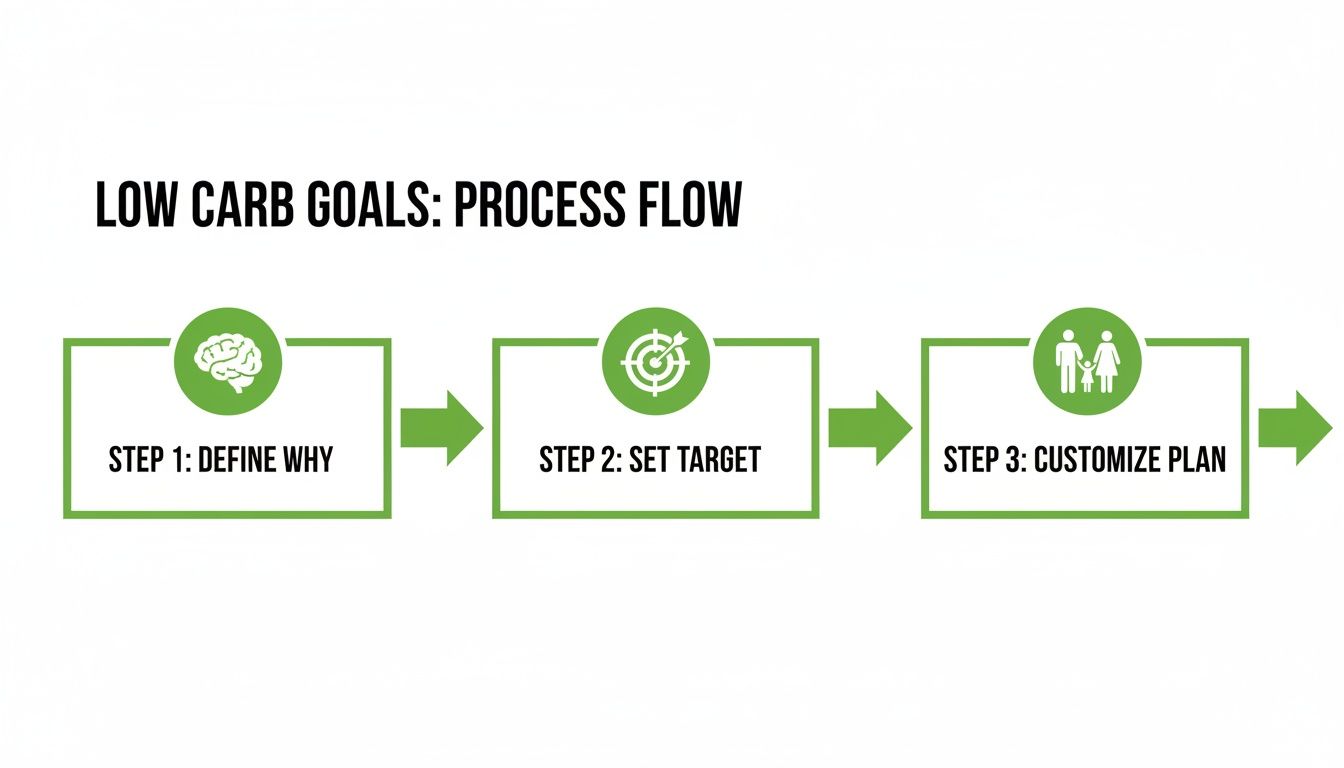
This is precisely what our template is designed to help you nail down, week after week.
The Magic of Low Carb Theme Nights
Let me tell you, theme nights are a game-changer. They’re your secret weapon for making this whole meal-planning thing fun and shockingly efficient. Instead of staring into the abyss of a blank weekly calendar, you have guardrails that make brainstorming recipes an absolute breeze.
Here are a few low-carb theme night ideas I've used time and time again:
- Meatless Monday: Think bubbly zucchini lasagna packed with ricotta and mozzarella, or maybe a rich, hearty mushroom and cauliflower rice risotto.
- Taco Tuesday: Who needs tortillas? We’re talking crisp lettuce wraps, bell pepper "nachos" loaded with toppings, or a massive taco salad bowl that’s way more satisfying.
- Sheet Pan Wednesday: My favorite for a reason: minimal cleanup! Toss chicken thighs or sausages with broccoli and peppers in some good olive oil and seasoning, then just roast and serve.
- "Brinner" Thursday (Breakfast for Dinner): Is there anyone who doesn't love bacon, eggs, and avocado for dinner? Almond flour pancakes are also a fantastic kid-friendly option here.
- Stir-Fry Friday: Use cauliflower rice or zoodles as your base and throw in your favorite protein and low-carb veggies like snap peas, bok choy, and mushrooms.
- Slow Cooker Saturday: Let the crockpot do all the heavy lifting. A juicy pulled pork or a hearty beef stew (I use a little xanthan gum to thicken it) is pure weekend comfort food.
- Soup & Salad Sunday: End the week with something simple. A creamy broccoli cheddar soup or a classic chicken and veggie soup alongside a big, loaded green salad is perfect.
The best part? This structure gives you direction without being bossy. If you're just not feeling stir-fry on Friday, swap it! The point is to have a starting block so you're never starting from zero.
Master the Cook Once, Eat Twice Strategy
For a busy caregiver, leftovers aren't an accident—they are a strategic advantage. I live by this rule. Intentionally cooking more than you need for one meal is the key to an efficient low-carb week. It's the "cook once, eat twice" philosophy, and it will revolutionize your lunches.
Picture this: you roast a whole chicken on Sunday night. That’s an amazing dinner. But it's also the shredded chicken for your salad on Monday, the protein for your kid's lunchbox, and the base for a quick soup on Wednesday. One cooking session, multiple grab-and-go meals.
By planning for leftovers, you're not just saving time. You're building a safety net for those wild days when cooking a fresh lunch from scratch is pure fantasy. It's the ultimate act of kindness to your future, frazzled self.
Here’s how you actually do it:
- Double Your Protein: Seriously, always cook at least double the chicken, ground beef, or pork you think you'll need for dinner. You will thank yourself later.
- Repurpose Like a Pro: Think beyond just eating the exact same meal twice. That leftover steak gets sliced thinly for an incredible steak salad. Extra grilled salmon can be flaked into a creamy dill dip served with cucumber slices.
- Prep Versatile Veggies: Roast a huge batch of broccoli, cauliflower, and bell peppers. They're a side dish one night, tossed into an omelet the next morning, and bulk up a salad for lunch.
This approach makes every minute you spend in the kitchen work twice as hard. It's the smartest way to guarantee you always have a healthy, low-carb option ready to go, saving you from those last-minute, carb-heavy temptations that always seem to pop up.
A 7-Day Low Carb Meal Plan Your Family Will Actually Eat
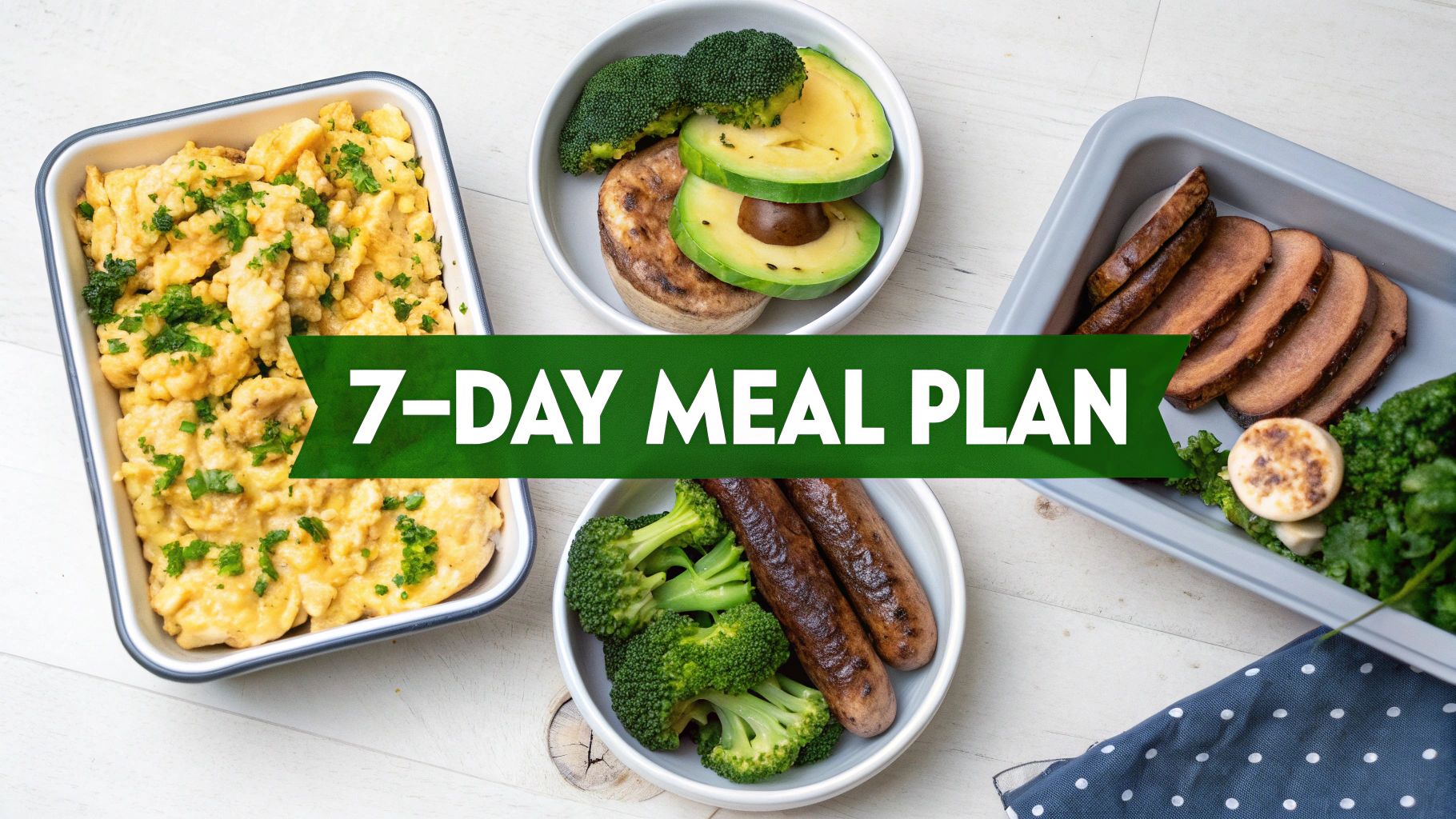
Okay, enough with the theory. Let's get down to what you really came here for—the food!
The biggest fear I hear from caregivers is that a low carb diet meal plan is a one-way ticket to bland food and a full-scale family rebellion. Let’s just bust that myth right here and now. This isn't about chewing on sad, plain chicken breast while your family eats pizza.
This is about making vibrant, delicious meals that just happen to be low in carbs. The secret? Cook one main dish and then make simple, strategic swaps for the kids. No more playing short-order cook. Just smart, tasty eating for everyone at the table.
To make it even easier, here's the full week laid out in a handy table. You can see the entire plan at a glance, from your morning fuel to the kid-friendly dinner hacks.
Sample 7-Day Low Carb Family Meal Plan
| Day | Breakfast | Lunch | Dinner | Kid-Friendly Swap |
| Monday | Scrambled eggs, avocado, berries | Leftover Sunday dinner | Sheet-Pan Sausage & Broccoli | Serve their portion over whole-wheat pasta or quinoa. |
| Tuesday | Full-fat Greek yogurt with nuts | Leftover sausage & broccoli | Deconstructed Burger Bowls | Pile their beef and toppings into regular hamburger buns. |
| Wednesday | Two-egg omelet with spinach | Leftover burger bowl | Chicken & Veggie Stir-Fry | Serve their stir-fry over a scoop of fluffy white rice. |
| Thursday | Protein smoothie | Leftover stir-fry | "Brinner" - Bacon & Eggs | Add a side of whole-grain toast for dipping. |
| Friday | Greek yogurt with berries | Turkey & cheese roll-ups | Zucchini Pizza Boats | Use pre-made pizza crusts or English muffins as their base. |
| Saturday | Almond flour pancakes | Leftover pizza boats | Slow-Cooker Pulled Pork | Pile the pulled pork into soft brioche buns. |
| Sunday | Leftover almond flour pancakes | Pulled pork salad | Roast Chicken & Cauliflower | Roast some potatoes or sweet potatoes on the same pan. |
This table is your roadmap. You can see how leftovers flow into the next day’s lunch, saving you time and mental energy. The "swaps" are designed to be incredibly simple, often just adding a single carb component that you can prep in minutes.
A Deeper Dive Into The Daily Plan
Let's break down a few of these days so you can see just how easy it is.
Monday’s Sheet-Pan Magic
Start the week strong and simple. For dinner, just toss some Italian sausage and broccoli florets with olive oil and garlic powder, then roast them at 400°F (200°C). Everything cooks on one pan. While that’s in the oven, you can boil a small pot of pasta for the kids. Done.
Tuesday’s Burger Bowl Bonanza
Taco Tuesday gets a low-carb makeover. Brown some ground beef with your favorite seasonings and serve it over a bed of shredded lettuce with all the fixings: cheese, pickles, tomatoes, and a sugar-free special sauce. The rest of the family gets the exact same stuff, just piled into a classic hamburger bun.
Friday’s Pizza Party
Yes, you can still have pizza night! Zucchini boats are a game-changer. Just slice a zucchini in half, scoop out the middle, and fill it with marinara, mozzarella, and pepperoni. Bake until it's golden and bubbly. For the kids? Let them make their own on English muffins or a pre-made crust. It's interactive, fun, and nobody feels like they're missing out.
The Leftover Advantage: Notice a pattern here? Sunday’s roast chicken becomes Monday’s quick lunch. The pulled pork from Saturday is reborn as a zesty salad. This isn’t about eating the exact same meal twice; it's about repurposing your main protein to save you from cooking a whole new meal at noon.
This approach isn't just about food; it's about reclaiming your time. By batch-cooking a protein like a roast chicken or pulled pork on Sunday, you've already handled the heaviest lifting for the next few days. For even more ideas on how to prep ahead, check out these **10 low carb meal prep recipes** that will make your weeks run so much smoother.
Turn Your Meal Plan Into an Automated Grocery List
Okay, you’ve done the hard part. You’ve built an amazing weekly template and have a drool-worthy 7-day plan ready to roll. High-five! But let's be real: even the most perfect low carb diet meal plan is just a pretty piece of paper if the next step—the actual grocery shopping—feels like a trip to Mordor.
This is exactly where good intentions go to die. So, let’s bridge that gap. The goal isn't just to make a list; it's to build a smart, efficient system that practically runs itself. No more aimless wandering down the cookie aisle or that soul-crushing "I forgot the avocado!" moment on Tuesday night.
From Plan to Purchase in Minutes
First, let's walk through the old-school (but still effective) way of doing this. Grab your 7-day plan and a notepad, or fire up your favorite notes app.
Go through every single meal—breakfast, lunch, dinner, snacks, the works—and jot down every last ingredient. Don't think, just list. Get it all out.
Next up: a little kitchen detective work. Take your master list and head to your pantry, fridge, and freezer. Cross off everything you already have. That half-empty bag of almond flour? Check. The giant bottle of olive oil? Done. This quick five-minute "pantry audit" is a lifesaver for your wallet and prevents you from buying your fifth jar of paprika.
Finally, wrangle that list into submission by organizing it by store section. Something like this:
- Produce: Avocados, broccoli, leafy greens, berries
- Meat & Seafood: Chicken thighs, ground beef, salmon, eggs
- Dairy: Heavy cream, block cheese, Greek yogurt
- Pantry/Dry Goods: Olive oil, spices, nuts, canned tomatoes
This simple act of categorizing your list will turn you into a grocery store ninja. You’ll be in and out with purpose, no more zigzagging across the store for a forgotten lemon.
The Magic of Automation
Now, what if you could just... skip all that?
Imagine your personalized meal plan instantly spitting out a perfectly organized, categorized grocery list that’s ready to be sent for delivery with a single click. This isn't science fiction anymore; it’s the power of automation.
For busy parents, this is an absolute game-changer. Modern tools can connect your recipes directly to your online shopping cart, giving you back precious time and eliminating the soul-sucking stress of navigating a crowded supermarket with kids in tow. To truly level up, learning how to automate tasks and reclaim your time is a skill that pays dividends far beyond just meal planning.
The real win here isn't just about convenience. It's about consistency. When grocery shopping is effortless, you're 90% more likely to stick with your low-carb goals because the biggest hurdle—getting the right food in the house—has been eliminated.
This shift toward easier, healthier eating is happening everywhere. The global low-carb diet market was valued at a whopping USD 14.55 billion in 2024 and is expected to climb to USD 22.25 billion by 2032. This incredible growth means more low-carb options are hitting shelves every day, making it easier than ever to stock your kitchen. You can discover more insights about this low-carb market surge and see what it means for your shopping trips.
Your Instacart-Ready Shopping List
When you put it all together, a smart, automated system generates a list that's more than just a list—it's your command center for the week. It ensures you buy exactly what you need, which slashes food waste and prevents those impulse buys that sabotage both your budget and your diet.
This approach transforms grocery shopping from a dreaded chore into a simple, satisfying task that sets you up for a week of healthy, stress-free meals. For a deeper dive, check out our guide on creating an automated grocery list that syncs perfectly with your meal plan. It’s time to let technology do the heavy lifting so you can get back to what matters most.
Got Questions? Let's Talk Real-World Low-Carb Life With Kids.
Let's be honest. Taking your family low-carb, even just mostly low-carb, sounds great in theory. You've got the vision, maybe even a perfect low carb diet meal plan sketched out. Then real life hits. We're talking birthday parties, that one kid who only eats beige food, and the beautiful chaos that is Tuesday night soccer practice.
It's one thing to plan; it's another to pull it off in the trenches of parenthood. So, let's tackle the questions that really matter—the ones that pop up when you're staring down a pizza delivery menu and wondering if it's all worth it. (Spoiler: it is, and I've got your back).
"Help! My Kid Is The World's Pickiest Eater."
Ah, the age-old dinner table standoff. I see you. The secret here isn't about force-feeding broccoli; it's about strategy, deconstruction, and a little bit of kid psychology.
Try serving meals "family style" as often as you can. This is a game-changer. It puts them in the driver's seat and gives them a sense of control. For something like a deconstructed burger bowl night, you just lay everything out: the seasoned ground beef, shredded lettuce, cheese, pickles, and tomatoes. You load your bowl up with all the low-carb goodness, and they can happily build their own burger on a bun. Everyone wins.
Another lifesaver is my "one safe thing" rule. Always, always have at least one food on the table you know for a fact they'll eat. Maybe it's just a side of berries or some cheese slices. This simple trick instantly lowers the pressure and prevents dinnertime from dissolving into a full-blown negotiation.
The goal is exposure, not a clean plate. Seriously. Just getting new foods onto the table, without any pressure to eat them, is one of the most powerful ways to expand a kid's palate over time.
"What On Earth Do I Do at Birthday Parties?"
Social events can feel like navigating a minefield of sugar and carbs. The best defense? A good offense.
First off, never, ever show up starving. This is non-negotiable. Have a protein-packed snack before you go—a handful of almonds, a cheese stick, something. This simple move takes the edge off your hunger and keeps you from making a desperate dive for the first cupcake you see.
Once you're there, scan the scene for what you can have. You'd be surprised what's usually available:
- Cheese platters are your best friend.
- Veggie trays are a solid bet (just stick to the ranch or tzatziki dip).
- Grab the burger patty or hot dog and just ditch the bun.
- Chicken wings can work, as long as they aren't coated in a sugary glaze.
If you know it's a potluck, bring a showstopper dish you can eat. A gorgeous salad with grilled chicken or a batch of killer deviled eggs always works. For your own kid's party, you're in the driver's seat! Make a mind-blowing low-carb dessert like a rich chocolate avocado mousse. I promise, no one will ever guess it's "diet food."
"I Need Fast, On-The-Go Snacks That Aren't Just Carbs."
You and every other busy parent on the planet! Hectic schedules demand snacks you can grab while running out the door. Having these on hand is your secret weapon against the siren song of the drive-thru.
Stock your car, purse, and pantry with these lifesavers:
- Individually wrapped cheese sticks or those little Babybel waxes of joy.
- Hard-boiled eggs (boil a big batch on Sunday for the week).
- Pre-portioned bags of nuts like almonds, walnuts, or macadamia nuts.
- Beef jerky or meat sticks (just double-check the label for sneaky added sugars).
- Packets of olives or pickles for that salty, savory fix.
- Celery sticks with single-serving peanut butter packs.
I find that creating a dedicated "snack station" in the pantry or a drawer in the fridge makes a huge difference. It's an easy-to-see, easy-to-grab system that helps the whole family make better choices in a hurry.
"Isn't This Going to Make My Grocery Bill Explode?"
This is a huge one, but it’s mostly a myth. Sure, if you fill your cart with fancy keto-branded products, the bill can climb. But if you focus on real, whole foods, you might be surprised to find it's totally manageable.
Here's how you shop smart: make frozen vegetables your best friend. They're just as nutritious as fresh, cost less, and you'll never have to deal with the tragedy of slimy spinach again. Buy meat in bulk when it's on sale and freeze it in meal-sized portions. And eggs? Eggs are basically the most perfect, affordable protein source known to man.
Think about it: you're swapping out pricey processed snacks, sugary sodas, and takeout meals for satisfying, nutrient-dense foods. Many families find their grocery bill actually evens out or even goes down. You're just shifting where the money goes.
---
Ready to stop guessing and start building a plan that truly works for you? With Meal Flow AI, you can generate a personalized low-carb meal plan in seconds and send the perfectly organized grocery list straight to Instacart. Click here to take the stress out of meal planning forever at Meal Flow AI!