The Ultimate 2026 Macro List for Food: 10 Meal Prep Staples
Unlock your nutrition goals with our ultimate macro list for food. Discover the top 10 foods with detailed macros, meal prep tips, and family-friendly ideas.
Love This Article?
Get personalized meal plans with recipes like this, automatically matched to your nutrition targets.
Ever feel like you're playing nutritional bingo, hoping you land on the right combination of protein, carbs, and fats? You're not alone. Juggling family meals, personal fitness goals, and a chaotic schedule can turn grocery shopping into a strategic nightmare. That's where a solid macro list for food transforms from a simple spreadsheet into your secret weapon for success.
Forget generic advice and confusing charts. This isn't just a list; it's a battle-tested blueprint featuring 10 powerhouse foods that form the foundation of countless successful meal plans. We're talking about the MVPs of meal prep: lean proteins like chicken breast and salmon, complex carbs like sweet potatoes and quinoa, and healthy fats from sources like almonds. We'll break down not just the numbers (protein, carbs, fat per serving), but the 'why' and 'how' with actionable tips, quick swaps for picky eaters, and meal prep shortcuts that actually work.
This guide is designed to be your go-to resource, helping you move from guessing to executing with confidence. Before we dive into the specific foods, if you need a quick refresher on the fundamentals, this guide on understanding and balancing your macros is an excellent starting point. It provides a foundational look at how these numbers work together to fuel your body and help you reach your goals. Get ready to conquer meal prep, simplify your shopping, and finally gain control over your nutrition, one delicious, perfectly-portioned meal at a time.
1. High-Protein Chicken Breast Profile
Welcome to the undisputed king of the lean protein world: the humble chicken breast. If macros were a high school yearbook, chicken breast would be voted "Most Likely to Succeed" and "Most Popular." It’s the cornerstone of nearly every fitness-focused meal plan for a reason, and it’s a non-negotiable entry on any serious macro list for food.
This powerhouse protein source is beloved by bodybuilders, meal prep gurus, and busy moms trying to sneak quality nutrition into family dinners. Its fame comes from its ridiculously efficient macro profile.
The Macro Breakdown
For a standard 100g (about 3.5 ounces) serving of cooked boneless, skinless chicken breast, you're looking at a macro dream:
- Protein: ~31g
- Fat: ~3.6g
- Carbohydrates: 0g
This stellar ratio makes it a go-to for building and maintaining muscle mass, promoting satiety to keep you full longer, and fueling your body without a heavy dose of fats or any carbs.
Pro-Level Meal Prep Tips
Tired of dry, bland chicken? Let's fix that.
- Pound It Out: Use a meat mallet to pound chicken breasts to an even thickness. This guarantees uniform cooking and banishes that dreaded dry-on-the-outside, raw-on-the-inside tragedy.
- Marinate for Moisture: A simple marinade of olive oil, lemon juice, garlic, and herbs for at least two hours makes a world of difference. The acid helps tenderize the protein and locks in moisture.
- Trust the Thermometer: Ditch the guesswork. A meat thermometer is your best friend. Pull the chicken off the heat the second it hits an internal temperature of 165°F for perfectly juicy results.
- Slice Smart: Always slice your cooked chicken against the grain. This shortens the muscle fibers, resulting in a much more tender bite.
For an even deeper dive into how chicken breast fits into a balanced diet, check out our complete guide on building a macro list. You can explore more options by reading about the ultimate food macros list.
2. Egg White High-Protein Profile
If chicken breast is the king of lean protein, then egg whites are the queen consort: elegant, efficient, and almost impossibly pure. They're the secret weapon for anyone looking to pump up their protein intake while keeping fats and carbs at a bare minimum. It’s the go-to ingredient for fitness competitors and a brilliant hack for stay-at-home moms wanting to craft balanced family meals without the extra calories.
This humble food is a superstar on any macro list for food because it delivers protein in one of its most unadulterated forms. It's essentially pure protein with a whisper of other macros, making it incredibly versatile for hitting precise nutritional targets.
The Macro Breakdown
For a 100g serving (about 3.5 ounces or roughly 3-4 large egg whites), the numbers are almost too good to be true:
- Protein: ~11g
- Fat: ~0.2g
- Carbohydrates: ~0.2g
This incredibly lean profile makes egg whites perfect for building muscle, enhancing satiety on a calorie-controlled diet, and sneaking protein into recipes where you don't want to alter the flavor or texture significantly.
Pro-Level Meal Prep Tips
Say goodbye to rubbery, tasteless egg whites forever. Here’s how to make them a delicious staple.
- Embrace Liquid Whites: Save yourself the mess and effort of separating yolks. Cartons of liquid egg whites are a meal prepper's dream, offering convenience and precise portion control.
- Low and Slow Heat: The biggest mistake is cooking egg whites too hot, which makes them tough. Cook them on a medium-low heat to keep them tender and fluffy.
- The 1:3 Whole Egg Ratio: To improve taste and texture without a huge fat increase, mix one whole egg with three parts egg whites. You get the creamy benefit of the yolk while keeping the macros lean.
- Boost Your Smoothies: Add a splash of liquid egg whites to your morning smoothie for a tasteless, textureless protein boost. It’s a fantastic way to hit your protein goals without relying solely on powders.
Egg whites are a foundational block for building a comprehensive macro list. For more ideas on how they fit into a wider dietary plan, explore our full ultimate food macros list.
3. Greek Yogurt Balanced Protein Profile
Move over, regular yogurt. The thick, creamy, and protein-packed superstar of the dairy aisle is here to stay. Greek yogurt isn't just a trend; it's a macro-tracking powerhouse that has earned its spot in the refrigerators of fitness buffs and busy parents alike. It’s the perfect blend of convenience, taste, and powerful nutrition.
This versatile food is a champion for a reason. Its straining process removes much of the whey, resulting in a lower sugar, higher protein product that’s a game-changer for hitting your daily macro goals, especially when you need a quick and easy option.
The Macro Breakdown
For a standard 100g (about 3.5 ounces) serving of plain, non-fat Greek yogurt, the numbers are beautifully balanced:
- Protein: ~10g
- Carbohydrates: ~3-4g
- Fat: ~0.4g
This profile makes it an incredibly efficient way to boost your protein intake without adding significant fats or carbs. It’s perfect for a satisfying snack that supports muscle maintenance and keeps you feeling full between meals.
Pro-Level Meal Prep Tips
Think Greek yogurt is just for breakfast? Think again.
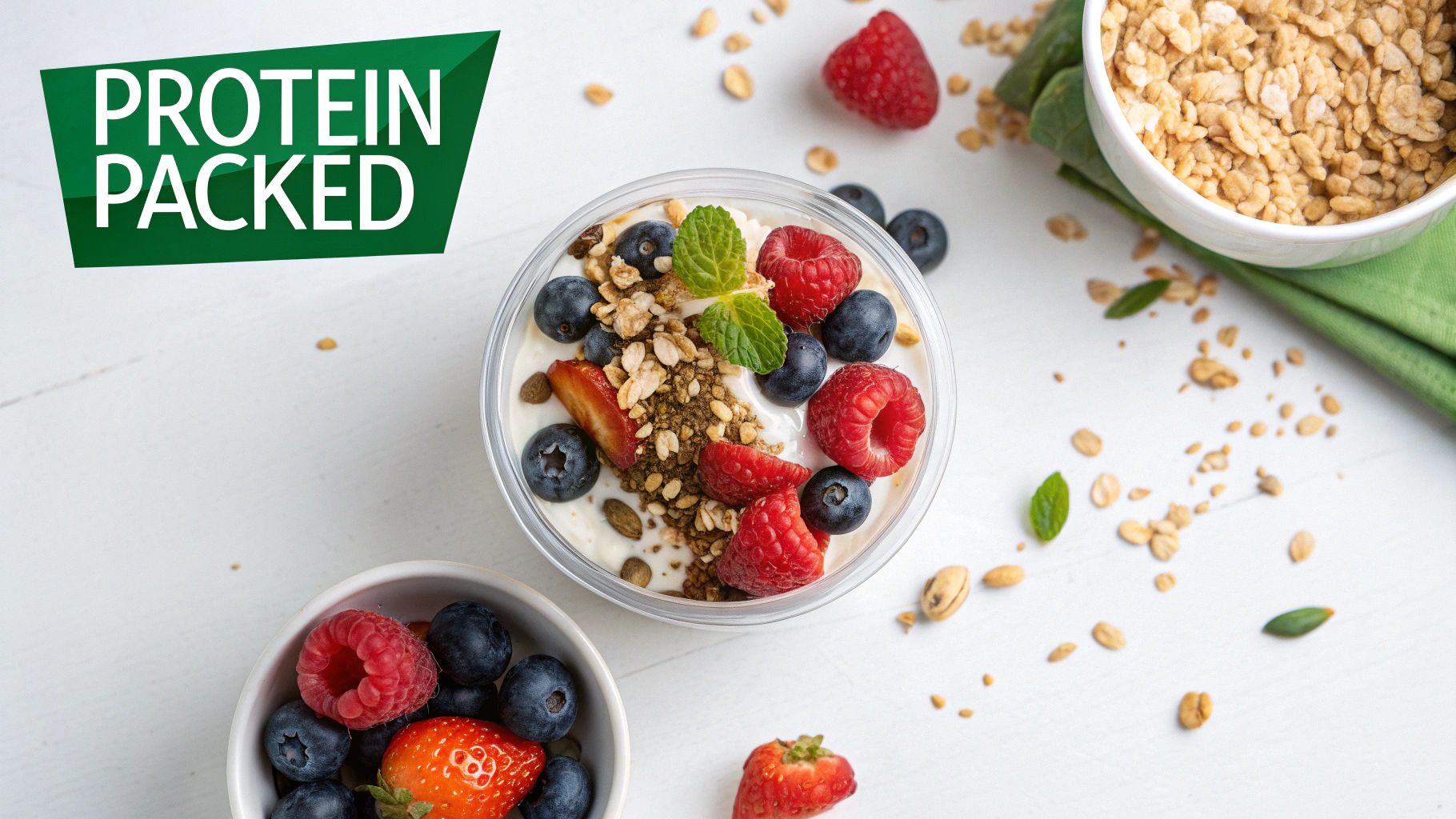
- Parfait Perfection: Layer 5oz of plain Greek yogurt with berries and a sprinkle of low-sugar granola in mason jars. You can prep 3-4 days' worth of grab-and-go breakfasts or snacks in minutes.
- Smarter Sauces: Use it as a direct substitute for sour cream or mayonnaise to create high-protein, low-fat dips and dressings. A homemade tzatziki sauce is a perfect example.
- Protein Powder Boost: For a post-workout punch, mix a scoop of your favorite protein powder directly into your yogurt. This can easily double the protein content for a quick recovery meal.
- Buy Plain, Flavor Yourself: Always opt for plain, non-fat varieties to control the sugar and macros. Add your own sweetness with a touch of honey, fresh fruit, or a sugar-free syrup.
If you’re just getting started, you can master the basics by learning more about how to calculate your macros.
4. Salmon Omega-3 Balanced Profile
Meet the sophisticated, brain-boosting cousin of lean protein: salmon. If chicken is the reliable workhorse of your macro list for food, salmon is the luxury sedan that’s both powerful and incredibly good for you. It delivers a one-two punch of high-quality protein and heart-healthy fats, making it a favorite of cardiologists and wellness advocates.
This fish isn't just delicious; it’s a nutritional powerhouse. Celebrated within the Mediterranean diet and beyond, salmon’s claim to fame is its perfect harmony of protein and essential omega-3 fatty acids, bridging the gap between muscle fuel and brain food.
The Macro Breakdown
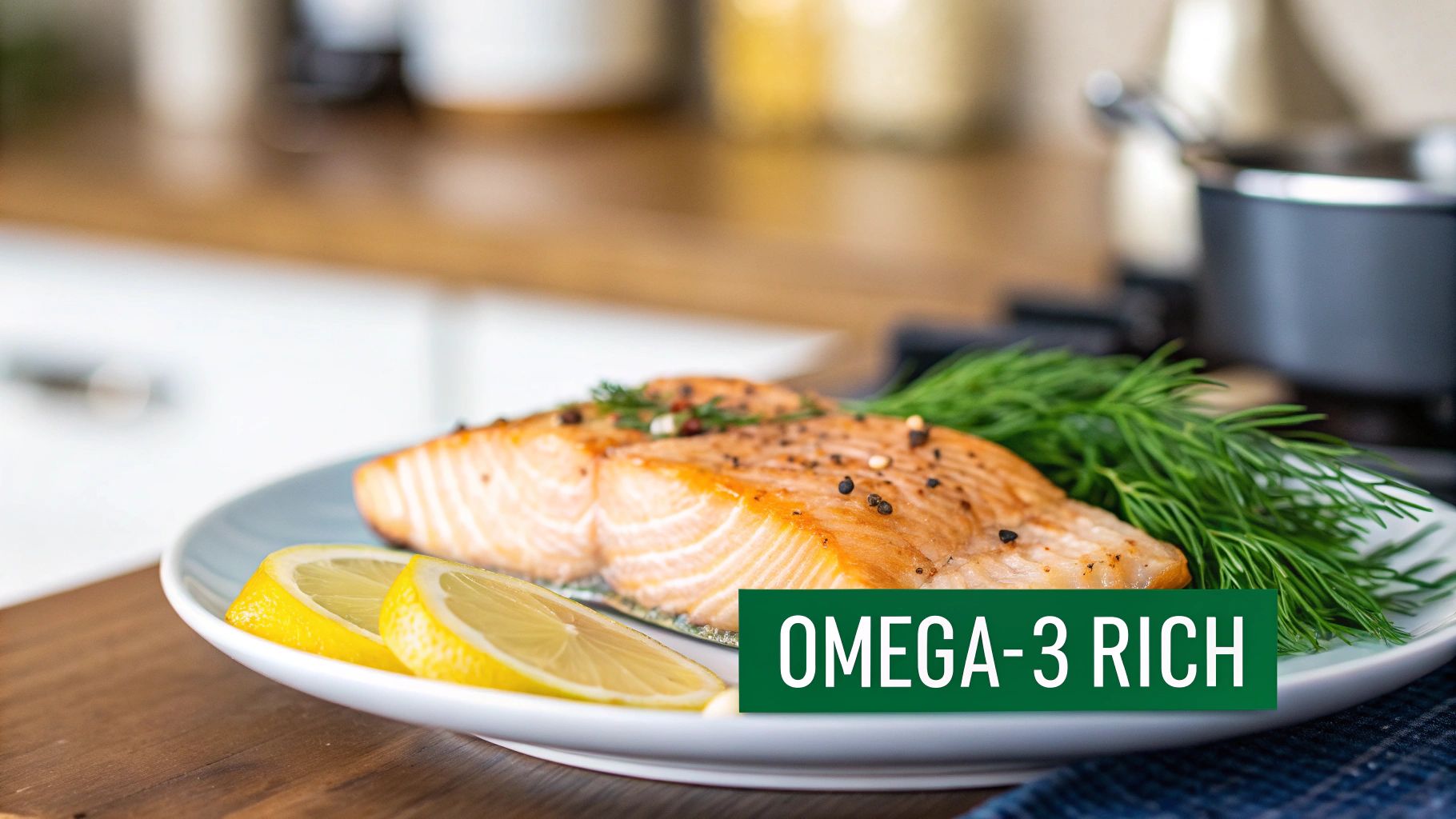
For a standard 100g (about 3.5 ounces) serving of cooked Atlantic salmon, you're getting a beautifully balanced profile:
- Protein: ~25g
- Fat: ~13g (including about 2.3g of powerful omega-3s)
- Carbohydrates: 0g
This unique ratio provides the protein needed for muscle repair and satiety while delivering essential fatty acids that are critical for reducing inflammation, supporting heart health, and boosting brain function.
Pro-Level Meal Prep Tips
Say goodbye to overcooked, fishy salmon forever. Here’s how to master it.
- Start with Dry Skin: For a deliciously crispy skin, pat the salmon fillet completely dry with a paper towel before seasoning. Moisture is the enemy of crispiness.
- Cook Skin-Side Down First: Place the salmon skin-side down in a hot, oiled pan. Cook for about 90% of the total time on this side to render the fat and get that perfect, crunchy texture.
- Check the Temp, Not the Clock: The golden rule for flaky, moist salmon is to cook it to an internal temperature of 145°F. Use a meat thermometer to pull it at the perfect moment.
- Embrace Citrus and Herbs: A simple squeeze of fresh lemon or a sprinkle of dill after cooking elevates the flavor and cuts through the richness of the fish.
- Plan for Twice a Week: To reap the full omega-3 benefits, aim to incorporate salmon into your family's meal plan twice a week. Think sheet pan dinners, salmon tacos, or flaked salmon in pasta.
5. Brown Rice Complex Carb Profile
Meet the trusty sidekick to every lean protein: brown rice. If chicken breast is the hero of the macro world, brown rice is the reliable, energy-providing companion that makes the whole mission possible. It’s the foundational complex carbohydrate that has earned its spot in every fitness enthusiast's pantry and every meal-prepping mom's weekly plan.
This whole-grain powerhouse is celebrated for its slow-releasing energy, making it a far superior choice to its refined, white rice cousin. Its versatility makes it the perfect base for everything from hearty burrito bowls to vibrant stir-fries, solidifying its place on any comprehensive macro list for food.
The Macro Breakdown
For a standard 100g (about ½ cup) serving of cooked brown rice, you get a balanced, fiber-rich profile:
- Carbohydrates: ~23g
- Protein: ~2.6g
- Fat: ~0.9g
This macro trio provides sustained energy without the sugar crash, thanks to its fiber content. It keeps you fueled for workouts, chasing toddlers, or conquering a busy workday, making it an essential carb source for balanced nutrition.
Pro-Level Meal Prep Tips
Say goodbye to mushy, bland rice forever with these simple tricks.
- Bulk Cook for the Week: Dedicate a slot on Sunday to cook a large batch. It saves an incredible amount of time during the hectic week ahead.
- Flavor the Foundation: Ditch plain water and cook your rice in vegetable or chicken broth. This simple swap infuses every grain with a savory, delicious flavor from the start.
- Perfect the Ratio: For fluffy, perfectly cooked rice, stick to a strict 2:1 water-to-rice ratio. Bring it to a boil, then cover and simmer on the lowest heat setting without peeking.
- Portion and Freeze: Portion cooked rice into ¾ cup servings (providing about 25g of carbs) in freezer-safe bags or containers. It reheats perfectly and prevents waste.
6. Lentil Plant-Based Protein Profile
Meet the humble hero of the plant-based world: the mighty lentil. If you're looking for a food that delivers on nutrition, budget, and sustainability, lentils are the triple-threat champion. They're a favorite among vegan influencers, Mediterranean diet gurus, and savvy parents aiming to pack more fiber and plant-powered goodness into their family's meals.
These tiny legumes are the ultimate multitaskers. They're incredibly versatile, easy to cook, and boast a macro profile that makes them an essential part of any balanced macro list for food, especially for those prioritizing plant-based options.
The Macro Breakdown
For a standard 100g (about a half-cup) serving of cooked lentils, you get a beautifully balanced macro package:
- Protein: ~9g
- Fat: ~0.4g
- Carbohydrates: ~20g
This blend of complex carbs and protein provides slow-releasing energy and high satiety, making lentils perfect for keeping you full and energized. The impressive fiber content (around 8g per serving) is also a massive win for digestive health.
Pro-Level Meal Prep Tips
Think lentils are just for boring soup? Let's upgrade your lentil game.
- Cook in Bulk, Freeze in Portions: Spend 30 minutes on Sunday cooking a large batch of dried lentils. Once cooled, freeze them in one or two-cup portions for instant additions to meals all week long.
- Combine for Complete Protein: Lentils are fantastic, but to get all essential amino acids, pair them with a whole grain. A simple lentil and brown rice curry or a quinoa and lentil salad creates a complete protein powerhouse.
- Red for Speed, Brown for Body: Use red lentils for quick-cooking dishes like dahls and creamy soups, as they break down in about 20 minutes. Use heartier brown or green lentils for salads and taco "meat" where you want them to hold their shape.
- Rinse and Repeat: Always give your dried lentils a thorough rinse in a fine-mesh sieve before cooking. This removes any dust or debris and can help reduce the compounds that sometimes cause digestive upset.
7. Broccoli Nutrient-Dense Vegetable Profile
Say hello to the green giant of the vegetable world, the mighty broccoli. Often pushed around the plate by picky eaters, this cruciferous powerhouse is the unsung hero of any well-rounded macro list for food. It's the nutritional equivalent of a multi-tool: versatile, packed with benefits, and essential for getting the job done right.
Broccoli has earned its place in the hearts of nutritionists, wellness advocates, and anyone looking to add serious nutrient volume to their meals without a calorie penalty. Its ability to fill you up and deliver a micronutrient punch makes it a non-negotiable for families and fitness fans alike.
The Macro Breakdown
For a standard 100g (about 1 cup) serving of raw broccoli, the numbers are as impressive as they are efficient:
- Protein: ~2.8g
- Fat: ~0.4g
- Carbohydrates: ~7g (with 2.4g of fiber!)
While it's not a protein headliner, its carb-to-fiber ratio is exceptional. That high fiber content aids digestion and promotes satiety, making it the perfect high-volume, low-calorie addition to bulk up any meal and keep you feeling full.
Pro-Level Meal Prep Tips
Transform broccoli from a bland obligation into a delicious highlight.
- Roast for the Best Taste: Forget boiling. Toss florets with a little olive oil, garlic, and salt, then roast at 400°F for 15-20 minutes. The edges get crispy and caramelized, bringing out a nutty sweetness.
- Blanch Before Freezing: If you're prepping for the long haul, blanch broccoli for 2-3 minutes in boiling water, then immediately plunge it into an ice bath. This locks in the color and nutrients before you freeze it in portions.
- Don't Overcook It: Mushy, smelly broccoli is a culinary crime. Steam or stir-fry it for just a few minutes until it’s tender-crisp. This preserves its vibrant green color and, more importantly, its valuable nutrients.
- Pair with Healthy Fats: The vitamins in broccoli (like Vitamin K and A) are fat-soluble. Pairing it with a source of healthy fat like olive oil, avocado, or a sprinkle of nuts helps your body absorb all that goodness.
8. Quinoa Complete Protein Grain Profile
Say hello to the super-grain that crashed the party and decided to stay: quinoa. Once an ancient staple, this "pseudo-cereal" has become a pantry hero for health influencers, vegetarian families, and anyone looking to upgrade their carb game. It's earned its spot on every serious macro list for food by offering something most grains can't: a complete protein profile.
Quinoa is celebrated for containing all nine essential amino acids, making it a rare plant-based powerhouse. This makes it an invaluable asset for those on vegetarian or vegan diets, or for busy moms aiming to pack maximum nutrition into every spoonful for their families.
The Macro Breakdown
For a standard 100g (about 1/2 cup) serving of cooked quinoa, you get a beautifully balanced macro spread:
- Protein: ~8g
- Carbohydrates: ~39g
- Fat: ~4g
This profile provides sustained energy from complex carbs, a solid dose of plant-based protein for muscle support and satiety, and healthy fats. It's the versatile team player your meal plan has been missing.
Pro-Level Meal Prep Tips
Unlock quinoa’s full potential and banish blandness forever.
- Rinse and Repeat: Always rinse your uncooked quinoa in a fine-mesh sieve under cold running water. This removes the natural coating, called saponin, which can give it a bitter or soapy taste.
- Flavorful Foundation: Ditch the plain water. Cooking quinoa in vegetable or chicken broth infuses it with a deep, savory flavor from the very start. A 2:1 liquid-to-quinoa ratio is the golden rule.
- The Fluff is Key: Once cooked, let the quinoa sit covered and off the heat for five minutes. Then, gently fluff it with a fork. This separates the grains and creates that light, fluffy texture everyone loves.
- Batch and Store: Cook a large batch and portion it into airtight containers. It keeps beautifully in the fridge for up to four days, ready for quick Buddha bowls, salads, or a nutritious side for dinner.
9. Sweet Potato Complex Carb Micronutrient Profile
Say hello to nature’s candy that also happens to be a nutritional powerhouse: the sweet potato. If carbs had a superhero, the sweet potato would be it, swooping in with sustained energy, a boatload of vitamins, and a naturally sweet flavor that satisfies cravings. It's the ultimate team player, beloved by everyone from bodybuilders fueling up post-workout to busy parents looking for a healthy and kid-approved side dish.
This vibrant tuber has earned its spot on every serious macro list for food because it perfectly balances deliciousness with an impressive nutrient-dense profile. It's the go-to complex carb for providing steady energy without the crash.
The Macro Breakdown
For a standard 100g (about 3.5 ounces) serving of cooked sweet potato, the numbers are as clean as they get:
- Carbohydrates: ~20g
- Protein: ~1.6g
- Fat: ~0.1g
This profile makes sweet potatoes an ideal source of fuel. The carbohydrates are primarily complex, meaning they digest slowly for lasting energy. Plus, they are packed with fiber and an exceptional amount of beta-carotene, which the body converts to Vitamin A.
Pro-Level Meal Prep Tips
Unlock the full potential of this versatile vegetable with a few simple tricks.
- Prep for Perfection: Before baking whole, scrub the sweet potatoes well and prick them several times with a fork. This allows steam to escape, preventing a messy potato explosion in your oven.
- Bake for Tenderness: For a creamy, fluffy interior, bake at 400°F for about 40-50 minutes, or until you can easily pierce it with a knife. This method caramelizes the natural sugars, deepening the flavor.
- Batch and Store: Bake a few sweet potatoes at the beginning of the week. Once cooled, you can store them in the fridge for quick additions to lunches and dinners, either whole, mashed, or cubed.
- Balance Your Plate: Pair your sweet potato with a quality protein source like grilled chicken and a healthy fat like avocado. This creates a well-rounded meal that hits all your macro targets and keeps you full for hours. To incorporate sweet potatoes into your meal planning, explore recipes such as these for Loaded Sweet Potato Skins.
For more ideas on how to integrate sweet potatoes and other macro-friendly foods into your routine, check out our guide to macro-friendly meal prep recipes.
10. Almonds Healthy Fat Micronutrient Profile
Say hello to the crunchy, pocket-sized nutritional powerhouse: the almond. If you're looking for a snack that punches well above its weight class, almonds are your champion. They're the go-to for Mediterranean diet advocates and wellness influencers for a reason, offering sustained energy without the sugar crash, making them a hero for busy moms everywhere.
These little nuts are a masterclass in balanced nutrition, delivering a satisfying trio of healthy fats, protein, and fiber. They're the perfect item to keep on your macro list for food when you need a quick, filling, and incredibly convenient option.
The Macro Breakdown
A standard 100g (about 3.5 ounces) serving of raw almonds brings a robust and balanced profile to the table:
- Protein: ~21g
- Fat: ~50g (mostly heart-healthy monounsaturated fats)
- Carbohydrates: ~22g (with a good portion from fiber)
This macro blend provides sustained satiety and is packed with micronutrients like Vitamin E, magnesium, and calcium, supporting everything from bone health to skin radiance.
Pro-Level Meal Prep Tips
Unlock the full potential of almonds with these simple strategies.
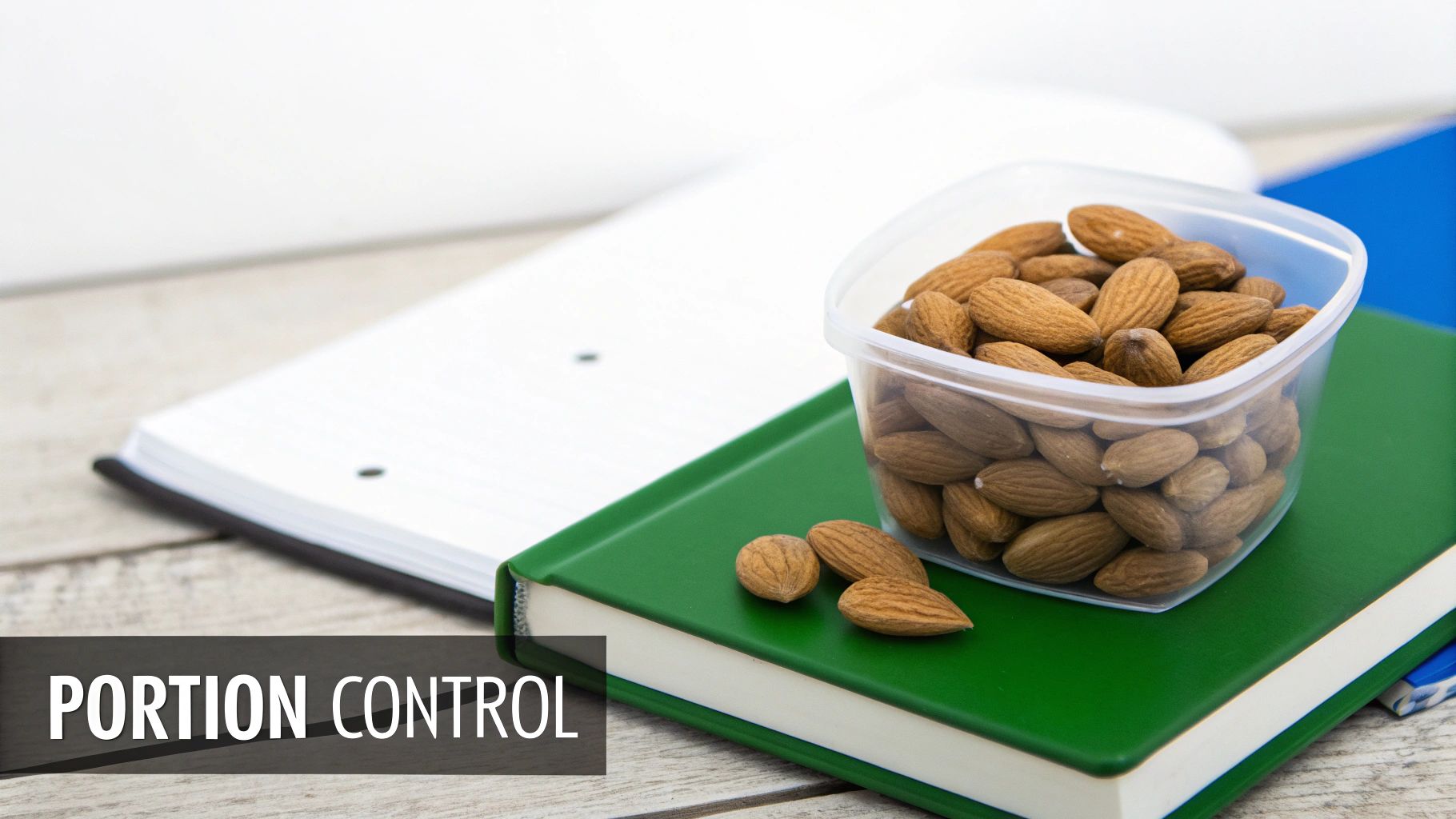
- Portion with Precision: The key to enjoying almonds is portion control. Pre-portion them into 1-ounce bags or containers (that's about 23 almonds). This keeps calories in check and makes for an easy grab-and-go snack.
- Go Raw and Unsalted: To get the maximum health benefits without extra sodium or processed oils, always opt for raw, unsalted varieties. You control what you add later.
- Soak for Better Digestion: Soaking raw almonds in water overnight can help reduce phytic acid, an antinutrient that can interfere with mineral absorption. This makes them easier on your digestive system.
- Boost Your Smoothies: Add a tablespoon of almond butter to your morning smoothie. It adds a creamy texture, a dose of healthy fats, and a protein kick to keep you full until lunch.
For a deeper look at how almonds and other foods fit into a perfectly balanced diet, explore our complete guide on building your ultimate food macros list.
Top 10 Foods: Macro Profiles
| Item | 🔄 Implementation complexity | ⚡ Resources & time | ⭐ Expected outcomes | 📊 Ideal use cases | 💡 Key advantages & tips |
| High-Protein Chicken Breast Profile | 🔄🔄 Moderate — basic cooking skills, safe handling | ⚡⚡ 15–20 min cook; low cost; freezes well | ⭐⭐⭐⭐ High lean protein, supports muscle maintenance & satiety | 📊 Meal prep, family dinners, weight-management plans | 💡 Versatile & affordable — pound for even cooking; use thermometer (165°F) |
| Egg White High-Protein Profile | 🔄 Low — simple prep, low food-safety risk | ⚡⚡⚡ 3–5 min; very low fat; very low cost | ⭐⭐⭐⭐ Ultra-low calorie protein, ideal for strict macro control | 📊 Weight-loss breakfasts, smoothies, protein baking | 💡 Pure protein with minimal calories — cook medium heat; combine with yolks for taste |
| Greek Yogurt Balanced Protein Profile | 🔄 Low — ready-to-eat, minimal prep | ⚡⚡ Ready-to-eat; refrigerated; moderate cost | ⭐⭐⭐⭐ Protein + probiotics; supports gut health and satiety | 📊 Snacks, breakfasts, smoothies, sour-cream substitute | 💡 Probiotic & calcium source — choose plain non‑fat; add fruit or protein powder |
| Salmon Omega-3 Balanced Profile | 🔄🔄 Moderate — careful handling, temperature control | ⚡⚡ 12–15 min; higher cost; refrigerate/frozen | ⭐⭐⭐⭐⭐ High-quality protein + omega‑3s for heart & brain benefits | 📊 Heart-health meals, family dinners, anti-inflammatory plans | 💡 Rich in omega‑3 & vitamin D — buy frozen for value; cook skin‑side down |
| Brown Rice Complex Carb Profile | 🔄🔄 Moderate — longer cook time, simple technique | ⚡⚡ Longer cook (45–50 min) or batch-cook; very low cost | ⭐⭐⭐ Sustained energy and fiber; moderate glycemic impact | 📊 Base for bowls, batch meal prep, sustained-energy meals | 💡 Budget whole-grain carb — cook in bulk; use 2:1 water ratio |
| Lentil Plant-Based Protein Profile | 🔄🔄 Moderate — soaking/cooking considerations | ⚡⚡ Fast in pressure cooker (~15 min); very low cost dry storage | ⭐⭐⭐⭐ Plant protein + high fiber; good satiety and micronutrients | 📊 Vegetarian meals, soups, budget meal prep | 💡 Affordable & sustainable — rinse; combine with grains for complete protein |
| Broccoli Nutrient-Dense Vegetable Profile | 🔄 Low — simple prep, versatile cooking | ⚡⚡⚡ Quick roast/steam (15–20 min); low cost | ⭐⭐⭐ Nutrient-dense, low-calorie volume for satiety | 📊 Volume addition to meals, sides, snacks | 💡 High vitamin C & fiber — avoid overcooking to preserve nutrients and reduce odor |
| Quinoa Complete Protein Grain Profile | 🔄🔄 Low–moderate — rinse required, simple cook | ⚡⚡ 15 min cook; moderate cost | ⭐⭐⭐⭐ Complete plant protein with balanced carbs | 📊 Vegetarian bowls, salads, gluten‑free grain alternative | 💡 Complete amino acids — rinse thoroughly; use 2:1 water-to-quinoa |
| Sweet Potato Complex Carb Micronutrient Profile | 🔄 Low — simple but longer cook for best texture | ⚡ 40–45 min baking (faster by microwave); low–moderate cost | ⭐⭐⭐ High micronutrient density (vitamin A) with sustained carbs | 📊 Sides, carb swaps, family meals, bowls | 💡 Nutrient-dense carb — bake at 400°F; keep skin for extra fiber |
| Almonds Healthy Fat Micronutrient Profile | 🔄 Low — no cooking, simple portioning | ⚡⚡⚡ Ready-to-eat; shelf-stable; moderate–high cost per cal | ⭐⭐⭐ Protein + healthy fats; very satiating but calorie-dense | 📊 Portable snacks, salad toppers, nut butter ingredient | 💡 Rich in vitamin E & magnesium — pre-portion 1‑oz servings to control calories |
Turn Your Macro List Into Effortless Meals
You did it. You’ve journeyed through the powerhouse players of the food world, from the lean protein punch of chicken breast to the healthy-fat haven of almonds. This isn't just another grocery list; it's a strategic arsenal. You now possess a detailed macro list for food that acts as your personal cheat sheet for building balanced, energizing, and satisfying meals for your entire family.
We've deconstructed the "big three" macros - protein, carbs, and fats - and shown you exactly where to find them in their most wholesome forms. You've seen how a simple swap, like using Greek yogurt instead of sour cream, can instantly upgrade a meal's nutritional profile. You've learned how a Sunday afternoon dedicated to prepping quinoa and roasting sweet potatoes can save you from the dreaded 5 PM "what's for dinner?" panic.
This knowledge is your new superpower. It’s the difference between staring blankly into the fridge and confidently pulling out pre-cooked salmon, leftover brown rice, and steamed broccoli to assemble a healthy plate in under five minutes.
From Blueprint to Dinner Plate: Your Action Plan
Information is great, but action is where the magic happens. The true value of this ultimate macro list for food is unlocked when you put it to work in your kitchen. It’s about transforming these individual food profiles from abstract numbers on a screen into tangible, delicious results that fuel your family and simplify your life.
Here are the key takeaways to focus on as you move forward:
- Embrace the “Building Block” Mindset: Stop thinking in terms of rigid recipes. Instead, view your meals as a combination of these macro building blocks. Start with a protein (chicken, lentils, eggs), add a complex carb (sweet potato, quinoa), and finish with a healthy fat (almonds, salmon). This flexible approach makes meal creation faster and more intuitive.
- Make Meal Prep Your Non-Negotiable: You don’t need to prep every single meal for the week. Start small. Just having two proteins and two carbs cooked and ready in the fridge can revolutionize your weeknight dinners. Remember the tips we shared: batch-cook brown rice, roast a tray of broccoli and sweet potatoes, and grill a family pack of chicken. This one action pays dividends all week long.
- Don't Fear the Scale (At First): Weighing your portions of foods like quinoa or almonds might feel tedious initially, but it’s an incredible learning tool. Doing it for just a week or two will calibrate your eyes, helping you understand what a proper serving size actually looks like. Soon, you'll be able to eyeball portions with surprising accuracy, making the process effortless.
Key Insight: Mastering your macros isn't about restriction; it's about empowerment. It's the freedom that comes from knowing exactly how to nourish your body and your family, taking the stress and guesswork out of healthy eating.
This journey is about reclaiming your time and energy. It’s about spending less mental bandwidth on meal planning and more quality time with your loved ones. You have the blueprint. You have the knowledge. You have the food list. The only thing left to do is take that first, simple step. Pick one meal prep tip from this article and try it this weekend. The momentum you build will be unstoppable.
---
Ready to put this macro list for food on autopilot? Let Meal Flow AI do the heavy lifting by transforming these ingredients into a personalized weekly meal plan, complete with an Instacart-ready shopping list. Stop planning and start living—Meal Flow AI is your shortcut to effortless, macro-balanced meals.