Creating Nutritious Meals For Kids They Actually Love
Tired of mealtime battles? Discover fun, practical strategies for creating nutritious meals for kids, including picky eater tips and AI-powered meal planning.
Love This Article?
Get personalized meal plans with recipes like this, automatically matched to your nutrition targets.
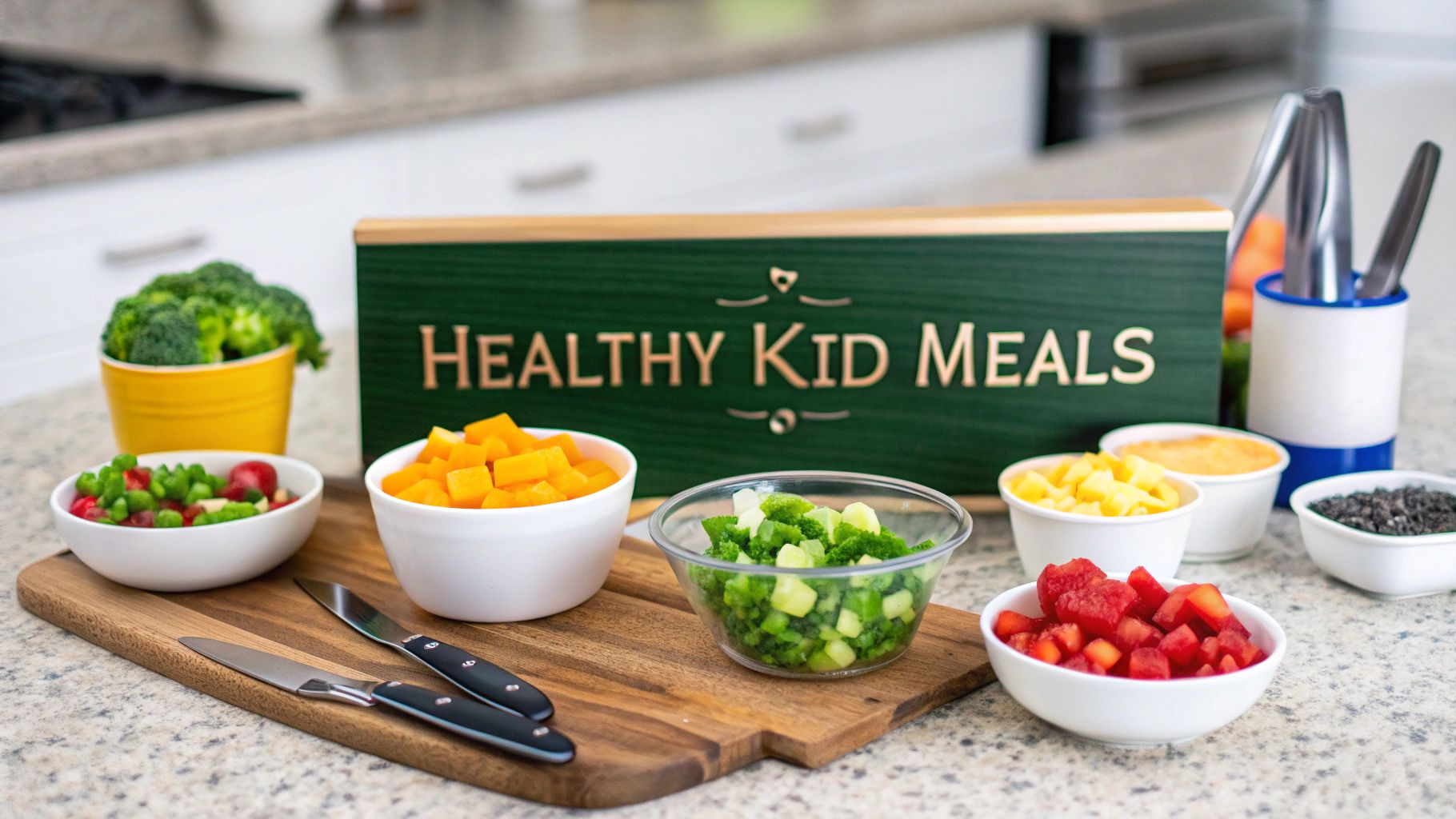
Let’s be real for a moment. Getting kids to eat nutritious food isn't just about what you put on the plate. The real secret? It’s about the vibe at the dinner table. You can have the most perfectly balanced meal in the world, but if mealtime feels like a chore, you've already lost. The goal isn't to trick them into eating their greens or bribe them with "just one more bite." It's about turning dinner from a daily showdown into a time you actually enjoy together.
Ending The Daily Mealtime Battles For Good
The kitchen table can feel like a war zone, can't it? One day they love bananas, the next they're public enemy number one. You’ve got a toddler on a hunger strike over a rogue piece of parsley or a teenager whose diet consists entirely of things that are beige. Sound familiar? You are definitely not alone. The constant pleading and stress can suck the joy right out of what should be a time to connect.

If you're tired of the fight and ready for a truce, you're in the right place. We're going to walk you through a practical, genuinely enjoyable way to create nutritious meals for kids that won't get an immediate eye-roll.
A Fresh Approach to Food
First things first: ditch the old playbook. The force-feeding and dessert-as-a-reward tactics? They don't work long-term. The real magic happens when you shift your entire approach.
I once worked with a family whose four-year-old, Liam, would only eat plain pasta with butter. That was it. His parents were tearing their hair out. Instead of turning every meal into a power struggle, they tried something new. They created a "Food Explorer" game. Once a week, Liam was in charge of picking a new, interesting-looking fruit or veggie at the grocery store.
The key? No pressure to eat it. They’d just investigate it together at home—what does it smell like? Is it bumpy or smooth? What "superpowers" does it have? Before long, little bell pepper "boats" and broccoli "trees" started making their way next to his pasta. It wasn't an overnight miracle, but it was a start. This is what it's all about: making healthy food an adventure, not an order. We dive deep into this with more tips in our guide on how to get kids to eat healthy without all the drama.
The goal isn't just to get them to eat broccoli today; it's to build a lifelong positive relationship with food. It’s about curiosity over compliance.
Your Secret Weapon for Stress-Free Meals
Look, modern parenting is a juggling act, and time is the one thing nobody has enough of. That’s why we’re also going to introduce you to your new best friend in the kitchen: Meal Flow AI. Think of it as your personal meal-planning assistant, designed to eliminate the guesswork and stress.
Imagine being able to:
- Whip up meal plans in minutes that actually cater to your family’s picky tastes.
- Get shopping lists automatically sent to your phone.
- Find new recipes that work for everyone, allergies and all.
Stick with us. We’re about to give you the tools to take back your dinner table, one peaceful, delicious meal at a time.
What Kids Actually Need To Eat At Every Age
Before you start blending spinach into a smoothie and just hoping for the best, let's get real about what your child’s growing body actually needs. A toddler’s nutritional demands are a galaxy away from a teenager’s, and that simple fact is the key to winning the meal-planning game.
Thinking about their needs in stages—toddler, school-age, and teen—is how you take the guesswork out of it.
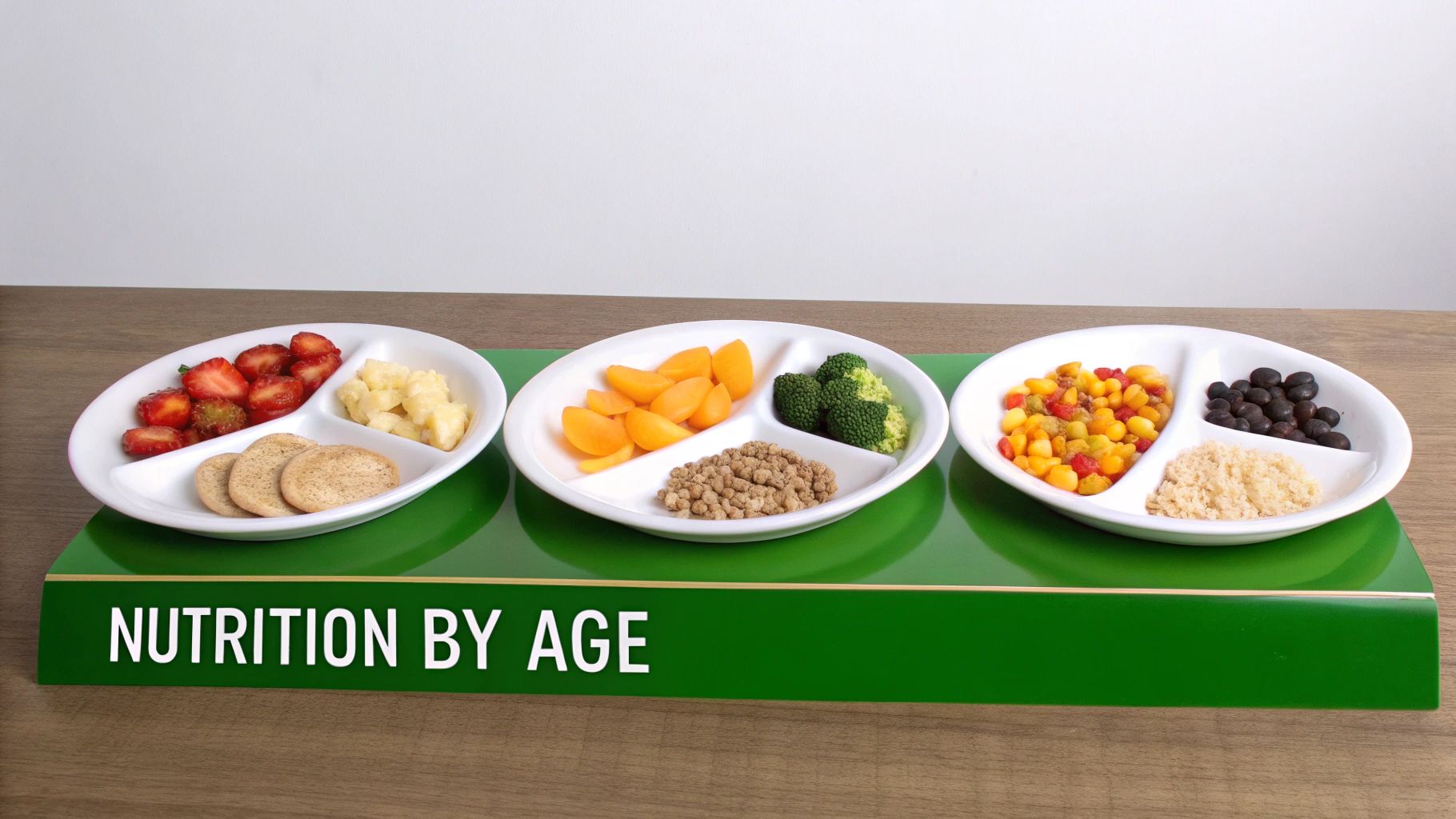
This isn’t about complicated science; it's about a simple framework. A handful of almonds can be brain fuel for a big test, while a glass of milk helps build crucial bone density during a massive growth spurt. We'll also tackle the ever-present challenges of portion sizes and allergies, so everyone at the table feels safe, happy, and satisfied.
Toddlers And Preschoolers: Fueling Their Discovery
For the little whirlwinds aged 1 to 5, every single bite is a building block for their rapidly developing brain and body. This is the time to go all-in on nutrient-dense foods. Their stomachs might be tiny, but their energy needs are surprisingly huge.
Their plates should look like a rainbow of colors and textures. My advice? Stress less about perfect portion sizes and more about consistently offering them healthy options.
- Proteins and Healthy Fats: This is pure brain food. Think creamy avocado slices, fluffy scrambled eggs, or a small swipe of nut butter on apple slices.
- Complex Carbs: You need to fuel that non-stop play! Oatmeal, whole-wheat toast fingers, and sweet potatoes are your best friends here.
- Calcium: Absolutely critical for building strong bones. Whole milk, fortified dairy-free milks, and yogurt are easy wins.
The rule of thumb for this age is a sanity-saver: you decide what to serve, and they decide how much to eat. This little trick helps them learn to trust their own hunger cues, a skill that's invaluable for life.
School-Age Kids: Powering Through Learning And Play
Once kids hit elementary school (around ages 6-12), their energy needs start to level out a bit, but their need for quality nutrition is higher than ever. Think about it: their days are jam-packed with learning, navigating friendships, and physical activity. Meals have to support their concentration in the classroom and give them stamina on the playground.
This is the perfect age to get them involved in making choices. A kid who helps pack their own lunch with a mix of healthy options is way more likely to actually eat it. You can really start to solidify what a balanced plate looks like.
- Lean Proteins: Chicken strips, beans, and lentils are fantastic. They help with muscle growth and keep kids full longer, which is your secret weapon against that dreaded mid-afternoon energy crash.
- Fiber-Rich Foods: Whole grains, fruits, and veggies are crucial for good digestive health and slow, sustained energy release.
- Hydration: Don't forget the water! So many kids mistake thirst for hunger. A fun, personalized, reusable water bottle can be a total game-changer.
If you want to dive even deeper, check out these super helpful age-by-age tips for feeding babies, toddlers, and kids.
Teenagers: Navigating The Growth Spurt Gauntlet
Ah, the teenage years. It's a nutritional whirlwind, to say the least. Between growth spurts, hormonal shifts, and increased activity from sports or hobbies, their calorie and nutrient needs can skyrocket—sometimes even surpassing an adult's.
Two nutrients, in particular, become all-stars during this stage: iron and calcium. Anemia can be a real issue, especially for teenage girls, leading to fatigue and poor concentration. And the strong bones they build right now are what will support them for the rest of their lives.
Nutrient Powerhouses for Teens
| Nutrient | Why It's Critical | Great Food Sources |
| Iron | Supports growth, provides energy | Lean red meat, spinach, lentils, fortified cereal |
| Calcium | Builds peak bone mass | Dairy products, tofu, fortified orange juice |
| Protein | Muscle repair and growth | Fish, chicken, beans, eggs, nuts |
| Zinc | Boosts immune function | Beef, pumpkin seeds, chickpeas |
This is also when friends have more influence and your teen starts making more of their own food choices. Your best strategy? Keep the kitchen stocked with healthy, grab-and-go options like yogurt, fruit, hard-boiled eggs, and trail mix. By making nutritious food convenient, you empower them to make better choices all on their own.
A Simple Blueprint For Meals Picky Eaters Actually Devour
Alright, let's get to the good stuff—turning all this nutritional theory into real, delicious meals your kids will actually eat. Forget staring at nutrition labels or doing complex math. I want to introduce you to a little trick I call the 'Balanced Plate Blueprint.' It's a dead-simple visual guide you can master in about five seconds.
The formula is a breeze: fill half the plate with colorful fruits and veggies, one quarter with lean protein, and the final quarter with whole grains or starchy vegetables. That’s it. No measuring, no stress. This visual cue automatically ensures you’re hitting all the important food groups.
The Mix-And-Match Method
The real magic happens when you think of each category as a set of building blocks. You can mix and match different options to create a nearly endless variety of meals, which is key to preventing the dreaded "I'm bored of this!" dinner-table declaration.
Here’s a handy table to get you started. Think of it as your cheat sheet for building balanced, kid-friendly plates.
The Balanced Plate Blueprint For Kids
| Meal Component (Portion) | Breakfast Ideas | Lunch Ideas | Dinner Ideas |
| Produce (½ Plate) | Berries, banana slices, sautéed spinach with eggs | Baby carrots, cucumber slices, apple wedges, side salad | Steamed broccoli, roasted sweet potatoes, bell pepper strips |
| Lean Protein (¼ Plate) | Scrambled eggs, Greek yogurt, sausage patty | Turkey slices, chickpeas, cheese cubes, hummus | Grilled chicken, baked fish, black beans, lentils, tofu |
| Whole Grains (¼ Plate) | Oatmeal, whole-wheat toast, quinoa porridge | Whole-wheat wrap, brown rice, whole-grain crackers | Quinoa, whole-wheat pasta, barley, corn on the cob |
See how easy that is? This approach takes all the pressure off. You're not aiming for some mythical "perfect" meal. You’re just filling the sections with foods you know your child likes, while gently nudging them to try new things.
Winning Over Your Picky Eater
Of course, a blueprint is only useful if the construction crew—your kids—are actually willing to build. This is where we need a few battle-tested strategies to make healthy food feel like a fun adventure, not a punishment. If you feel like you're stuck in a food fight every single night, our guide full of picky eater meal ideas can give you even more backup.
One of my favorite techniques is food chaining. It’s all about introducing new foods that are similar to something your kid already loves. For example, if chicken nuggets are a win, try introducing pan-fried chicken strips. From there, maybe move to grilled chicken, and eventually, chicken in a stir-fry. It’s a gentle, no-pressure way to slowly expand their world.
Another game-changer? The deconstructed meal. Think "build-your-own" taco night or a DIY pizza bar on the kitchen counter. When kids get to assemble their own plates, they feel a sense of control and are way more likely to try the different ingredients you’ve laid out.
The secret to picky eating isn't about hiding vegetables; it's about giving kids a sense of ownership over their food. When they get to choose, they're more likely to eat.
Make Healthy Food An Adventure
Getting your kids involved in the kitchen is honestly one of the best things you can do to encourage adventurous eating. When they help wash, chop, or stir, they feel a sense of pride. They made it! And that curiosity is often all it takes to get them to try it.
Give them age-appropriate jobs. A toddler can wash vegetables in the sink. An older child can stir ingredients or use a kid-safe knife to chop something soft like a banana. The more they touch, smell, and see the food before it hits their plate, the less intimidating it feels.
And please, have some fun with it! Healthy food doesn't have to sound so... healthy.
- Superhero Smoothie Bowls: Blend spinach, banana, and a scoop of protein powder. Let them add toppings like "power berries" (blueberries) and "super seeds" (chia seeds).
- Dinosaur Broccoli Forests: Steam some broccoli florets and serve them as "dinosaur trees." Let their toy dinosaurs stomp through the forest before taking a bite.
- X-Ray Vision Carrots: It’s not a plate of carrot sticks. It’s a plate of "X-ray vision sticks." Who wouldn't want to eat that?
When you bring a little playfulness to the table, the entire dynamic changes. It’s no longer a standoff over what they won't eat. It becomes a shared experience built on discovery and fun—and that’s how you build healthy habits that actually stick.
The Busy Parent’s Weekly Meal Prep Playbook
Picture this: it’s 5 PM on a Tuesday, and you actually have your evening back. No frantic Googling for dinner ideas, no staring into a fridge full of ingredients but no actual plan. This isn't some parenting pipe dream; it's the magic of a solid meal prep system. Let's walk through my "Sunday Power Hour" routine that turns this dreaded chore into a total game-changer.
This isn’t about spending your entire Sunday chained to the stove, cooking seven complete dinners from scratch. It’s about being smart. You're simply prepping the building blocks, which transforms weeknight cooking into a quick assembly job. Think of it as giving your future, frazzled self a massive high-five.
The "Sunday Power Hour" in Action
The secret is to focus on the tasks that suck up the most time during the week. Just carve out 60-90 minutes on a Sunday afternoon to knock out the basics. Trust me, that small investment pays off in a huge way when you’re exhausted and just want to get a healthy dinner on the table without a fight.
Here’s what my Power Hour usually looks like:
- Get the Grains Going: I'll cook up a big batch of quinoa or brown rice. This becomes the foundation for bowls, a simple side for chicken, or gets tossed into salads for lunch.
- Batch Cook a Protein: I'll throw a family-sized pack of chicken breasts in the oven or on the grill. At the same time, I’ll hard-boil a dozen eggs for super-fast breakfasts and snacks. Easy peasy.
- Chop All the Veggies: This is the biggest time-saver. I chop up onions, bell peppers, broccoli—whatever’s on the menu. Storing them in airtight containers means they're ready to be thrown into a stir-fry or roasted on a whim.
This is the basic blueprint for building a balanced meal with your prepped components.
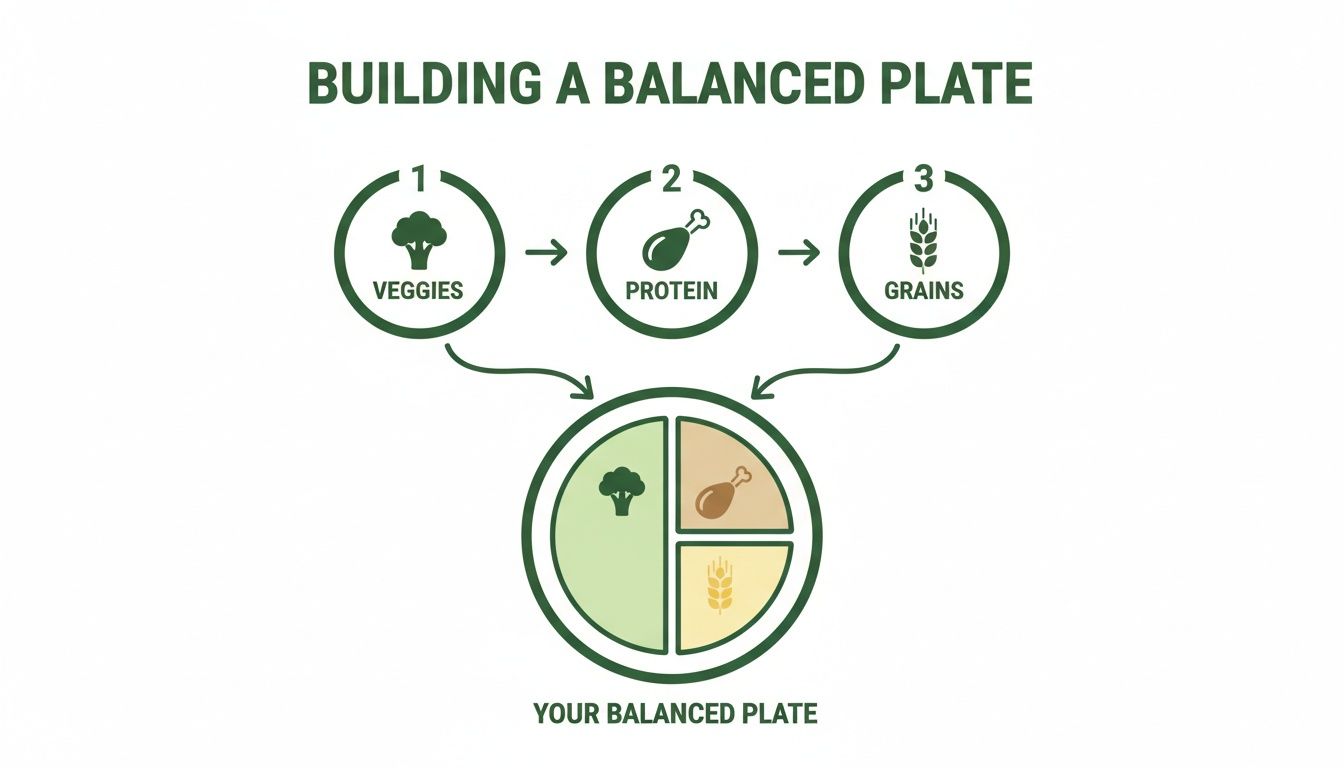
With your protein, grains, and veggies ready to go, throwing together nutritious meals for kids becomes a simple, stress-free puzzle.
A Sample Week of No-Stress Meals
Okay, so how does this actually play out during a chaotic week? Here’s a peek at how this prep work makes real-life dinners a breeze. Think of it less as a rigid set of rules and more as a flexible template to show you what’s possible.
Monday: Chicken & Veggie Quinoa Bowls. All you have to do is reheat the pre-cooked quinoa and chicken, then toss it with those chopped bell peppers and a splash of soy sauce. Done.
Tuesday: Build-Your-Own Tacos. I’ll shred some of that leftover chicken (or quick-cook some ground turkey). Then I just set out bowls of chopped lettuce, tomatoes, cheese, and salsa and let everyone build their own.
Wednesday: Pasta Night! While the pasta cooks, I sauté the pre-chopped onions and garlic with a jar of marinara sauce. To sneak in some greens, I'll toss in some of that pre-chopped broccoli.
Thursday: Breakfast for Dinner. Sometimes you just need an easy win. I’ll scramble some eggs (and set out those hard-boiled ones for whoever prefers them) and serve them with fruit and whole-wheat toast.
Friday: DIY Pizza Night. This is a family favorite. We use whole-wheat pitas or naan as the crust and let everyone pile on their favorite toppings from the leftover chopped veggies.
This whole approach makes weeknight cooking feel not just manageable, but sometimes even fun. For a little more inspiration, check out these 10 kid-approved easy meal prep ideas that slot perfectly into this system.
Your Ultimate Meal Prep Shortcut
Now, what if you could put the entire planning and shopping process on autopilot? This is where being a parent in the 21st century gets a serious upgrade. A tool like Meal Flow AI can create a personalized weekly meal plan based on your family's tastes and dietary needs in just a few clicks.
But here’s where it gets really good: the integration. Once your plan is ready, Meal Flow AI zaps a perfectly organized shopping list straight to your Instacart app. No more wandering the aisles trying to remember if you have paprika. No more impulse-buying that jumbo bag of cheese puffs.
This direct link between planning and shopping is an absolute game-changer. And it’s not just about convenience. Consistent access to good food is critical. The World Health Organization is aiming for a 40% reduction in stunting among children under five. Proper nutrition early on can boost a child's IQ by up to 10 points and dramatically slash the risk of developmental delays. It’s a powerful reminder of why making healthy food accessible is so important.
This tool just streamlines the whole grocery-getting process, giving you back those precious hours. It’s not just about saving time—it’s about lifting that mental load of "what's for dinner?" so you can focus on what actually matters: enjoying a great meal with your family.
Let’s Make Healthy Eating a Fun Family Adventure
Alright, let's talk about the real endgame here. It's not just about surviving tonight's dinner without a standoff over a piece of broccoli. The mission is much bigger: to raise kids who actually enjoy food, feel good about eating, and carry that positive vibe with them for life.
This is where we zoom out from the nitty-gritty of individual meal plans and start building habits that actually stick. It’s about reframing the daily chore of feeding people into something... well, fun.
More than any perfectly balanced plate, the way you talk about and interact with food sets the stage. You’re their first and most important guide, and your attitude is contagious.
Get Them Curious (and a Little Dirty) in the Kitchen
Want to know the secret to getting a kid to try something new? Give them a role in making it. When they have a hand in the process, their curiosity often outweighs their skepticism. And it doesn't have to be a huge production.
Start small. A tiny herb garden on a windowsill is a fantastic gateway. Let them be the official waterer for the basil and mint. The moment they snip off leaves they grew themselves to sprinkle on pasta? Pure magic.
Or, turn the grocery run into a game. A trip to the farmers' market can easily become a color scavenger hunt. "Can you find a new vegetable that's red? How about a fruit with a weird shape we've never tried?" The only rule is there's no pressure to eat it, just to explore.
Make the Dinner Table a Pressure-Free Zone
The dinner table should feel like a safe harbor, not a battlefield. As soon as kids feel pressured, anxiety kicks in and shuts down their appetite. It's our job to cultivate a relaxed, positive space where they can explore food on their own terms. This means, once and for all, ditching the "clean plate club."
Here are a few ways to bring the good vibes back to dinner:
- Go family-style. Put all the different parts of the meal in bowls on the table and let everyone build their own plate. This simple shift gives kids a huge sense of control over what—and how much—they choose to eat.
- Be a food explorer, not a food critic. When you try something, describe it neutrally. "Wow, this roasted cauliflower is a little sweet and crispy," works worlds better than, "This is so good for you, you have to try it!"
- Keep it light. The dinner table is for connection, not negotiation. Talk about the best part of your day, tell some truly terrible jokes, and just enjoy being together.
Turning mealtime battles into happy family moments is totally possible when you focus on creating a positive atmosphere. You can find some great ideas in a resource promoting love for dinnertime.
Your ultimate legacy as a parent isn't raising a child who eats their vegetables; it's raising a human who knows how to nourish themselves, enjoys food without guilt, and sees mealtime as a source of connection and joy.
This whole journey is about playing the long game. It’s about consistency, not perfection. Some nights, dinner will be buttered noodles. And that is 100% okay. What really matters is the positive food culture you're building, one meal at a time.
Your Burning Questions About Feeding Kids, Answered
Let's be real: trying to figure out kids' nutrition can feel like you're playing a high-stakes game of telephone with a pediatrician, a food blogger, and your mother-in-law. Everyone has an opinion, and your kid still just wants to eat beige-colored food.
You're not alone in this. Every parent wonders if they're getting it right. The good news? You don't need a Ph.D. in nutrition to raise a healthy eater. Let’s cut through the noise and tackle the questions that really keep parents up at night.
"Is My Kid Actually Getting Enough Protein?"
This is a big one, especially if you have a pint-sized picky eater on your hands or your family leans more plant-based. The short answer? You can probably relax a little. Most kids in the U.S. get more than enough protein.
Instead of obsessing over hitting a specific number of grams at every meal, think about weaving quality protein sources into their day. It all adds up faster than you think!
- Morning: A scrambled egg or a small bowl of Greek yogurt gets the day off to a powerful start.
- Midday: A few slices of rolled-up turkey, a mini-pot of hummus for dipping veggies, or a simple cheese stick are all easy wins for lunch.
- Evening: A small piece of chicken, some lentils snuck into a pasta sauce, or a side of black beans can round out the day perfectly.
Don't forget that things like whole-wheat toast and oatmeal have protein, too. It’s all about the big picture, not one perfect meal.
"How Do I Stop the Endless Snacking?"
Ah, yes. The familiar cry of "I'm huuungry!" that echoes through the house exactly seven minutes after they've polished off a full dinner. It’s maddening, but it’s often just a sign of a growth spurt or them burning off their seemingly infinite energy. The key isn't to banish snacks, but to make them work for you.
Try to reframe snacks as "mini-meals" instead of treats. This simple mental shift can completely change what you offer when they come asking.
Think of snacks as bridges connecting one meal to the next. Their job is to deliver real, sustained energy, not a quick sugar high that will have them crashing and whining for more food in 30 minutes.
This is where a little bit of prep becomes your superpower. Having healthy, easy options ready to go means you won't get caught off guard and resort to handing over a bag of something processed.
Smart Snack Swaps
| Instead Of This... | Try This... | Why It's Better |
| Potato Chips | Apple Slices with Nut Butter | Fiber, healthy fats, and protein for energy that lasts. |
| Fruit Snacks | A Handful of Berries | Natural sweetness with a bonus of vitamins and antioxidants. |
| Sugary Cereal Bar | A Hard-Boiled Egg | A protein powerhouse to keep them full and focused. |
Keeping the kitchen stocked is more important than we often realize. Over 20 million kids depend on school meals for consistent nutrition. When school is out, that lifeline can vanish. A pantry full of healthy snacks ensures they have the fuel they need to grow, learn, and just be kids, all year long.
"Are Juice and Chocolate Milk Really That Bad?"
Here's where the lines get a little blurry. A tiny glass of 100% fruit juice once in a while isn't the end of the world, but it’s incredibly easy to overdo it. Juice is basically fruit with all the good fiber stripped out, leaving behind a concentrated shot of sugar that doesn’t do much to fill them up.
The same logic applies to flavored milks. Sure, they have calcium, but they can also be loaded with added sugar. My personal rule of thumb is to treat these kinds of drinks like dessert—an occasional fun thing, not an everyday beverage.
Water should always be the main event. Get them a cool, fun water bottle or drop some strawberries or lemon slices in a pitcher to make it more exciting. For milk, plain old milk (or a fortified non-dairy alternative) gives them all the good stuff without the sugar rush.
At the end of the day, building nutritious meals for kids is about creating a foundation of good habits. It's not about perfection. Don't sweat the occasional birthday cake or the day they only eat toast. Focus on consistency, color, and keeping mealtimes as positive and pressure-free as possible. That’s the real secret sauce.
---
Ready to take the guesswork and stress out of meal planning for good? Meal Flow AI creates personalized meal plans your kids will love and sends the shopping list directly to Instacart. Get started today and reclaim your evenings!