Your Ultimate Guide to Using a Slow Cooker Like a Pro
Master using a slow cooker with our expert guide. Learn prep tips, timing, and recipes to make weeknight meals effortless and delicious every time.
Love This Article?
Get personalized meal plans with recipes like this, automatically matched to your nutrition targets.
Ah, the slow cooker. It’s not just an appliance; it’s a promise. A promise that after a day of juggling work, school runs, and a to-do list that never seems to shrink, a hot, delicious meal will be waiting for you. This isn't about fancy cooking—it's about smart cooking. It’s about letting low, slow heat do the heavy lifting, turning basic ingredients into something incredible while you’re off living your life.
This is your guide to making that countertop gadget your new best friend.
Your Secret Weapon for Stress-Free Weeknights
Picture this: you walk in the door, exhausted. The kids are dropping their bags, the dog is barking, and the last thing you want to do is start chopping onions. But instead of that familiar wave of dinner-dread, you're hit with the incredible smell of a meal that's been simmering away all day. That’s not a dream. That's the reality a slow cooker can give you.
It's time to ditch the dinner-time scramble and the takeout guilt.
We're going to skip the overly complicated recipes and get straight to the good stuff—real, practical strategies that work. I've had my share of dinner disasters, but I've also had some serious triumphs, all thanks to this simple machine. We're embracing a method that gives you back hours in your day. If you're just starting out, our complete tutorial on how to cook with a Crockpot is a fantastic place to get your bearings.
From Chaos to Calm in the Kitchen
So, what makes the slow cooker such a game-changer? It’s all about its beautiful simplicity and the way it can completely overhaul your daily routine.
Here’s why it’s a must-have for any busy family:
- Your Time-Saving Hero: The real work is done in the morning. Seriously. A quick 15 minutes of prep before you dash out the door is all it takes for dinner to be handled.
- Budget-Friendly Meals: It’s a master at turning tougher, more affordable cuts of meat into something unbelievably tender. Think fall-apart roasts and stews that make your grocery budget stretch further.
- A Flavor Powerhouse: That long, low cooking time isn't just for convenience. It allows flavors to meld and deepen in a way that quick stovetop cooking just can't match.
The biggest win? The mental freedom. Just knowing dinner is already bubbling away lifts a massive weight off your shoulders. It lets you be present and enjoy your evenings with your family instead of stressing about what to cook.
And we'll even show you how a tool like Meal Flow AI can act as your personal sous-chef, finding the perfect recipes and lining up your grocery list. For some killer inspiration, check out these incredible slow cooked shin beef recipes.
Get ready for amazing meals that practically make themselves.
From Box to Countertop: Your Slow Cooker's Maiden Voyage
So, you’ve finally done it. You’ve unboxed that shiny new slow cooker, or maybe you’ve rescued that wedding gift from the dark depths of the pantry. Good. Let's get this thing set up and working for you, because it’s not just an appliance; it's your new secret weapon against weeknight dinner chaos.
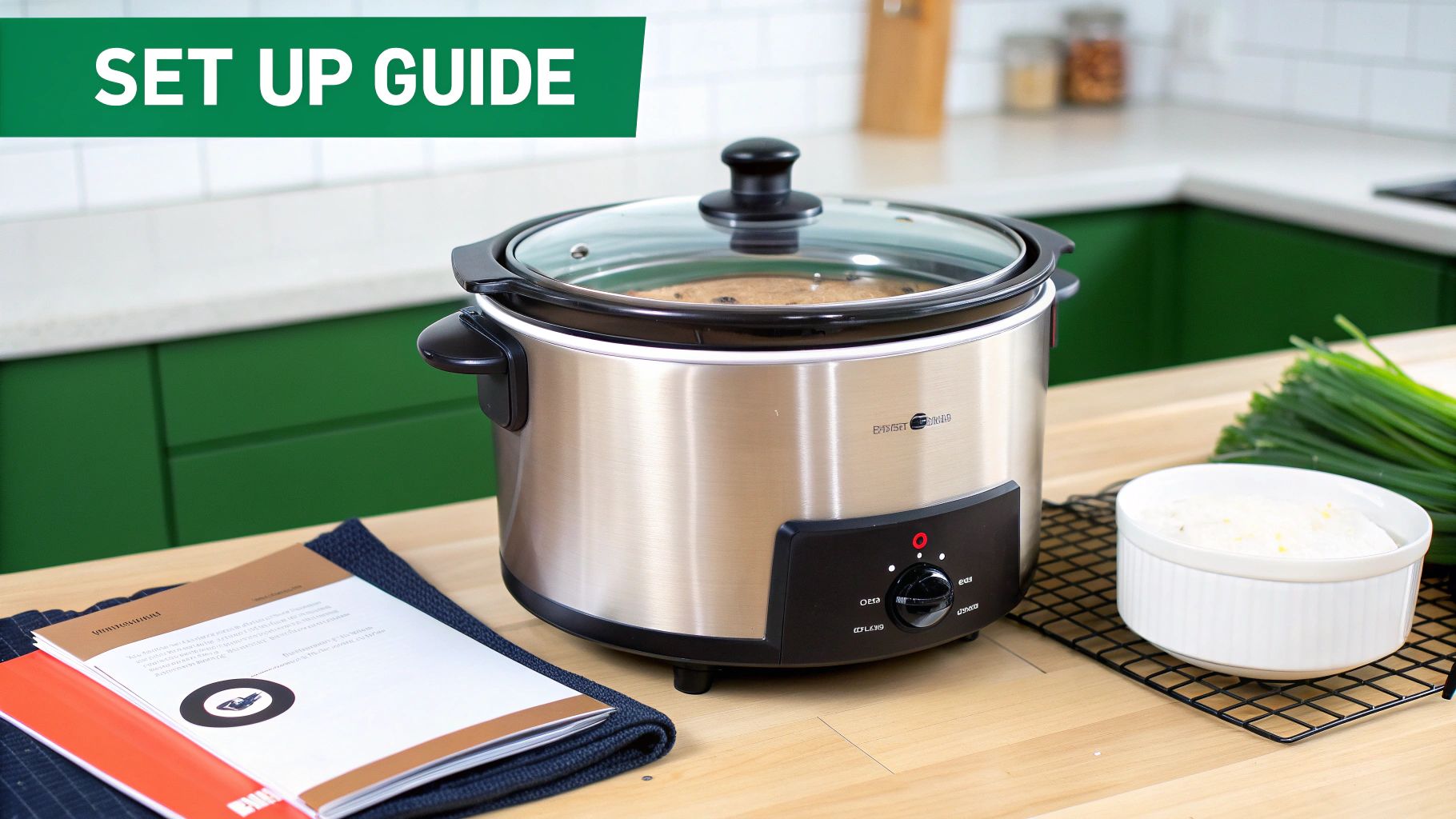
Don't be intimidated by it. At its heart, a slow cooker is just three simple parts working in beautiful harmony: the heating base that plugs into the wall, the heavy ceramic or stoneware insert where all the magic happens, and a glass lid to trap all that flavor. That’s it!
Cracking the Code: Low, High, and Warm
Forget a million confusing buttons. Most slow cookers keep it beautifully simple, and knowing when to use each setting is what separates the pros from the rookies.
- LOW: This is your best friend for all-day cooking. Think of it as the "set it and forget it" setting that transforms tough, budget-friendly cuts of meat into something unbelievably tender over an 8-10 hour stretch. Perfect for while you're at work.
- HIGH: Did you get a late start on dinner? No problem. HIGH gets the job done in about half the time as LOW, typically around 4-6 hours, without turning your food into shoe leather.
- WARM: This one’s a game-changer. It’s not for cooking; it’s for holding. Once dinner is done but the kids are still at soccer practice, switch it to WARM. It keeps everything at a perfect, food-safe temperature until you’re ready to eat.
Slow cookers are absolute beasts for meal prep, especially when you're trying to make that grocery budget stretch. They’re masters at turning a cheap chuck roast—which can cost 40-50% less than prime cuts—into a meal that tastes like a million bucks after a long, slow simmer. It’s this kind of convenience that’s making them so popular, with the global market expected to hit a staggering USD 3,704.5 million by 2033. You can dive into more market trends to see just how much this humble appliance is shaking things up.
Pro Tip: Before you cook anything, give the removable pot and lid a quick bath in warm, soapy water. It gets rid of any dust or residue from the factory and ensures your first meal is a clean slate.
Your First (Totally Foolproof) Cook
Ready to get your feet wet? Let’s start with something so simple it’s practically impossible to mess up. I’m talking about some basic shredded chicken. This will build your confidence and show you the true power of this machine.
Just toss a few chicken breasts into the pot, pour in about a cup of broth or water, and sprinkle in some salt, pepper, and garlic powder. No need to get fancy yet.
Put the lid on, set it to LOW for 6-8 hours, and walk away. When you come back, you'll have the most tender, juicy, shreddable chicken you've ever made. It’s perfect for tacos, salads, or sandwiches for the next few days. This one simple success will have you hooked and ready to tackle bigger and bolder recipes.
Prepping Your Ingredients Like a Pro
The real magic of a slow cooker doesn't happen when you flick the switch. It starts on your cutting board. How you prep and load your ingredients is the secret handshake to unlocking those deep, unforgettable flavors everyone raves about.
A few simple moves beforehand can take a meal from "good" to "spectacular." Sure, the "dump and go" method works when you're in a jam. But trust me, taking an extra ten minutes to prep properly pays off with hours of rich, developed taste. This is where you go from just making dinner to crafting a meal.
The Golden Rule: Always Brown Your Meat
Ever wonder why some slow-cooked dishes taste incredibly savory while others just seem… flat? The difference is usually a hot pan and a few minutes of searing before anything even hits the ceramic pot.
This isn’t just about getting a nice color; it’s pure flavor chemistry. When you brown meat, you're kicking off the Maillard reaction—a glorious process where amino acids and sugars create hundreds of new flavor compounds. It's the same reaction that gives coffee its aroma and toast that irresistible crunch.
Honestly, those five extra minutes you spend browning a beef chuck or some chicken thighs build a foundation of rich, complex flavor that slow cooking alone can't touch. You’re not just cooking the meat; you’re building layers of taste right from the start.
Layering: There's a Method to the Madness
Tossing ingredients into your slow cooker isn't like packing a suitcase for vacation. The order matters. A lot. Layering things correctly ensures every single component comes out perfectly tender—never mushy, never undercooked.
Think of your slow cooker as having different heat zones. The bottom and sides are the hottest, which makes them prime real estate for the tough guys that need a long time to soften up.
Here’s the foolproof strategy I swear by:
- The Foundation (Bottom Layer): This is where your root vegetables go. Potatoes, carrots, onions, turnips—the sturdy stuff. Putting them on the bottom gets them consistent heat so they become melt-in-your-mouth tender without turning into a pile of mush.
- The Star of the Show (Middle Layer): Your meat goes right on top of that vegetable foundation. This lifts it up just enough, letting it braise in the flavorful juices without boiling or scorching on the direct heat of the pot.
- The Finishers (Top Layer): Save your delicate ingredients for the grand finale. Fresh herbs, spinach, peas, or a splash of cream should be stirred in during the last 15-30 minutes of cooking. If you add them too early, they’ll just disintegrate and lose all their vibrant flavor and color.
Get Your Liquid Levels Just Right
I see this all the time: people drowning their ingredients in liquid. It's the most common slow cooker mistake. Unlike cooking on a stove, the slow cooker’s tight lid traps all the steam, so almost no moisture evaporates. Too much broth at the start means a bland, watery sauce at the end.
A good rule of thumb is to use about half the liquid you'd use for a similar recipe in the oven or on the stovetop. Your meat and vegetables are going to release a surprising amount of their own juices. You really only need enough liquid to come about halfway up the ingredients. This is how you get those beautifully concentrated flavors.
And if you want to take your prep game to the next level, check out our complete guide to amazing Crockpot freezer meals—it’s packed with tips for getting ahead.
Mastering Cook Times and Temperature Settings
"So... how long do I actually cook this for?"
If you've ever found yourself staring at your slow cooker, asking that exact question, you're not alone. It can feel like a high-stakes guessing game. But what if I told you it's way simpler than you think? Let's break down the timing so you can adapt any recipe with confidence and stop worrying if your pot roast will turn into a hockey puck.
The whole game boils down to two settings: LOW and HIGH. Think of LOW as your all-day, set-it-and-forget-it hero for when you're at work. HIGH is your savior for those mornings you hit the snooze button one too many times and need to get dinner going faster.
The Art of Conversion: From Stovetop to Slow Cooker
One of the biggest rookie mistakes is thinking a stovetop recipe's cook time translates directly to the slow cooker. Nope! Because a slow cooker uses such gentle, contained heat, the timing is a completely different ballgame.
This is where a little conversion magic comes in handy. I've put together a quick-glance table to take the guesswork out of it.
Oven and Stovetop to Slow Cooker Conversion Guide
Use this table to easily convert cooking times from traditional oven or stovetop recipes to the correct slow cooker setting.
| Traditional Cook Time | Slow Cooker on LOW | Slow Cooker on HIGH |
| 15–30 minutes | 4–6 hours | 1.5–2.5 hours |
| 30–60 minutes | 6–8 hours | 3–4 hours |
| 1–3 hours | 8–10 hours | 4–6 hours |
This isn't just for dinner, either. Imagine prepping steel-cut oatmeal the night before—your slow cooker does all the work while you sleep, freeing up your chaotic morning. That kind of time-saving appeal is exactly why the slow cooker market is projected to hit a massive USD 3,064 million by 2031.
It's no surprise that medium-sized models (3-7 quarts) are the fan-favorite, making up over 50% of the market. They’re the perfect size for prepping 8-10 servings at once, which is a game-changer for batch cooking. You can read more about the growing slow cooker market trends if you're curious.
This handy guide breaks down the simple choices that lead to a fantastic meal every single time.
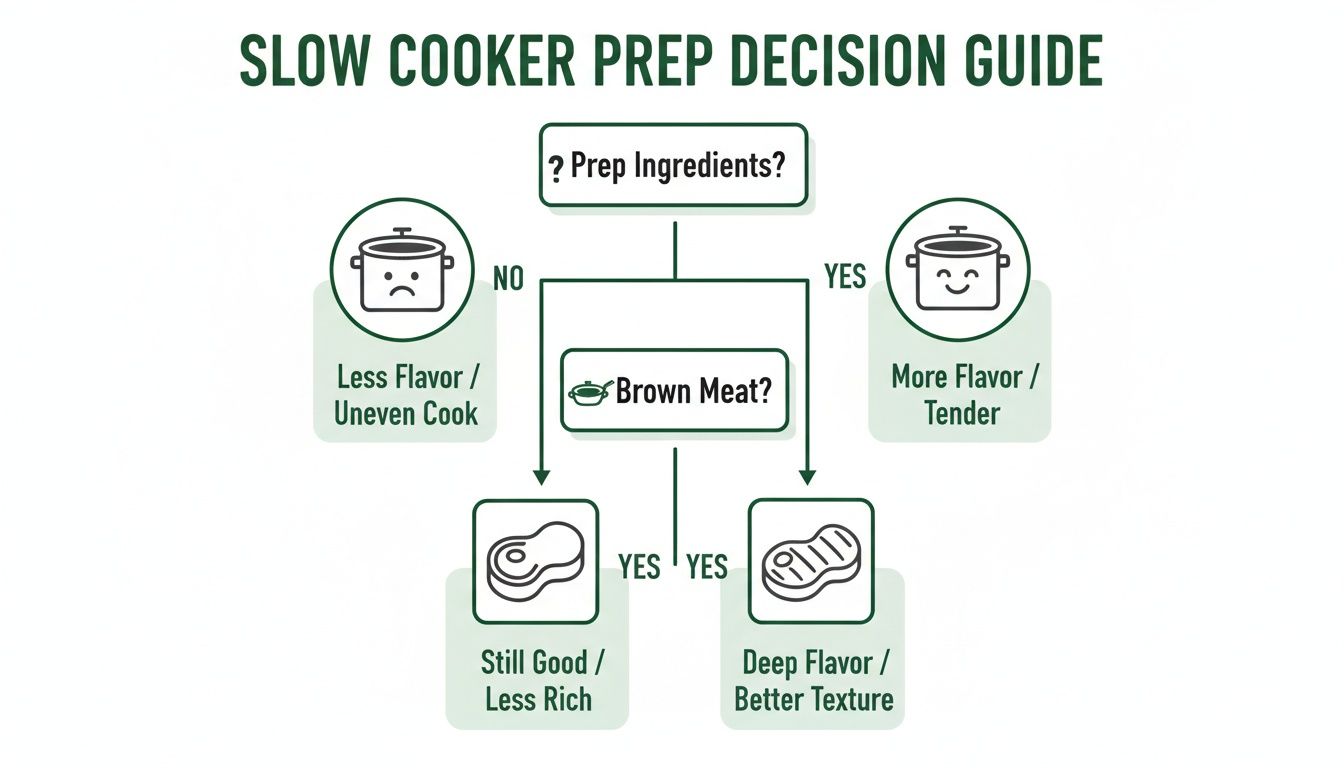
The big takeaway here? That little bit of effort upfront—like searing your meat before it goes in the pot—pays off big time with a huge boost in flavor.
Insider Tips That Change Everything
Ready to go from good to great? Beyond the basic time conversions, a few pro-level secrets will make you a true slow cooker master.
First, pay attention to how full your pot is. A slow cooker is happiest and works most efficiently when it's between half and two-thirds full. If you overstuff it, you risk an unevenly cooked meal. If it’s nearly empty, things can cook way too fast and even burn. You might need to adjust your timing if you're not in that sweet spot.
The golden rule of slow cooking? Don't peek! Seriously. Every time you lift that lid, you release a ton of built-up heat. Just one little look can add 15-20 minutes to your total cook time, and that can throw off your whole meal. Resist the urge and trust the process!
Finally, remember that not all ingredients are created equal. Bone-in meats, for instance, will take a bit longer to reach that glorious fall-off-the-bone tenderness compared to their boneless cousins. But trust me, the incredible flavor and moisture you get is almost always worth that extra hour.
Put Your Meal Prep on Autopilot with Smart Tools
Alright, you’ve got the slow cooker down. You're a pro at turning a handful of ingredients into a feast that makes the whole house smell amazing. So, what’s next? Let's take the thinking part of meal planning and make it just as hands-off. This is where your favorite kitchen workhorse gets a high-tech sidekick.
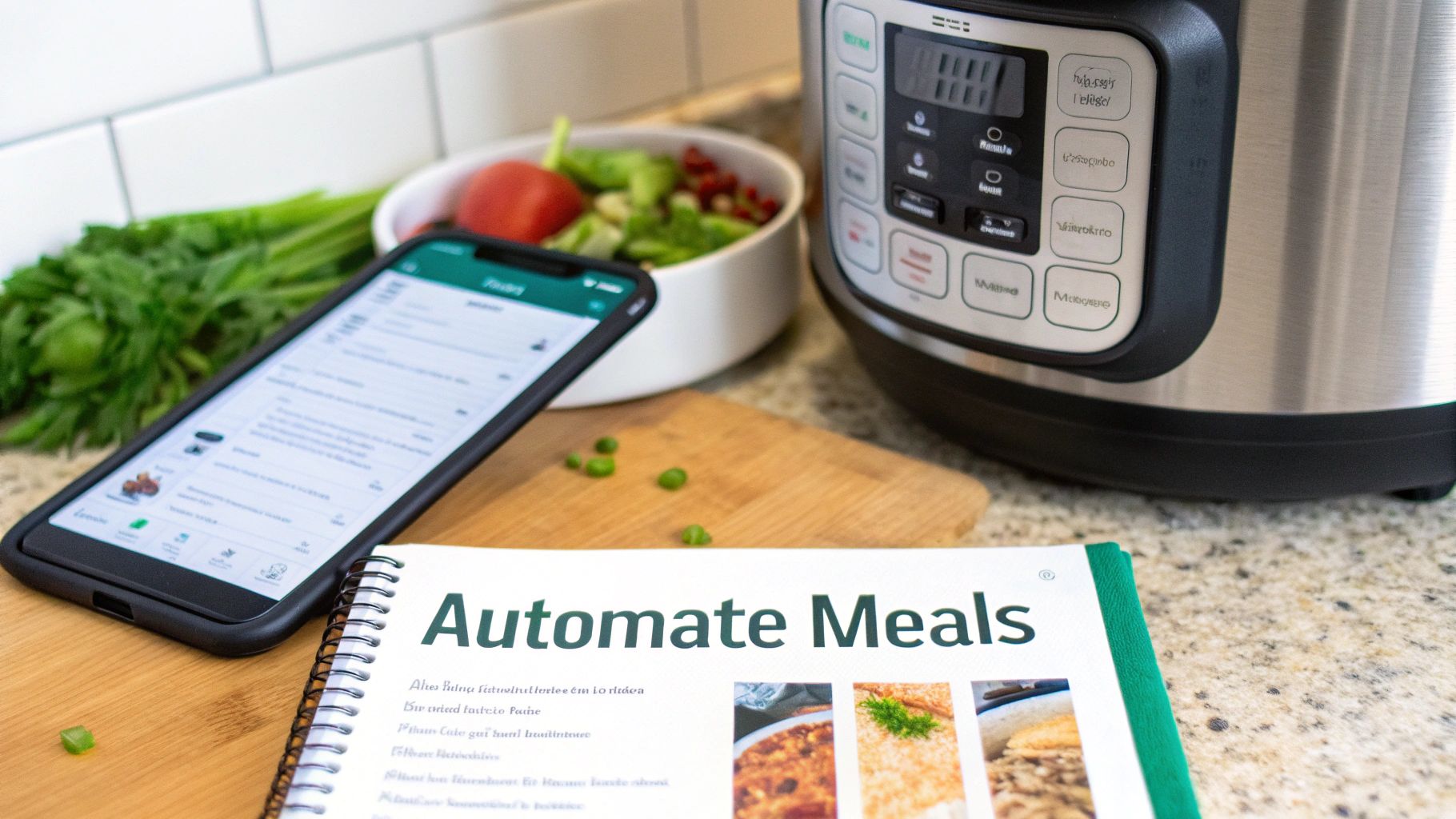
Picture this: You're craving a week of pure comfort food. Maybe some pot roast, pulled chicken for taco night, and a killer beef stew. Instead of spending an hour hunting for recipes, you can use a tool like Meal Flow AI to do the heavy lifting. It finds recipes your family will actually eat, plugs them into a weekly calendar, and—BAM—generates a shopping list with a single click. It takes that fuzzy "what's for dinner?" thought and turns it into a real, actionable plan.
From Vague Idea to Instacart in Minutes
The real magic here is how it all connects. That tedious process of scribbling down a list (and forgetting it on the counter) and then wandering aimlessly through the grocery store? Gone. An AI-powered planner instantly converts your slow cooker dreams into a perfectly organized shopping list, ready to be sent straight to Instacart.
For any busy caregiver, this is a total game-changer. It’s not just about getting time back; it’s about dodging those impulse buys at the store and actually sticking to a budget. There’s a reason the medium-sized slow cookers (3-7 quarts) make up over 50% of the market—they're built for family-sized convenience. And in North America, a massive 70% of slow cooker owners say saving time is its number one benefit. When you pair that convenience with smart planning tools, your meal prep becomes practically frictionless.
This is more than just meal planning; it's about building a system that works for you. You get back precious time and mental energy—two things that are always in short supply. It’s about making your kitchen your ally, not another source of stress.
Want to take your kitchen's efficiency even further? Check out some modern kitchen design ideas that focus on creating a smoother, more integrated cooking space. When you've got the right tools and the right setup, you can create a seriously powerful meal prep machine. See exactly how all the pieces fit together in our guide on using a https://mealflow.ai/blog/menu-planner-and-shopping-list-app.
Got Slow Cooker Questions? We've Got Answers.
Every slow cooker owner has been there. You're staring at the pot, a brilliant recipe idea in your head, but a nagging question pops up. Is this really okay? Can I do that?
Don't worry, you're not alone. Instead of letting you get lost in the wilds of online forums, I've rounded up the biggest head-scratchers I hear all the time. Let's get these mysteries solved so you can cook with confidence.
Can I Just Toss Frozen Meat in There?
This is easily the most-asked question, and my answer is a firm but friendly no. I know, I know—it sounds like the ultimate time-saving hack. But trust me on this one; both food safety experts and the folks who make these cookers agree it's a bad idea.
A slow cooker, by its very nature, heats up... well, slowly. A solid block of frozen meat will hang out in the temperature "danger zone" (that's between 40°F and 140°F) for way too long. That’s prime real estate for nasty bacteria to throw a party you definitely don’t want to be invited to.
For your safety and for a much better-tasting meal, always thaw your meat completely in the fridge first. It's the only way to guarantee it's safe to eat and cooks all the way through.
Do I Really Have to Brown the Meat First?
Technically? No. Your food will cook just fine if you skip this step. But should you do it for a ridiculously more flavorful meal? Oh, one hundred percent yes.
Searing your meat in a hot pan for a few minutes before it hits the slow cooker is like unlocking a secret level of flavor. This is where the magic of the Maillard reaction happens—a little bit of delicious food science that creates those deep, savory, roasted notes we all crave.
Think of it as a ten-minute investment that pays off with eight hours of incredible flavor. It’s the single best thing you can do to take your dish from "homemade" to "who made this?!"
Help! My Sauce is a Watery Mess. How Do I Fix It?
Welcome to the club! This is the classic slow cooker conundrum. Because the lid traps all the moisture, nothing evaporates, which can leave you with a soupy sauce. But don't despair—the fix is incredibly easy.
You've got a couple of solid options:
- Bring in the Cornstarch Slurry: About 30 minutes before dinner, just whisk one tablespoon of cornstarch into two tablespoons of cold water until it’s perfectly smooth. Stir that little mixture into the pot, crank the heat to HIGH, and pop the lid off. Presto! Your sauce will thicken right up.
- Let It Breathe: If you have a bit more time on your hands, just take the lid off for the final hour of cooking. This lets all that extra liquid evaporate, naturally reducing and concentrating the flavors of your sauce. Easy peasy.
Is It Safe to Leave This Thing on All Day While I'm Gone?
Absolutely! That’s literally what they were designed for. Slow cookers are low-wattage workhorses, using about as much energy as a light bulb. This makes them far safer and more efficient than leaving your big oven running while you're out.
Of course, a little common sense goes a long way.
- Set it up on a flat, sturdy surface, well away from the edge of the counter.
- Check that the cord isn't dangling where a kid or pet could give it a yank.
- And most importantly, make sure there’s enough liquid in the pot to avoid any scorching.
Follow those simple rules, and you can walk out the door with total peace of mind, knowing a hot, delicious meal is waiting for you. It's the "set it and forget it" dream, realized.
---
Ready to make your meal planning just as effortless? Let Meal Flow AI find the perfect recipes, build your weekly plan, and generate your shopping list in seconds.