What Are Empty Calories: what are empty calories and how they drain your energy
Discover what are empty calories, where they hide in your meals, and easy swaps to boost energy and nutrition today.
Love This Article?
Get personalized meal plans with recipes like this, automatically matched to your nutrition targets.
Finished a bag of chips only to feel hungrier than when you started? Welcome to the world of empty calories. These are the calories you get from foods loaded with sugar and unhealthy fats but offering next to nothing in the way of vitamins, minerals, or fiber. They give you a quick flash of energy, but they don't provide the high-quality fuel your body actually needs to thrive.
The Sneaky Truth About Empty Calories
Imagine your body is a high-performance car. Nutrient-dense foods—fruits, veggies, lean proteins—are the premium, top-tier fuel that keeps the engine humming perfectly. Empty calories? That's like putting cheap, watered-down gas in the tank. Sure, the car will run for a minute, but it's not getting any of the good stuff it needs for long-term health and peak performance.
This isn't just a minor issue; it's a huge part of the modern diet. Empty calories, which come from added sugars, solid fats, and alcohol, make up a shocking portion of what we eat every day. One analysis found that for adults in the US, they account for about 23% of total daily calories. That’s roughly 550 calories out of a recommended 2,400! If you want to dive deeper, you can learn more about these dietary patterns and what they mean for our health.
Making the Concept Crystal Clear
To really get what empty calories are all about, it helps to see a side-by-side comparison. This isn't about villainizing certain foods. It's about understanding the trade-off you’re making with every bite. The real difference is nutritional value—what your body gets for the energy it takes in.
Here's the bottom line: A calorie is a unit of energy, but not all energy sources are created equal. An avocado and a donut might have a similar calorie count, but how they affect your health, your energy levels, and how full you feel are worlds apart.
Nailing this distinction is the secret to making smarter food choices without feeling like you're missing out. Let's break it down with a simple table to show what this looks like in the real world.
Nutrient-Dense Vs Empty Calorie Showdown
This quick comparison shows how different foods stack up when it comes to providing calories versus actual nutrition. Notice how the same calorie count can deliver wildly different benefits.
| Food Item | Approx. Calories | Key Nutrients Provided | Calorie Type |
| Handful of Almonds | 100 | Fiber, Protein, Vitamin E, Healthy Fats | Nutrient-Dense |
| Handful of Gummy Candies | 100 | Added Sugars, Artificial Colors | Empty Calorie |
| 1 Medium Apple | 95 | Fiber, Vitamin C, Antioxidants | Nutrient-Dense |
| 1 Can of Soda (12 oz) | 140 | Added Sugars | Empty Calorie |
| Grilled Chicken Breast (3 oz) | 140 | Protein, B Vitamins, Iron | Nutrient-Dense |
| Small Bag of Chips | 160 | Sodium, Saturated Fats | Empty Calorie |
As you can see, it’s not about the number of calories but what comes along for the ride. Both almonds and gummy candies give you a quick energy boost, but only one is actually feeding your body what it needs. Getting this difference is the first, most important step toward fueling yourself better and finally ditching those dreaded energy crashes.
Identifying The Usual Suspects in Your Pantry
Empty calories are sneaky. They’re masters of disguise, hiding in plain sight in some of our favorite foods and drinks. Let's do a little detective work and raid the pantry to unmask these nutritional imposters. You might be shocked at how many have set up camp on your shelves.
The biggest, most obvious culprits? Sugary drinks. That can of soda, that super-sweet iced tea, or the vibrant "fruit" punch are often the single largest source of empty calories in the American diet. They give you a quick sugar high but absolutely nothing else of value, often leaving you feeling even thirstier and more sluggish than before.
Next up, we have the world of processed snacks and sweets. We're talking about those addictively crunchy potato chips, the neon-orange cheesy puffs, and every cream-filled cookie that calls your name. Common treats like Italian candies are practically all empty calories. These foods are engineered for maximum flavor and a crazy-long shelf life, not for nutrition.
The Six Main Offenders
While empty calories can pop up all over the place, research points to a surprisingly small group of foods as the primary source. In fact, you can trace about half of all the empty calories we consume back to just six items.
Here’s the lineup:
- Soda and sports drinks: A whopping 36% of the total.
- Fruit-flavored drinks: A solid 7%.
- Dairy desserts (like ice cream): Around 9%.
- Grain-based sweets (cookies, cakes, etc.): Another 8%.
- Pizza: Yep, it accounts for 5%.
- Whole milk: Contributes another 9%.
That's right, even pizza is a major player. The average slice gets about 40% of its energy from empty sources, thanks mostly to the refined white flour in the crust and the high-fat cheese.

This image really puts it into perspective. For the average American, nearly a quarter of all daily calories are completely empty. Those 550 calories are basically a whole meal's worth of energy, but you get none of the good stuff your body actually needs.
What Makes Them So "Empty"?
So, what’s the common thread tying all these foods together? It really comes down to two things: added sugars and solid fats.
Added sugars, like high-fructose corn syrup, are pure calories with zero nutritional upside. Solid fats, such as butter, shortening, or lard found in pastries and processed foods, pack a caloric punch and are high in saturated fats without offering any vitamins or minerals in return.
The point isn't to demonize these foods or swear them off for life. It's all about awareness. Knowing where these empty calories are lurking is the first step toward making smarter, more conscious choices that tilt the balance in favor of foods that actually fuel and nourish your body.
The Sneaky Ways an "Empty" Diet Wrecks Your Health
Let's be real—choosing foods packed with empty calories does way more than just nudge the number on the scale. It kicks off a chain reaction that can mess with your whole vibe, from your energy levels to your long-term health.
Think of it like this: your body is a high-performance machine, constantly working to repair and rebuild itself. But it can only use the fuel you give it. An "empty" diet is like trying to run a race car on watered-down gas. It might sputter along for a bit, but it's not going anywhere fast.
That 3 PM slump you feel after a sugary latte and a muffin? That’s not just a case of the Mondays. It's a textbook sugar crash. You get a quick, dizzying high from the sugar rush, followed by a spectacular crash that leaves you feeling foggy, cranky, and desperately searching for another quick fix. It's a vicious cycle.
This constant rollercoaster of sugar highs and lows does more than just ruin your afternoon. Over time, it puts a serious strain on your body's ability to manage blood sugar, which is a fast track to bigger health problems down the road.
It's Not Just About the Pounds
Sure, weight gain is the most obvious sign of an empty-calorie diet, but the real damage is happening under the surface. When your meals are loaded with sugar and unhealthy fats but have virtually zero essential nutrients, your body is essentially running on fumes.
The fallout isn't just that your body stores the extra energy as fat. You also end up with major shortages of the good stuff—like iron, calcium, and B vitamins. This is a perfect storm for conditions like obesity, which now impacts a staggering 13% of the global population, and type 2 diabetes. You can dig deeper into the health consequences to see just how quickly these choices can stack up.
This leads to a bizarre, frustrating paradox: you can be simultaneously overweight and malnourished. You’re getting plenty of calories, but your body is starving for the actual vitamins and minerals it needs to run everything from your immune system to keeping your hair and skin healthy.
It's a classic case of being overfed but undernourished. Your calorie tank is overflowing, but your nutrient gauge is blinking red, leaving your body struggling to perform its most basic jobs.
The Long-Haul Damage
Making a habit of choosing empty calories isn't a one-off problem; it paves the way for serious chronic diseases. A diet consistently high in added sugars and bad fats is directly tied to a higher risk of heart disease, system-wide inflammation, and a whole host of metabolic issues.
Here’s a quick look at the potential long-term damage:
- Serious Nutrient Gaps: Without a steady supply of vitamins and minerals, your body just can’t work right. This leads to everything from constant fatigue and a weak immune system to brittle bones.
- Higher Risk of Chronic Disease: Pounding your system with sugar is a key driver of insulin resistance, which is the precursor to type 2 diabetes.
- Unhappy Gut: Most processed, empty-calorie foods are stripped of fiber. Your gut bacteria need that fiber to thrive, and when they don't get it, your digestion, mood, and even mental clarity can suffer.
Getting a handle on these hidden costs is the first real step toward making a change. It's not about being perfect. It’s about starting to consciously choose foods that build you up instead of just filling a temporary craving.
Becoming a Nutrition Detective at the Grocery Store
Think of the nutrition label as your secret weapon for finding those sneaky empty calories. I know, I know—sometimes it feels like you need a Ph.D. just to figure out what you're buying. But trust me, once you know what to look for, you can become a food label detective and spot the nutritional imposters in seconds.
Your first mission, should you choose to accept it, is to find the "Added Sugars" line. This little line is a total game-changer. It clearly separates the sugars that naturally occur in things like fruit or milk from the processed junk—like high-fructose corn syrup—that gets pumped in during manufacturing. This number is your direct line to the truth, telling you exactly how much pure, empty-calorie sweetness is hiding in there.
As a rule of thumb, I always tell people to look for products with single-digit grams of added sugar per serving. The moment you see numbers climbing to 20g or 30g, you can be pretty sure you're holding a classic empty-calorie culprit.
Next up: the ingredients list. Don't just gloss over it! This isn't some boring legal disclaimer; it's a treasure map revealing the real story of what’s inside. Ingredients are listed by weight, so whatever is at the top of the list makes up most of the product. If sugar (or one of its many sneaky aliases) shows up in the top three, you can bet that food is loaded with empty calories.
For a complete walkthrough, our guide on how to read nutrition labels will turn you into a pro at decoding these panels.
Spotting Sugar in Disguise
Here's a little secret: sugar is a master of disguise. It rarely just calls itself "sugar." Food manufacturers have a whole playbook of tricky names to hide just how much of the sweet stuff they're packing into their products. Learning to spot these aliases is a true detective skill.
Keep your eyes peeled for these usual suspects on the ingredient list:
- Syrups: High-fructose corn syrup, maple syrup, agave syrup, brown rice syrup.
- Words ending in "-ose": Sucrose, dextrose, fructose, maltose. (Basically, if it ends in "-ose," it's a sugar!)
- "Natural" sounding sweeteners: Cane juice, fruit juice concentrate, honey, molasses.
Once you can recognize these names, you’ll see right through the "healthy" claims plastered on the front of the box. That granola bar that seems so wholesome? It might just be a candy bar in disguise once you realize its ingredient list is packed with these hidden sugars.
Mastering this simple skill is incredibly empowering. It lets you make choices based on facts, not just clever marketing, putting you firmly in control of your family's nutrition.
Simple and Delicious Swaps to Ditch Empty Calories
Let's be honest: cutting back on empty calories sounds like a one-way ticket to a boring diet of steamed broccoli and plain chicken. But that's not the reality. The real secret is making smarter, tastier upgrades that still scratch that itch for your favorite foods while actually fueling your body. This is your playbook for turning nutritional voids into delicious, nutrient-rich victories.
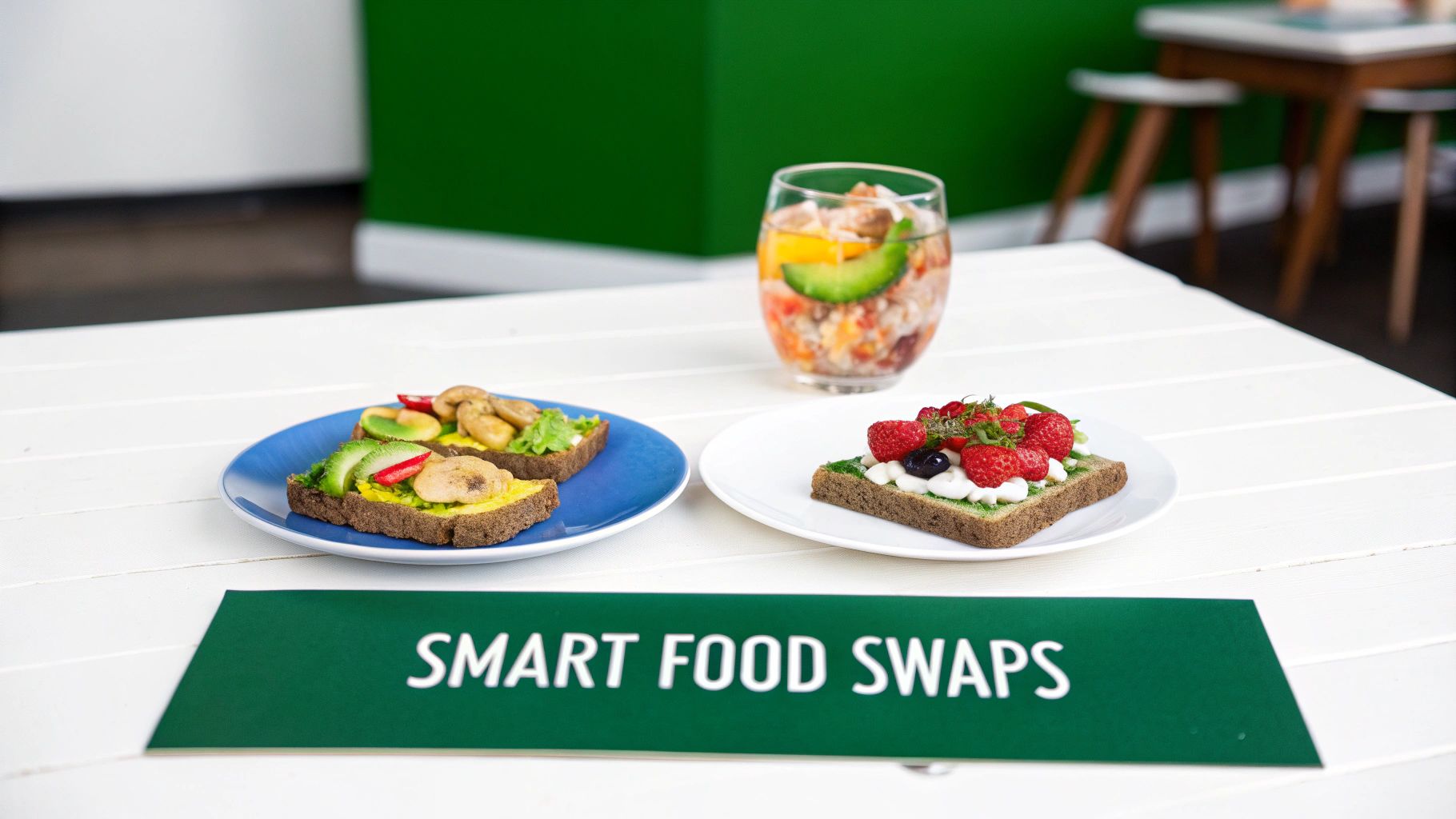
It’s all about small, strategic trades that pack a big punch over time. Think about this: swapping just one can of soda for a glass of water every day cuts about 150 empty calories. That simple move alone could help you drop 15 pounds in a year without ever feeling like you’re on a diet. If you're curious about the impact of these small changes, you can explore more insights on reducing empty calories.
Your Ultimate Swap Guide
What are your biggest food temptations? Maybe it’s that 3 PM energy slump that screams for a sugary soda, or the late-night urge for something crunchy and salty. Instead of white-knuckling your way through those cravings, redirect them with a better choice. This isn't about restriction; it's about upgrading.
Here are a few simple swaps to get you started:
- Your Morning Coffee Fix: Ditch the sugary flavored creamer and try a splash of whole milk with a dash of cinnamon. You get all the flavor without the sugar bomb.
- Your Sandwich Sidekick: Instead of mayo, go for creamy mashed avocado. It’s a fantastic swap that gives you healthy fats and fiber to keep you full for hours.
- Your Crunchy Snack Attack: Trade greasy potato chips for a handful of spiced roasted chickpeas or some air-popped popcorn. You get that satisfying crunch along with a solid dose of fiber and protein.
See? These aren't just "less bad" options. They are genuinely delicious and satisfying alternatives that work with your body, not against it.
The goal isn't to eliminate every single treat from your life. It's to make your everyday choices work harder for you, packing more nutritional punch into every bite and sip.
Easy Empty Calorie Swaps for Everyday Cravings
To make it even easier, here are some of the most common empty-calorie traps and the simple, tasty alternatives you can start using today. This little cheat sheet proves you can have your flavor and eat it, too.
| Instead of This... | Try This! | Why It's Better |
| Sugary Cereal | Oatmeal with Berries | Delivers slow-release energy, fiber, and antioxidants instead of a quick sugar spike and crash. |
| French Fries | Baked Sweet Potato Wedges | Provides complex carbs, Vitamin A, and fiber with significantly less unhealthy fat and sodium. |
| Creamy Salad Dressing | Olive Oil & Vinegar | Cuts out hidden sugars and unhealthy fats while adding heart-healthy monounsaturated fats. |
| Candy Bar | A Piece of Dark Chocolate | Offers antioxidants and minerals with far less sugar, satisfying your sweet tooth without the empty load. |
By making these simple shifts, you're doing more than just dodging empty calories—you're actively inviting vitamins, minerals, and fiber to the party. It’s proof that a healthier lifestyle can be even more flavorful and satisfying than the one you’re leaving behind.
Making a Nutrient-Rich Lifestyle Stick
Real, lasting changes aren't about chasing perfection or jumping on some new diet trend. They’re built on small, smart habits that you can actually stick with. This is where we go from knowing what empty calories are to building a life that just doesn't have much room for them. The secret sauce? Aim for progress, not a perfect record.
Think of it as creating momentum. Every tiny upgrade you make adds up. Prepping a big batch of brown rice or roasting a tray of veggies on Sunday might not feel like a huge deal, but it's the hero that saves you from the drive-thru on a chaotic Tuesday night.
Start by Adding the Good Stuff
Instead of getting hung up on everything you can't have, flip the script. Focus on what you can add to your plate. When you make a point to load up on whole, unprocessed foods, you naturally start pushing out the empty-calorie culprits. Fill your meals with colorful vegetables, lean proteins, and good fats, and suddenly, there's just less space for the junk.
Building a truly nutrient-rich life isn't just about what you're eating, either. It’s about making sure your body can actually use all that good stuff. If you're curious about that side of things, learning how to improve nutrient absorption is a critical piece of the puzzle for feeling your best long-term.
Drink More Water and Listen to Your Body
Here’s a simple but powerful trick: stay hydrated. So many times, we think we're hungry when our bodies are actually just thirsty. That craving for a sugary snack might just be a cry for a glass of water. Keeping a water bottle nearby can be a total game-changer for stopping mindless munching in its tracks.
This kind of awareness is catching on. In the U.S., for example, soda sales have dropped by a whopping 25% since 2000 as people have become more educated. But the fight isn’t over. In India, sugary drink consumption has doubled in the last decade, which shows just how crucial these simple, mindful habits are for everyone.
Progress, not perfection, is the mantra. Each smart swap and prepped meal is a vote for a healthier, more energized you. It’s about creating a lifestyle that feels good and lasts.
At the end of the day, all these small steps work together to build a strong foundation for your health. For a bigger picture of how it all fits together, check out our guide on what is a balanced diet—it’s a great roadmap for creating meals you'll actually love to eat.
Got Questions About Empty Calories? We've Got Answers.
Alright, let's dive into some of the questions that always seem to come up when we start talking about cutting back on the nutritional fluff. It’s one thing to know what empty calories are, but it’s another to deal with them in the real world.
What About "Natural" Sweeteners Like Honey or Maple Syrup?
This is a fantastic and super common question. It feels like honey and maple syrup should be healthier, right? And they are, but only by a tiny margin.
While they do contain some trace minerals and antioxidants that you won't find in plain white sugar, your body still treats them as, well, sugar. They're high in calories and low in just about everything else. Think of them as empty calories wearing a slightly nicer outfit—better, but not a free pass.
How Can I Possibly Avoid This Stuff at Parties and Family Dinners?
Ah, the social minefield. You don't want to be that person turning down every single thing, but you also don't want to undo all your hard work. The secret isn't to skip the party—it's to have a game plan.
My go-to trick? Never show up starving. Have a small, protein-packed snack before you go, like a handful of almonds or a Greek yogurt. Once you're there, make a beeline for the good stuff first. Load up your plate with veggie sticks, salad, or fruit, leaving only a little room for the cheesy dip or that slice of cake. It’s all about balance.
Look, one fun meal out with friends isn't going to sink the ship. The goal is to build a lifestyle where healthy, nutrient-rich foods are your default, so you can enjoy those special moments completely guilt-free.
Any Tips for Getting My Kids to Eat Fewer Empty Calories?
Yes! And it's probably not what you think. The key is to be a little sneaky and focus on addition, not subtraction.
Instead of declaring a war on cookies, try crowding them out by making delicious, healthy options impossible to ignore. Keep a bowl of fresh fruit on the counter, have apple slices with peanut butter ready to go, or whip up a smoothie. When treats do happen, just keep the portions reasonable.
Getting a handle on how much energy your little ones actually need can also be a game-changer. Our guide on how to calculate daily calorie needs is a great place to start. And never underestimate the power of fun! Turning fruit into colorful kabobs or making "ants on a log" can get even the pickiest eater excited about snack time.
---
Ready to stop guessing and start eating well? Meal Flow AI designs personalized meal plans perfect for your family's tastes and health goals, then zaps the shopping list right over to Instacart. It's time to simplify your week and stock your kitchen with foods you'll all love. Start your journey with Meal Flow AI today!