What Is Flexible Dieting? A Beginner's Guide to Flexible Eating Success
Discover what is flexible dieting and how it lets you enjoy your favorites while hitting goals. Learn practical steps and start today.
Love This Article?
Get personalized meal plans with recipes like this, automatically matched to your nutrition targets.
Picture this: It's Friday night, the kids are screaming for pizza, and instead of feeling a wave of diet-induced panic, you're actually excited. You grab a slice, enjoy it with your family, and feel zero guilt. Sound like a dream? It’s not. Welcome to the world of flexible dieting.
This isn't another list of "good" foods and "bad" foods. It’s a complete mindset shift that says no foods are off-limits. It's about finally understanding what your body needs and making smart, informed choices—not just blindly following someone else's restrictive rules.
Finally, A Diet That Bends to Your Life—Not the Other Way Around
So, what’s the secret sauce behind flexible dieting? Let's break it down. Think of it like a daily budget for your body, but instead of tracking dollars and cents, you're tracking macronutrients—protein, carbs, and fats.
Every day, you have a personalized "macro budget" designed for your specific goals. Your only job? To "spend" those macros on foods you actually enjoy.
This means you’re back in the driver's seat. Craving that brownie your kid left on the counter? Go for it. Want to have the same spaghetti and meatballs as the rest of the family? You absolutely can. As long as it fits within your daily numbers, you’re golden.
It’s Not About What You Eat, But How Much
Instead of labeling foods as "good" or "evil," this approach gives you the power of knowledge. You start to see food for what it is—fuel for your body. This insight helps build a much healthier, more sustainable relationship with eating, kicking the guilt and shame cycle to the curb for good.
The whole philosophy can be summed up in one simple phrase: If It Fits Your Macros (IIFYM), you can eat it. This isn't a hall pass to live on pop-tarts and protein shakes, but an invitation to strike a real, sustainable balance between nutrient-packed foods and the treats that make life worth living.
For a busy mom, this freedom is a game-changer. It puts an end to the exhausting cycle of being "on" or "off" a diet, where one cookie makes you feel like you've thrown in the towel. In fact, research shows that this kind of flexible approach can slash binge eating episodes by up to 30% compared to rigid dieting, because it gets rid of that all-or-nothing pressure. You can read the full study on flexible dieting outcomes here.
By focusing on your macro targets, you're not just counting—you're ensuring your body gets the right mix of fuel it needs to build muscle, have energy, and feel amazing. It transforms dieting from a miserable chore into a numbers game you can actually win, day after day.
Before we dive deeper, let’s quickly look at how this stacks up against the diets you're probably used to.
Flexible Dieting vs. Traditional Dieting At A Glance
This table cuts through the noise and shows you exactly what makes the IIFYM approach so different.
| Feature | Flexible Dieting (IIFYM) | Traditional Dieting |
| Food Choices | All foods are allowed; focus is on hitting macro targets. | Rigid "good" vs. "bad" food lists; many food groups are often eliminated. |
| Core Principle | Quantitative; based on macronutrient and calorie goals. | Qualitative; based on strict food rules and restrictions. |
| Social Life | Adaptable. You can eat out and enjoy social events without guilt. | Extremely difficult. Often requires bringing your own food or avoiding events. |
| Mindset | Fosters an empowered, educated, and balanced relationship with food. | Often leads to a cycle of guilt, shame, and all-or-nothing thinking. |
| Sustainability | High. It’s designed to fit your lifestyle, making it easy to stick with long-term. | Low. The extreme restrictions are hard to maintain, leading to burnout and yo-yo dieting. |
As you can see, one approach is about empowerment and sustainability, while the other is built on a foundation of restriction and control. For moms trying to build lasting healthy habits for themselves and their families, the choice is pretty clear.
Understanding Your Body's Fuel System
To really get why flexible dieting works—and isn't just another passing trend—we need to pop the hood and see what’s going on inside. It's not magic, it’s just basic biology. Think of your body as the car you rely on every single day to get you through life.
The "fuel" it runs on comes in three main forms, which you’ve probably heard of: macronutrients, or "macros" for short. Those are your protein, carbohydrates, and fats. Each one has a specific, critical job to do in keeping your engine humming along.
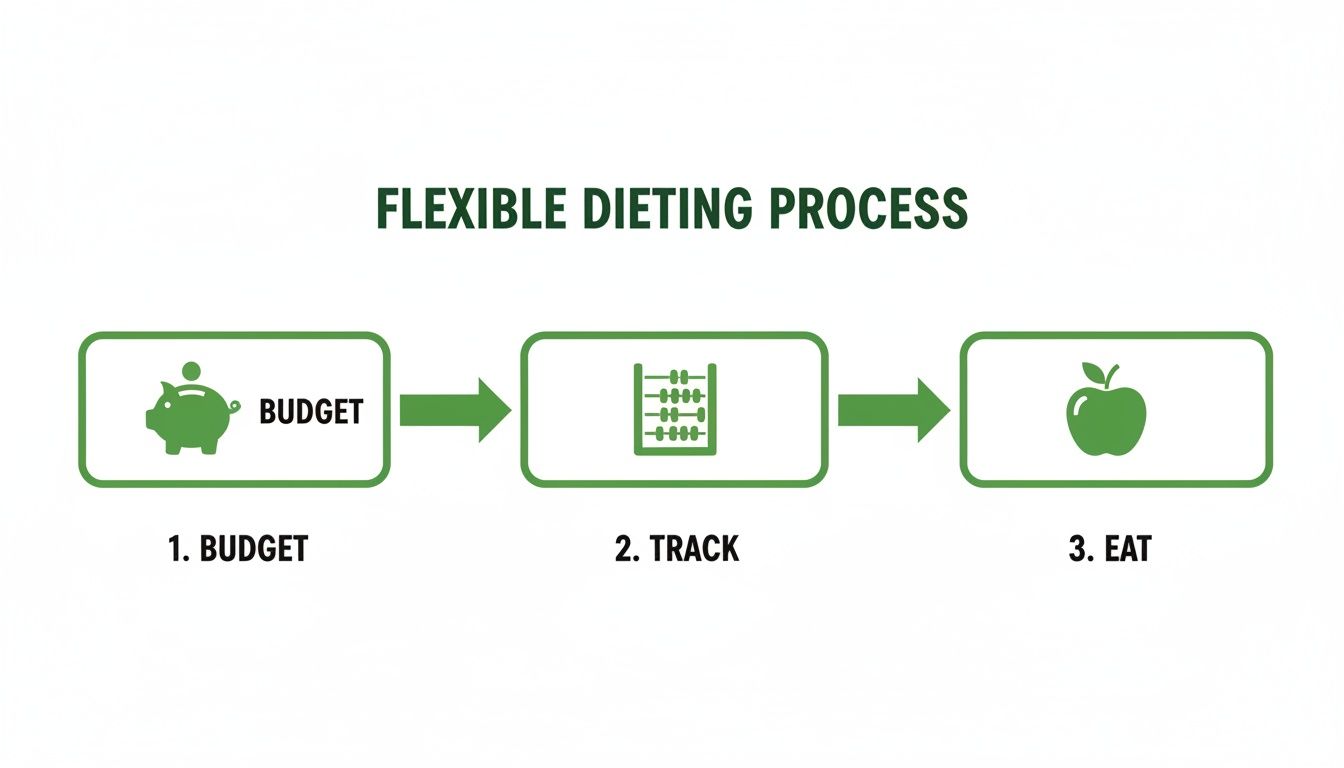
The Three Key Players In Your Diet
Flexible dieting shifts your mindset from labeling foods as "good" or "bad" to seeing them for what they really are: sources of these three essential nutrients.
- Protein: The Body's Building Blocks. This is the literal engine, frame, and tires of your car. Protein builds and repairs everything—from your muscles after a workout to your hair and skin. Getting enough is a game-changer for feeling full, holding onto muscle while you lose fat, and keeping your metabolism fired up.
- Carbohydrates: The High-Octane Fuel. Carbs are your body’s go-to source for quick energy. They're the premium gas that powers you through chasing toddlers, a spin class, or just getting through a hectic afternoon. Without them, you'd be running on fumes.
- Fats: The Essential Lubricants. Forget what you heard in the 90s—fats are not the enemy! Think of them as the motor oil and lubricants that keep everything running smoothly. They protect your organs, are crucial for hormone balance, and help you absorb key vitamins. Healthy fats are non-negotiable for brain health and long-term wellness.
Getting a handle on your macros is the first big step. If you're new to this, there are some great guides on how to count macros for beginners that can walk you through the basics.
Calculating Your Personal Fuel Needs
So, how much gas does your specific car need? That's where a little something called your Total Daily Energy Expenditure (TDEE) comes in. It sounds technical, but it’s just the total number of calories your body burns in a 24-hour period—from sleeping and breathing to chasing the kids and working out. It's your personal energy "budget."
Once you know your TDEE, you can tailor your intake to your goals:
- To Lose Fat: You’ll eat slightly fewer calories than your TDEE (a calorie deficit).
- To Build Muscle: You’ll eat slightly more calories than your TDEE (a calorie surplus).
- To Maintain: You’ll eat right around your TDEE number.
From there, you just split that calorie budget among your three macros. These become your daily targets. It might seem like a lot of numbers at first, but this is how you take the driver's seat. For a step-by-step breakdown, check out our guide on how to calculate macros.
The beauty of this system is that it’s all about you. Your goals, your body, and your lifestyle dictate the numbers—not some cookie-cutter meal plan that was doomed from the start.
The Give and Take of Food Freedom
So, the idea of "food freedom" has you hooked. No more off-limits foods, no guilt-trip after eating a cookie, and the power to say "yes" to family pizza night without derailing your goals. It sounds almost too good to be true, right?
Well, like anything in life, flexible dieting has its amazing upsides and a few potential snags. Let's get real about what you’re signing up for.
On the bright side, the biggest win here is that it's actually sustainable. Seriously. So many diets feel like you're holding your breath underwater, just waiting to come up for air. Flexible dieting is the opposite—it lets you breathe. This isn't just a vibe; the numbers back it up. Studies show that people who practice flexible dietary control stick with it 15-20% better in the long run compared to those on super-strict plans. Rigid diets like keto or paleo often see dropout rates as high as 40-60% in just two months!
This approach isn't about memorizing a list of "bad" foods. It's about learning how food actually works in your body. You'll finally understand what a real serving of peanut butter looks like (spoiler: it's smaller than you think!) and how to balance a brownie with your protein and fiber goals for the day. That knowledge is power, and it’s what finally helps quiet the food anxiety that drives so many of us crazy.
Flexible dieting isn't really about the food. It’s about rewiring your brain. You’re trading that 'all-or-nothing' mindset for one of balance, consistency, and a little bit of grace.
The Learning Curve and a Few Ditches to Avoid
Now, let's talk about the not-so-glamorous part. Getting started with flexible dieting can feel like a bit of a chore. You'll be tracking what you eat, probably with an app and maybe a food scale. But listen, this isn't a life sentence. Think of it like training wheels. It’s a temporary tool to help you get a real feel for portion sizes and the macro breakdown of the foods you eat all the time.
Another classic mistake is the "junk food diet" trap. Just because you can technically make a Snickers bar fit your macros doesn't mean your entire day should be powered by candy and chips. The real sweet spot is aiming for nutrient-packed, whole foods about 80% of the time. That other 20% is where the fun and flexibility live.
Here’s a quick reality check to keep things in perspective:
- Pro: It Actually Lasts. Flexible dieters have been shown to maintain a whopping 80% of their weight loss two years later. Rigid dieters? They often regain a huge chunk of it within just one year. You can learn more about the long-term success of flexible dieting.
- Con: The Initial Grind. Those first few weeks require a real commitment to logging your food. It can feel a little tedious, but it pays off big time.
- Pro: Kiss Food Guilt Goodbye. When you stop labeling foods as "good" or "bad," you start building a genuinely healthier relationship with everything on your plate.
- Con: You Still Have to Be Smart. You can't just ignore nutrition. Making sure you're getting enough vitamins, minerals, and fiber is still on you.
At the end of the day, flexible dieting gives you a real shot at long-term success because it's designed to fit into your actual, messy, wonderful life—not the other way around. It takes some learning upfront, but the payoff is a lifetime of sanity and freedom around food.
A Realistic Day Of Flexible Dieting
Okay, the theory sounds great, but what does flexible dieting actually look like on a chaotic Tuesday when the kids have soccer practice and you're running on fumes?
It’s way less complicated than you might think. Let's walk through a real-life day to see how you can hit your personal macro goals without eating weird "diet food" or making separate meals for yourself.
Imagine your target is around 1,800 calories for the day. We'll break that down into 140g protein, 160g carbs, and 60g fat. Here’s how you can nail it, stress-free.
Morning Fuel-Up
Your morning mission is to start the day with a breakfast that's quick, satisfying, and front-loads your protein. This is key to staying full until lunch and avoiding that mid-morning snack attack.
- Breakfast (approx. 400 calories): You whip up a quick bowl of protein oatmeal. It’s just regular oats, a scoop of your favorite chocolate protein powder, a handful of berries, and a spoonful of almond butter. It takes five minutes, tastes amazing, and starts your day with a solid 35g of protein. Done.
Lunch And The Afternoon Power-Through
Lunchtime is all about working smarter, not harder. Instead of starting from scratch, you're going to put last night's leftovers to work, saving precious time and mental energy.
- Lunch (approx. 500 calories): Remember that grilled chicken from yesterday’s dinner? You shred it up and toss it into a big salad with mixed greens, cucumber, tomatoes, and a light vinaigrette. To get some carbs in, you add a small whole-wheat pita on the side. Easy, delicious, and perfectly on track.
Later that afternoon, when the 3 PM slump hits, you grab a Greek yogurt and a handful of almonds. It's the perfect protein-and-fat combo to power you through until dinner.
The secret isn’t in preparing separate "diet meals." It’s about making smart, simple adjustments to everyday foods to align them with your macro budget.
Family Dinner And A Guilt-Free Treat
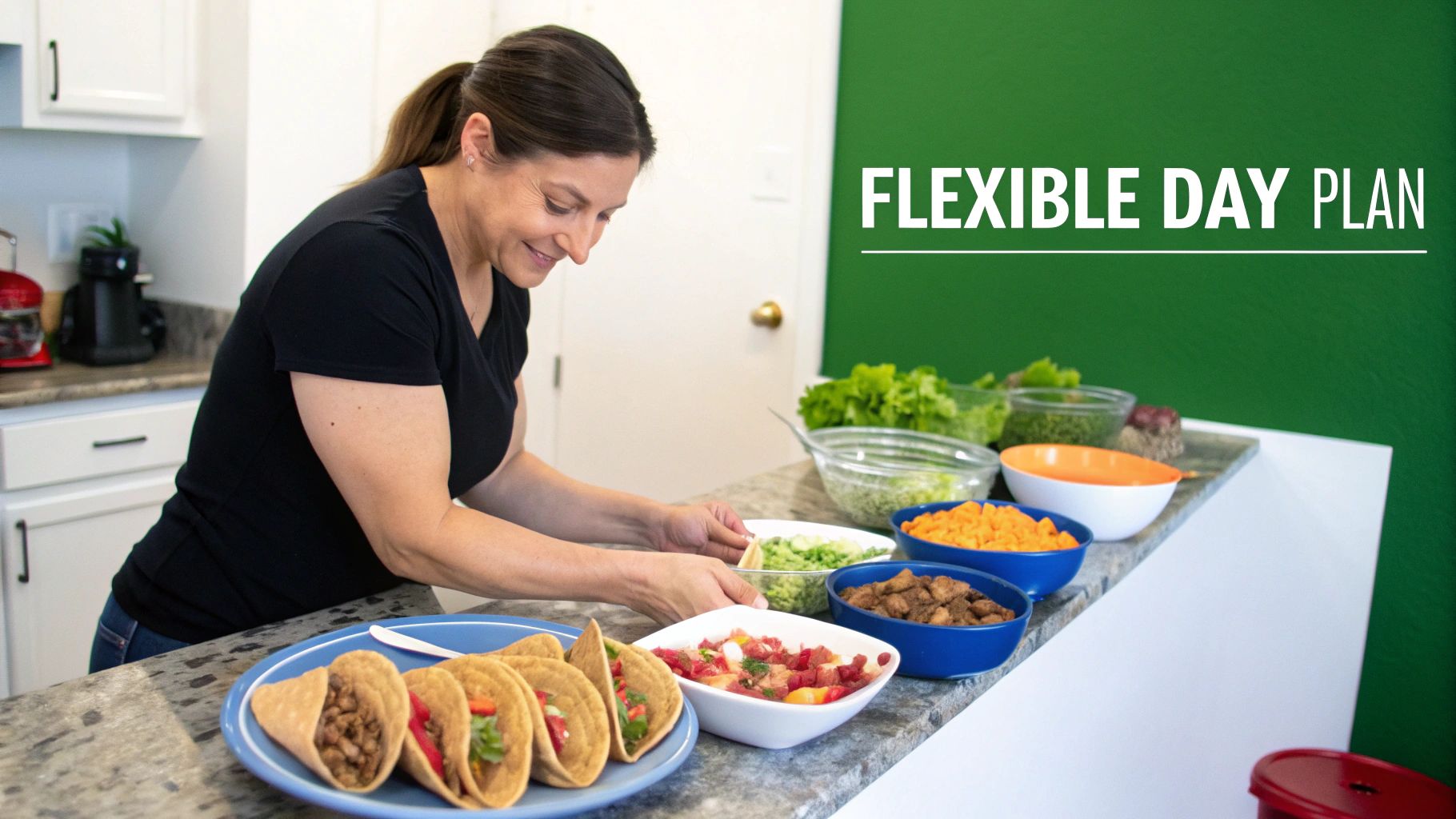
Dinner is family time, and there's absolutely no reason for you to eat something different from everyone else. Tonight is taco night!
- Dinner (approx. 600 calories): Everyone gets to build their own tacos. While the kids go heavy on the cheese and sour cream, you just build yours with your macros in mind. You fill two corn tortillas with a generous serving of seasoned ground turkey, pile on the lettuce and salsa, and add a sprinkle of cheese. Same meal, just built your way.
After you log your dinner, you realize you have some macros left over. You already planned for this! So you enjoy two chocolate chip cookies and a small glass of wine without a single ounce of guilt. You just pre-logged them earlier in the day to make sure they'd fit.
Here's a quick look at how that day breaks down:
Sample 1800 Calorie Flexible Dieting Day
| Meal | Example Food | Protein (g) | Carbs (g) | Fat (g) |
| Breakfast | Protein Oatmeal with Berries & Almond Butter | 35 | 45 | 15 |
| Lunch | Grilled Chicken Salad with Pita | 40 | 35 | 18 |
| Snack | Greek Yogurt & a Handful of Almonds | 20 | 15 | 10 |
| Dinner | 2 Ground Turkey Tacos with Salsa & Cheese | 35 | 40 | 12 |
| Treat | 2 Chocolate Chip Cookies & a Glass of Wine | 5 | 25 | 8 |
| Totals | A full, satisfying day! | 135 | 160 | 63 |
See? The numbers are pretty darn close to the goal. This whole day felt completely normal, satisfying, and was perfectly aligned with your goals. No drama, no weird food, just results.
For even more inspiration on how to make meals that fit your numbers, check out these awesome macro meal prep recipes.
Automate Your Meal Plan And Grocery List
So, you're sold on the idea of flexible dieting, but let's get real for a second. The thought of planning every single meal and writing out super-detailed grocery lists sounds like a one-way ticket to burnout. It feels like taking on another part-time job you definitely don't have time for.
Between the school run, the mountain of laundry, and just trying to find five minutes of peace, who has the brainpower to become a macro mathematician? This is where a little modern-day magic comes in handy. Instead of letting the planning overwhelm you before you even start, you can just... automate it.
Let Technology Handle The Heavy Lifting
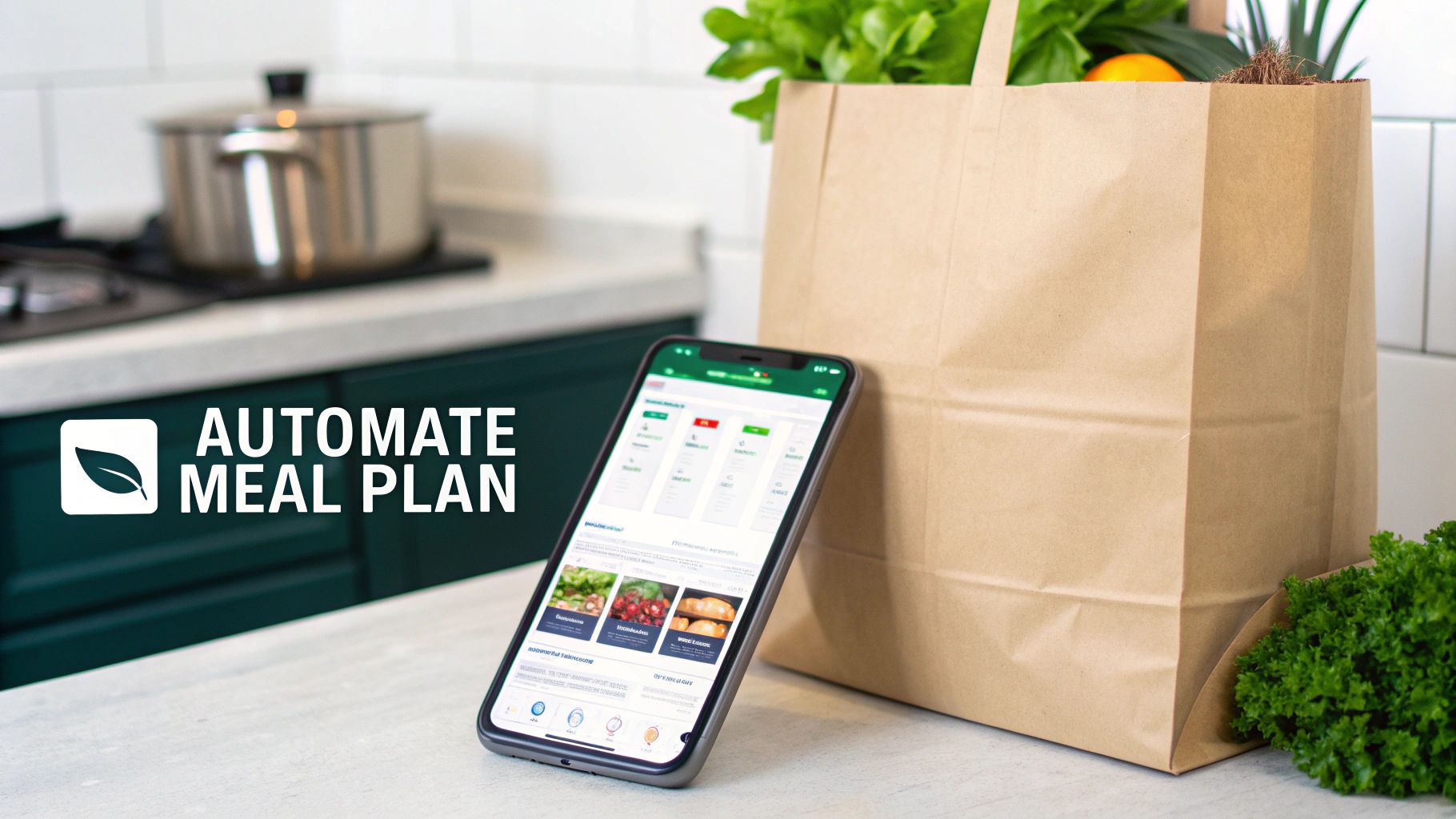
Picture this: you plug in your personal macro targets—those numbers you figured out just for your body and your goals—and poof! An entire week of delicious, family-friendly meals pops up on your screen. No more staring into the fridge abyss, wondering what on earth to make for dinner. No more last-minute panic.
This is exactly what tools like Meal Flow AI were designed for. Our app takes your personal numbers and does all the hard work for you, creating a complete plan that hits your protein, carb, and fat goals with scary accuracy. It’s like having a personal nutritionist and a private chef whispering ideas in your ear.
The system automatically fills your week with balanced meals, making the whole "what is flexible dieting" question a simple, visual reality instead of a complicated puzzle you have to solve every day.
The goal isn’t to add more to your plate; it’s to take things off. Automating your meal plan frees up the mental energy you desperately need for everything else life throws at you.
But here's the real game-changer. Once your plan is set, Meal Flow AI has a feature that turns your entire week of meals into an organized grocery list with a single click. And it gets even better—it can send that list straight to Instacart for delivery. Seriously.
This one simple step can save you hours of wandering through the grocery store and completely erases the mental load of making lists. If you're looking for the right tools, it's worth learning more about how a menu planner and shopping list app can make all the difference. This is how you make flexible dieting not just possible, but genuinely effortless.
Common Flexible Dieting Questions
Jumping into a new way of eating is a bit like learning a new language—it’s exciting, but you’re bound to have a ton of questions. That's completely normal. Let's get into the nitty-gritty and bust some myths so you can start with total confidence.
Think of this as your personal FAQ session, where we tackle the questions that are probably already buzzing around in your head.
Do I Have To Weigh My Food Forever?
Oh, thank goodness, no! Let's just get that out of the way right now. This is probably the biggest relief for anyone considering this approach.
Think of your food scale like training wheels. It’s an amazing tool when you're first starting out. It helps you see what 4 ounces of chicken actually looks like, or how small a real serving of peanut butter is (spoiler: it's smaller than you think!).
After a few weeks of consistent practice, you'll start to develop a kind of superpower: the ability to eyeball portion sizes like a pro. You'll just know what your go-to meals look like on the plate.
Most people who've been doing this for a while only bring out the scale every now and then. Maybe they use it to "recalibrate" their eyes every few months or if they're zeroing in on a very specific goal. The point isn't to be chained to a kitchen gadget forever; it's to build a lasting intuition about food.
Can I Really Eat Junk Food And Lose Weight?
Okay, let's have an honest chat about this. Technically? Yes. As long as you’re in a calorie deficit (burning more than you eat), you will lose weight. Physics is physics.
However... and this is a big "however"... if you try to hit your macro goals by eating nothing but pizza and ice cream, you're going to feel like absolute garbage. You'll be hungry all the time, your energy will tank, and your body will be screaming for the vitamins and minerals it needs to actually function. It's a recipe for failure.
The real magic is in the 80/20 rule. Focus on filling about 80% of your macro budget with awesome, nutrient-packed foods—things like lean protein, veggies of every color, fruits, and whole grains. Then, use that other 20% for the fun stuff. That piece of chocolate, that glass of wine, those chips you love.
This approach gives you the best of both worlds. You get all the amazing health benefits of nutritious food plus the freedom to enjoy your favorite treats without a shred of guilt. It's what makes this whole thing sustainable in the real world.
What Happens If I Go Over My Macros?
First, take a deep breath. Absolutely nothing dramatic is going to happen. One off day will not wreck your progress or undo all your hard work. Seriously. Life happens—birthday parties, date nights, Tuesdays. Perfect eating is a myth.
The most important thing is to ditch the "all-or-nothing" mindset. That's the little voice that says, "Well, I already messed up, might as well eat the whole pint of ice cream and start over on Monday." Don't listen to that voice! It’s a trap.
Just acknowledge what happened, let it go, and get right back on track with your very next meal. No need to "punish" yourself with extra cardio or by starving yourself the next day. Just get back to your normal plan.
Remember, the golden rule here is consistency over perfection. Your long-term results are built by what you do most of the time, not by the occasional slip-up.
---
Ready to make flexible dieting truly effortless? Meal Flow AI takes the guesswork out of hitting your macro targets. Get personalized weekly meal plans and automated grocery lists sent straight to Instacart, so you can focus on your family, not spreadsheets. Start your free trial today and see how easy it can be!